
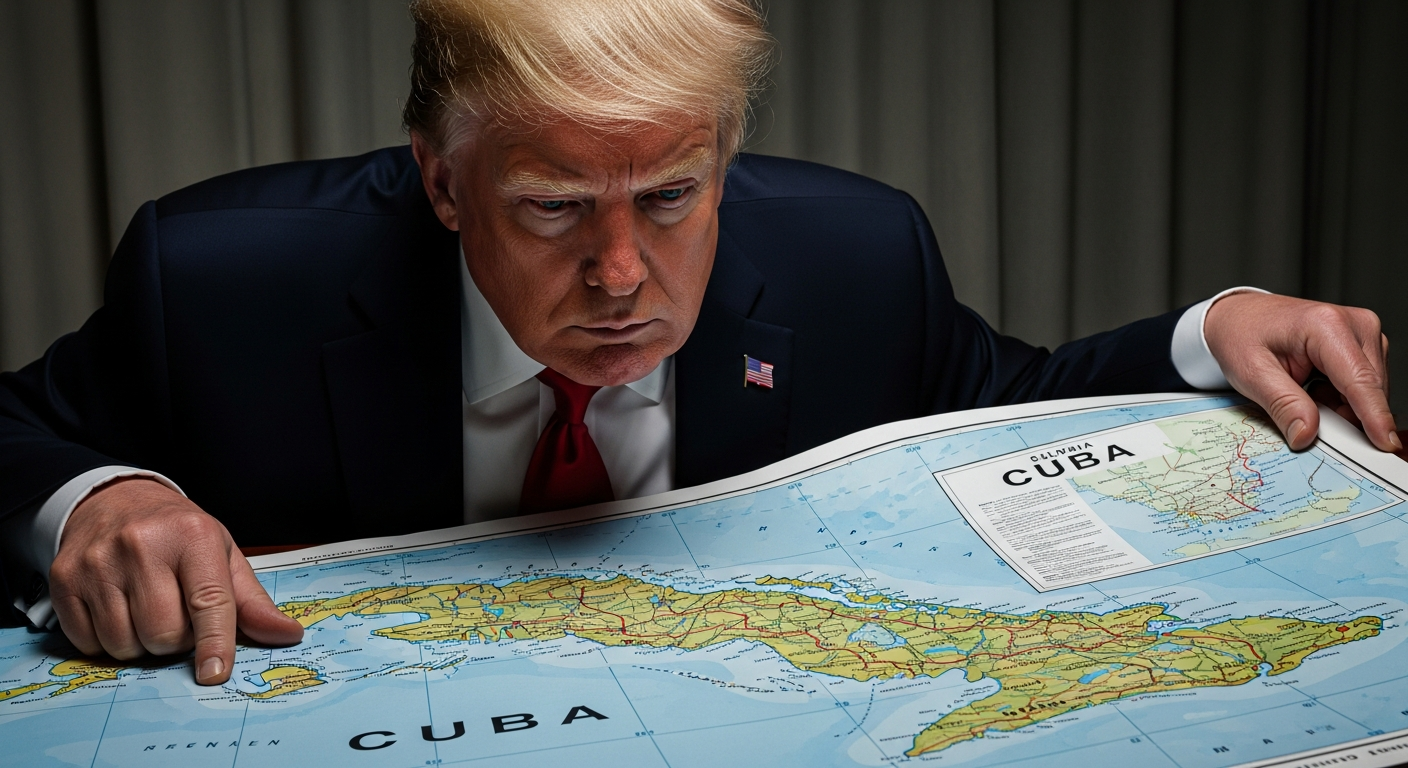
Speculation about potential U.S. military action involving Cuba has intensified following reports that the Pentagon is quietly reviewing contingency plans for operations on the island. While U.S. officials have publicly denied any active preparations for an invasion, the reports, coupled with recent comments from President Donald Trump, have drawn significant attention to the long-standing geopolitical tensions between the two nations.
"Cuba is a failing nation. We may stop by Cuba after we’re finished with this." — President Donald Trump
According to USA Today, citing anonymous sources familiar with internal discussions, planning for a possible U.S. operation in Cuba is "quietly ramping up." The report did not confirm an invasion plan and offered few specific details regarding the nature or form of any potential operation. In response to the report, the Pentagon issued a cautious statement, indicating that the Department of Defense routinely plans for a wide range of contingencies and remains prepared to execute lawful presidential orders if directed. This phrasing is standard for military institutions, yet its context has amplified interest due to President Trump's recent remarks.
President Trump has employed increasingly aggressive rhetoric toward Cuba in recent months, often linking it to broader geopolitical conflicts. Earlier this week, he suggested Cuba could become a future focus after the U.S. confrontation with Iran. "Cuba is a failing nation," President Trump stated. "We may stop by Cuba after we’re finished with this." These comments have been interpreted by critics as provocative and by supporters as strategic pressure tactics aimed at the Cuban government.
Cuba, which has been under communist rule since the 1959 revolution, is currently led by Miguel Díaz-Canel. The island nation has been grappling with severe economic hardship, including widespread shortages, frequent blackouts, and growing civil unrest. Independent monitoring groups reported a sharp increase in protests throughout March, with multiple demonstrations occurring daily across the country. This internal instability has led some U.S. analysts to suggest that the current Cuban regime may be particularly vulnerable.
Despite the heightened speculation, top U.S. military leadership has publicly downplayed the notion of an invasion. Last month, General Francis Donovan, chief of U.S. Southern Command, testified before the Senate that the Pentagon was not "rehearsing an invasion" and was not actively preparing to attack Cuba. This testimony directly contradicts some of the more sensational speculation circulating in political media and online.
Another contributing factor to the renewed scrutiny of Cuba is its alleged role in global conflicts. Recent reports indicate that the Trump administration briefed Congress on claims that Cuba has supported Russia’s war effort in Ukraine. A State Department spokesperson accused the Cuban government of failing to prevent its citizens from being used as "pawns" in the conflict, according to Trending Politics. These allegations further complicate the diplomatic landscape and fuel calls for tougher action against Havana.
The issue carries particular political weight in Florida, especially within the influential Cuban-American community. A Miami Herald poll reportedly found strong support among Cuban Americans for tougher action against Cuba’s communist leadership. This sentiment is especially significant in South Florida, where Cuban exile politics have historically played a crucial role in shaping electoral outcomes and foreign policy discussions.
For now, there has been no official announcement of military action, no declared invasion plan, and no confirmed policy shift beyond the use of strong rhetoric and the routine process of contingency planning. What appears more likely, according to some observers, is strategic signaling—utilizing pressure, messaging, and military ambiguity to unsettle the Cuban government. Nevertheless, when a sitting president publicly discusses potential military action and anonymous reports cite Pentagon planning, the situation inevitably commands significant attention from both domestic and international audiences. The ongoing developments underscore the complex and often sensitive nature of U.S.-Cuba relations.