


Breaking
Sponsor Advertisement
President Trump Prepares for Potential Supreme Court Vacancy
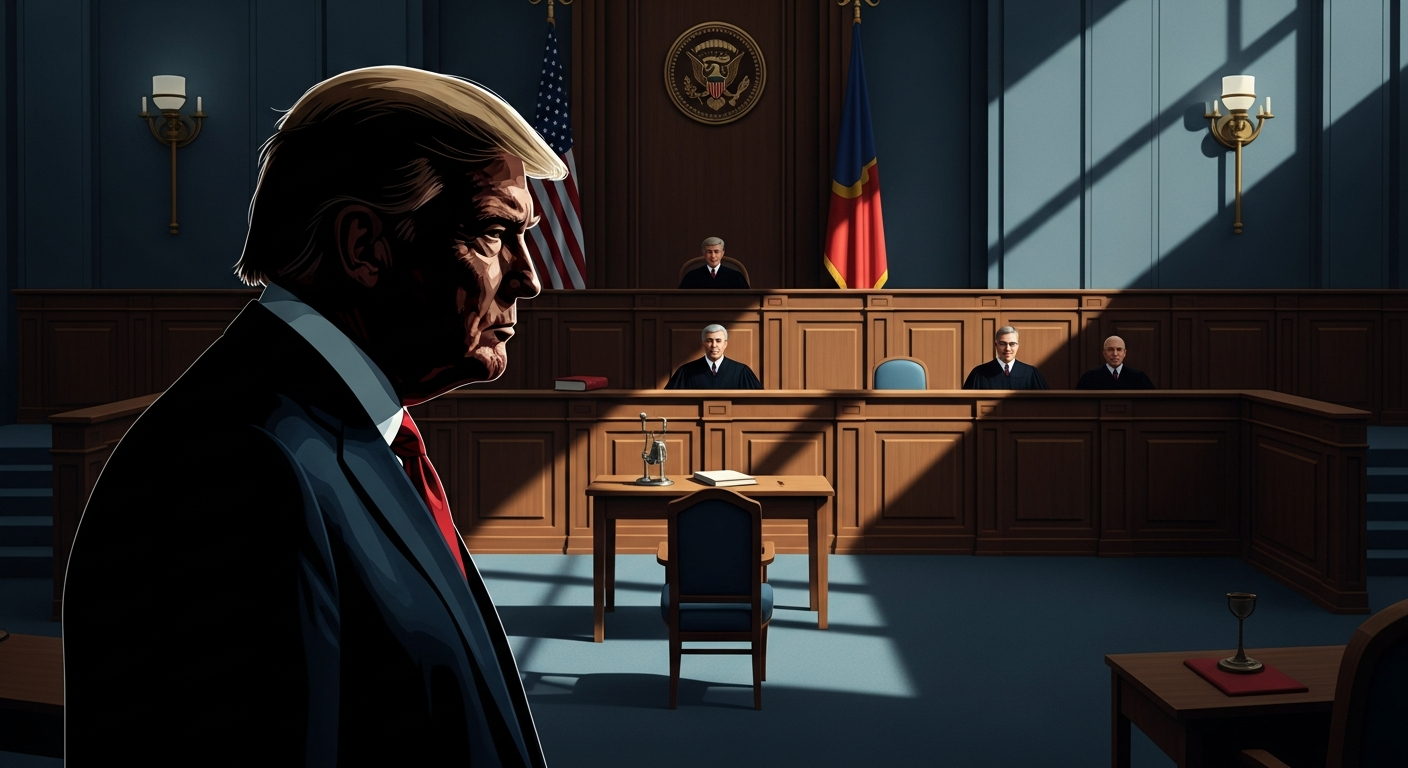
AI-generated image for: President Trump Prepares for Potential Supreme Court Vacancy

President Trump Prepares for Potential Supreme Court Vacancy

President Donald Trump announced his administration is prepared to nominate a new Supreme Court justice should a vacancy arise, intensifying speculation about Justice Samuel Alito's future.
Jump to The Flipside Perspectives

President Donald Trump has stated his administration is prepared to nominate a new Supreme Court justice if a vacancy opens, fueling speculation regarding the potential retirement of Justice Samuel Alito. The President's remarks, made in an interview with Fox Business, indicate that the White House has already compiled a shortlist of candidates and is ready to act quickly should one of the court's senior conservative justices decide to step down.

"Justice Alito is an unbelievable justice, and a brilliant justice. He does what’s right for the country." — President Donald Trump

"It could be two, could be three, could be one. I don’t know, I’m prepared to do it," President Trump said, addressing the possibility of future vacancies on the nation's highest court. Currently, there are no openings on the Supreme Court. Justice Alito, who is 76 years old, and Justice Clarence Thomas, 77, have not publicly announced any plans to retire. Nonetheless, President Trump's comments have immediately drawn increased attention to Justice Alito, whose age and extensive tenure on the bench have frequently made him the subject of retirement rumors within legal and political circles.

Trump also offered strong praise for Justice Alito during the interview. "Justice Alito is an unbelievable justice, and a brilliant justice," President Trump stated. "He does what’s right for the country."

The political implications of a potential Supreme Court vacancy are significant. With Republicans currently holding a majority in the Senate, the Trump administration would likely find a clearer path to confirming a nominee before the 2026 midterm elections, a period that could potentially see a shift in congressional control. Senate Majority Leader John Thune reportedly indicated that Republicans would be able to confirm a nominee before the midterms if such a situation arose. This factor has led many conservatives to view a potential retirement by a justice at this time as strategically advantageous for solidifying the court's ideological composition.

Speculation surrounding Justice Alito's health and potential retirement intensified recently following reports that he was treated for dehydration after experiencing lightheadedness at a Federalist Society dinner. A spokesperson for the Supreme Court confirmed the incident, stating that Justice Alito was fully evaluated and returned to work the following Monday, emphasizing that there was no major medical emergency.

Several names are already circulating in legal and political discussions as possible successors to a Supreme Court seat. Among those frequently mentioned are James Ho and Aileen Cannon, both of whom are regarded as conservative jurists. Senate Judiciary Chairman Chuck Grassley (R-IO) also reportedly mentioned Texas Senator Ted Cruz (R) and Utah Senator Mike Lee (R) as potential candidates, according to the Conservative Brief. However, Senator Cruz publicly rejected the idea of a judicial appointment. "I don’t want to stay out of policy fights. I don’t want to stay out of political fights," Senator Cruz stated, explaining his disinterest in becoming a Supreme Court justice.

President Trump has already profoundly reshaped the Supreme Court, more so than any Republican president since Ronald Reagan. During his first term, he successfully appointed three justices, contributing to the establishment of the current 6-3 conservative majority on the bench. Another vacancy would present President Trump with an opportunity to further deepen this judicial influence, potentially impacting legal precedent and constitutional interpretation for decades to come.

The President's recent remarks underscore the White House's proactive planning and highlight how the administration views the possibility of a Supreme Court vacancy as a major political and strategic opportunity to cement its judicial legacy.


Advertisement

The Flipside: Different Perspectives

Progressive View

Progressives view President Trump's proactive stance on Supreme Court nominations with significant concern, particularly given the current 6-3 conservative majority. The prospect of another vacancy being filled by an ideologically aligned justice is seen as a threat to established legal precedents and the advancement of social justice, equity, and collective well-being. A further entrenchment of a conservative majority could lead to reversals or weakening of protections related to civil rights, voting rights, environmental regulations, healthcare access, and reproductive rights.

The emphasis on quickly confirming a nominee while Republicans control the Senate is perceived by progressives as an attempt to bypass broader public consensus and solidify a specific political agenda for decades. This approach, they argue, risks politicizing the judiciary further and undermining public trust in the court's impartiality and its role as a neutral arbiter of justice. For progressives, the Supreme Court should reflect a broader range of legal philosophies and societal values, ensuring that judicial decisions consider the systemic contexts of inequality and strive to protect the most vulnerable populations. The potential appointment of another deeply conservative justice raises fears about the long-term impact on the rights and well-being of marginalized communities and the future direction of American society.

Conservative View

From a conservative perspective, President Trump's readiness to nominate a Supreme Court justice upon a vacancy is a demonstration of responsible governance and strategic foresight. The core tenet of judicial conservatism emphasizes originalism and textualism, interpreting the Constitution and statutes according to their original meaning or plain language. A vacancy, particularly from a justice like Samuel Alito, presents a critical opportunity to reinforce the court's conservative majority, ensuring that judicial decisions align with these foundational principles. This approach is seen as vital for protecting individual liberties, upholding free-market principles, and limiting government overreach.

The current Republican control of the Senate provides a clear and efficient pathway for confirming a conservative nominee, a window of opportunity that may not last indefinitely. Expediency in filling a vacancy is therefore paramount to avoid leaving a crucial branch of government understaffed or risking a less favorable political climate for confirmation in the future. Appointing justices who adhere to a strict interpretation of the Constitution is viewed as essential for maintaining the balance of power and preventing judicial activism, which conservatives believe can lead to policy-making from the bench rather than through the legislative process. This ensures the protection of the Constitution as intended by its framers, rather than its evolution through judicial interpretation.

Common Ground

Despite differing political priorities regarding the Supreme Court, there are areas of common ground concerning the process and purpose of judicial appointments. Both conservatives and progressives agree on the fundamental importance of a fully staffed and functioning Supreme Court to ensure the stability and efficacy of the American legal system. The timely filling of any vacancy is generally seen as necessary to prevent judicial backlogs and maintain the court's ability to hear and decide cases.

Furthermore, there is a shared understanding that nominees should be highly qualified individuals with extensive legal experience and a demonstrated commitment to the rule of law. While their interpretations of the Constitution may differ, both sides seek individuals who possess intellectual rigor and integrity. The process of Senate confirmation, while often contentious, is recognized by both viewpoints as a critical mechanism for vetting nominees and ensuring accountability. Ultimately, both conservatives and progressives share an interest in a Supreme Court that commands respect and provides a consistent framework for justice, even if they disagree on the specific judicial philosophies that should guide its decisions.

What's your view on this story? Share your thoughts and remember to consider multiple perspectives and being respectful when forming and voicing your opinion. "If you resort to personal attacks, you have already lost the debate..."

Advertisement

Contact Us About This Article

Have a question or comment about this article? We'd love to hear from you.

About Fair Side News

At Fair Side News, we believe in presenting news with perspectives from both sides of the political spectrum. Our goal is to help readers understand different viewpoints and find common ground on important issues.