


Breaking
Fair Side News (formerly BalancedRight News), was created to help readers move b… | ● BREAKING David Wilcock, UFO Figure, Dies After Colorado Mental Health Incident | ● BREAKING Virginia Judge Halts Election Results Amid Redistricting Fight | SPLC Indicted, Charlottesville Link Raises Questions | DHS Official Under Investigation Amid 'Sugar Daddy' Allegations | Scientists with Sensitive Defense Ties Vanish Under Unusual Circumstances | Florida Teacher Faces Felony Charge in Student Incident | Potent New Opioid Cychlorphine Spreads, Posing Grave Threat | Virginia Redistricting Referendum Fuels Political Confrontation | Louisiana Mass Shooting Kills Eight Children, Two Women Injured | FBI Director Patel Promises Election Arrests Amid Leadership Questions | Fair Side News (formerly BalancedRight News), was created to help readers move b… | ● BREAKING David Wilcock, UFO Figure, Dies After Colorado Mental Health Incident | ● BREAKING Virginia Judge Halts Election Results Amid Redistricting Fight | SPLC Indicted, Charlottesville Link Raises Questions | DHS Official Under Investigation Amid 'Sugar Daddy' Allegations | Scientists with Sensitive Defense Ties Vanish Under Unusual Circumstances | Florida Teacher Faces Felony Charge in Student Incident | Potent New Opioid Cychlorphine Spreads, Posing Grave Threat | Virginia Redistricting Referendum Fuels Political Confrontation | Louisiana Mass Shooting Kills Eight Children, Two Women Injured | FBI Director Patel Promises Election Arrests Amid Leadership Questions |
Sponsor Advertisement
Navy Secretary Fired Amid Iran Standoff, Leadership Shake-Up
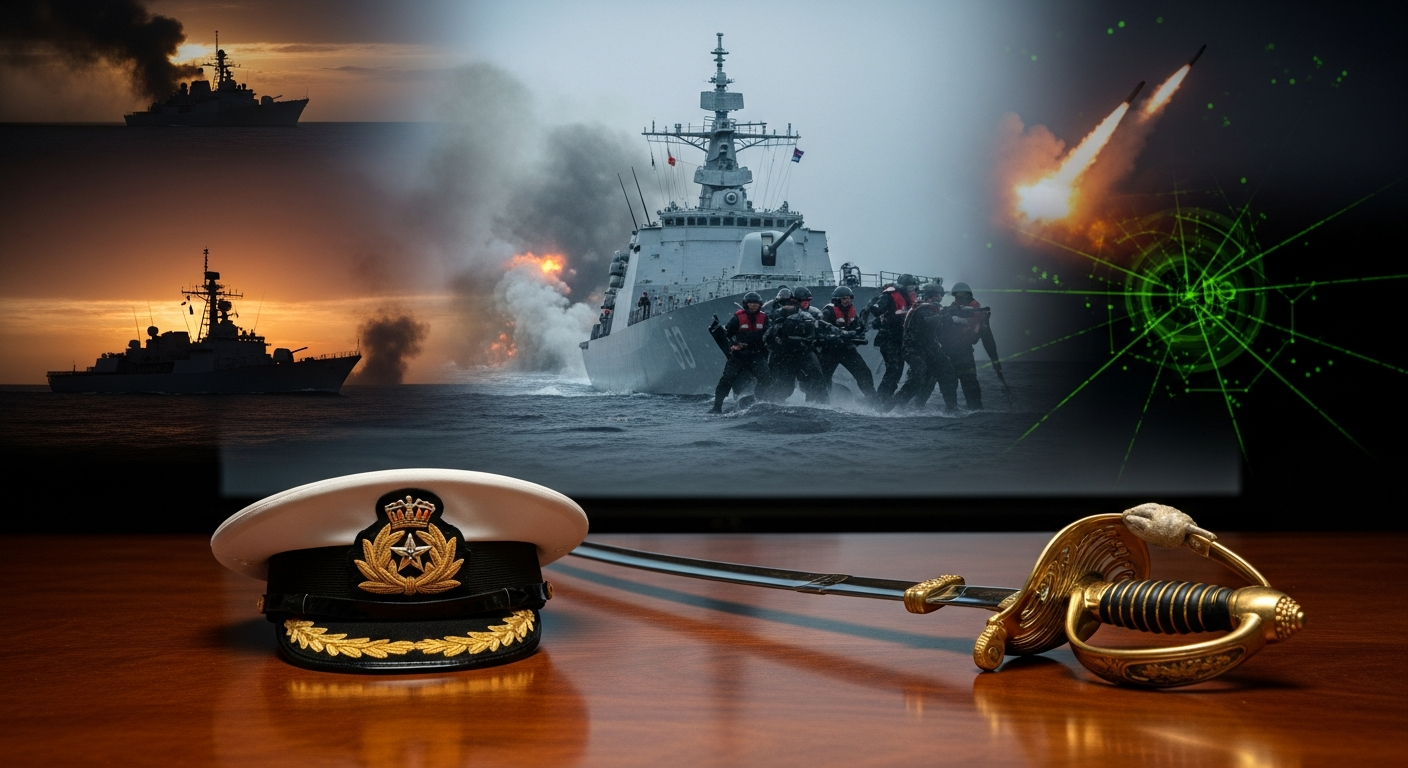
AI-generated image for: Navy Secretary Fired Amid Iran Standoff, Leadership Shake-Up

Navy Secretary Fired Amid Iran Standoff, Leadership Shake-Up

Defense Secretary Pete Hegseth terminated Secretary of the Navy John C. Phelan on Wednesday afternoon, cutting short his tenure amid an active military and economic confrontation with Iran and a broader reshuffling of military leadership.
Jump to The Flipside Perspectives

Defense Secretary Pete Hegseth terminated Secretary of the Navy John C. Phelan on Wednesday afternoon, April 22, cutting short his tenure during one of the most consequential periods in recent American naval history. The dismissal, effective immediately, places Hung Cao, previously Navy Undersecretary, into the acting role. This leadership change occurs as the United States is engaged in an active military and economic confrontation with Iran, with the U.S. Navy operating aggressively in and around the Strait of Hormuz.

"The administration really wanted to accelerate the shipbuilding program because of the president’s agenda … and the secretary seemed incapable of accomplishing those goals and he wasn’t well liked." — Source, The New York Post

Sources familiar with the matter indicate that tensions had been building between Phelan and the administration, particularly concerning President Donald Trump’s sweeping naval expansion initiative, known as the “Golden Fleet.” This program calls for the construction of a brand-new class of nuclear-capable warships, to be designated “Trump-class” battleships, each displacing between 30,000 and 40,000 tons, according to analysis from the Center for Strategic and International Studies. Phelan was reportedly perceived as not moving quickly enough to accelerate this ambitious shipbuilding program.

A source, speaking to The New York Post, stated, "The administration really wanted to accelerate the shipbuilding program because of the president’s agenda … and the secretary seemed incapable of accomplishing those goals and he wasn’t well liked." The source further commented on Phelan’s standing within the Pentagon, adding, "When you combine incompetence with arrogance it usually doesn’t end well." Separately, The Wall Street Journal reported that Phelan had been feuding with both Defense Secretary Hegseth and Deputy Defense Secretary Steve Feinberg in the weeks leading up to his removal.

The Pentagon confirmed the dismissal through a formal statement issued by Hegseth’s office. The statement read: “Secretary of the Navy John C. Phelan is departing the administration, effective immediately. On behalf of the Secretary of War and Deputy Secretary of War, we are grateful to Secretary Phelan for his service to the Department and the United States Navy. We wish him well in his future endeavors. Undersecretary Hung Cao will become Acting Secretary of the Navy.”

Phelan’s exit does not occur in isolation but rather at the tail end of a broader series of high-level departures and reassignments that have reshaped the upper ranks of the American military under Secretary Hegseth’s leadership. Since assuming his post, Hegseth has removed more than a dozen senior officers. Notable among these are Chairman of the Joint Chiefs of Staff General C.Q. Brown, Chief of Naval Operations Admiral Lisa Franchetti, Air Force Vice Chief of Staff General James Slife, and Defense Intelligence Agency Director Lieutenant General Jeffrey Kruse. Just weeks prior to Phelan’s termination, Army Chief of Staff General Randy George, a four-star general responsible for organizing, training, and equipping a force exceeding one million soldiers, was directed to stand down and retire immediately, with his removal taking effect on April 2.

These internal leadership shifts coincide with a period of heightened geopolitical tension, particularly in the Persian Gulf region. The Navy is currently operating in one of the most volatile maritime environments in decades. The United States initiated a full naval blockade of Iranian ports and coastal waters, spanning the Gulf of Oman and the Arabian Sea, on April 17. This blockade has effectively cut off vessel traffic to and from Iran’s shoreline.

The blockade followed the collapse of diplomatic negotiations on April 12, when Vice President JD Vance returned from Islamabad without securing an agreement with Iranian counterparts. Just two days before Secretary Phelan’s termination, the U.S. Navy intercepted and seized an Iranian cargo vessel attempting to pass through the American blockade inside the Strait of Hormuz. In response, Iran vowed to choke off commercial shipping through the strait for as long as American forces continue blocking its ports.

The Strait of Hormuz, a narrow passage that historically saw more than 3,000 ships transit monthly, serves as a critical artery connecting global trade routes. Since the escalation, transits have reportedly been reduced to only a handful per day. For Tehran, the strait functions as its most formidable economic weapon; its closure could significantly rattle global markets and exert considerable political pressure on Washington. Conversely, for the Trump administration, the naval blockade serves as a financial vice, aimed at denying Iran the oil revenue it depends on to sustain its government and nuclear program. The roots of this escalating conflict trace back to February 28, when the States and Israel launched coordinated military operations targeting Iran’s nuclear program.

The combination of significant leadership changes within the U.S. military and active confrontation in a critical global chokepoint underscores the strategic complexities facing the Trump administration. The appointment of Acting Secretary Cao comes at a juncture demanding both internal cohesion and decisive external action from the U.S. Navy.


Advertisement

The Flipside: Different Perspectives

Progressive View

The dismissal of Secretary of the Navy John C. Phelan, amidst a broader "purge" of senior military officers, raises significant concerns about stability and continuity within the Pentagon, especially during an active military confrontation with Iran. While administrations have the prerogative to select their leadership, the rapid turnover of experienced military personnel can destabilize institutional knowledge and potentially undermine effective strategic planning. Such widespread changes could be perceived as politicizing the military command structure, potentially eroding morale and creating an environment of uncertainty at a time when steady leadership is most needed.

From a progressive standpoint, the emphasis should be on de-escalation and diplomatic solutions rather than aggressive military posturing that risks broader conflict. The ongoing confrontation with Iran in the Strait of Hormuz, a critical global chokepoint, carries immense risks for global trade and human lives. Changing leadership in the Navy during such a sensitive period, particularly if driven by disagreements over the pace of a massive shipbuilding program, could signal a focus on military expansion over measured diplomatic engagement. Prioritizing the construction of "Trump-class" battleships at the expense of stable, experienced leadership and diplomatic avenues may lead to an escalation of tensions, potentially with severe international repercussions and human costs.

Conservative View

The termination of Secretary of the Navy John C. Phelan reflects a decisive move by the Trump administration to ensure that the nation’s defense objectives are met with urgency and efficiency. President Trump's "Golden Fleet" initiative is a critical component of strengthening national security and projecting American power globally, particularly in an era of heightened international tensions. When a key leader is perceived as hindering progress on such vital programs, a change in leadership becomes necessary to uphold accountability and ensure the swift execution of strategic goals.

From a conservative perspective, effective governance and national defense are paramount. The U.S. military, especially the Navy, must operate with maximum capability and responsiveness to protect American interests and maintain global stability, particularly in volatile regions like the Strait of Hormuz. The reported inability of Secretary Phelan to accelerate the shipbuilding program, coupled with internal discord, suggested a lack of alignment with the President's agenda for a stronger military. This dismissal reinforces the principle that leadership must be capable, aligned with the administration's vision, and committed to achieving results that safeguard national security and economic interests through a robust defense posture. The appointment of Hung Cao, described as a "communist-hating patriot" by some, signals a clear intent to instill leadership fully committed to the administration's assertive foreign policy and military modernization goals.

Common Ground

Despite differing perspectives on the motivations and implications of the leadership changes, there are shared interests that both conservative and progressive viewpoints can agree upon regarding the U.S. Navy and international security. Both sides recognize the critical importance of a strong and effective military to protect national interests and ensure global stability. Ensuring the safety of U.S. personnel and assets, as well as the security of vital international trade routes like the Strait of Hormuz, is a shared priority.

There is also common ground in the need for competent and decisive leadership within the Department of Defense and the Navy. Regardless of political alignment, an efficient and well-managed military command is essential for national defense and the successful execution of any strategic objectives, whether defensive or offensive. Furthermore, both sides desire to avoid unnecessary escalation of conflicts and seek outcomes that ultimately benefit American security and economic well-being. The challenge lies in finding the right balance between robust defense capabilities, stable leadership, and the pursuit of diplomatic solutions to mitigate risks in volatile regions.

What's your view on this story? Share your thoughts and remember to consider multiple perspectives and being respectful when forming and voicing your opinion. "If you resort to personal attacks, you have already lost the debate..."

Advertisement

Contact Us About This Article

Have a question or comment about this article? We'd love to hear from you.

About Fair Side News

At Fair Side News, we believe in presenting news with perspectives from both sides of the political spectrum. Our goal is to help readers understand different viewpoints and find common ground on important issues.