
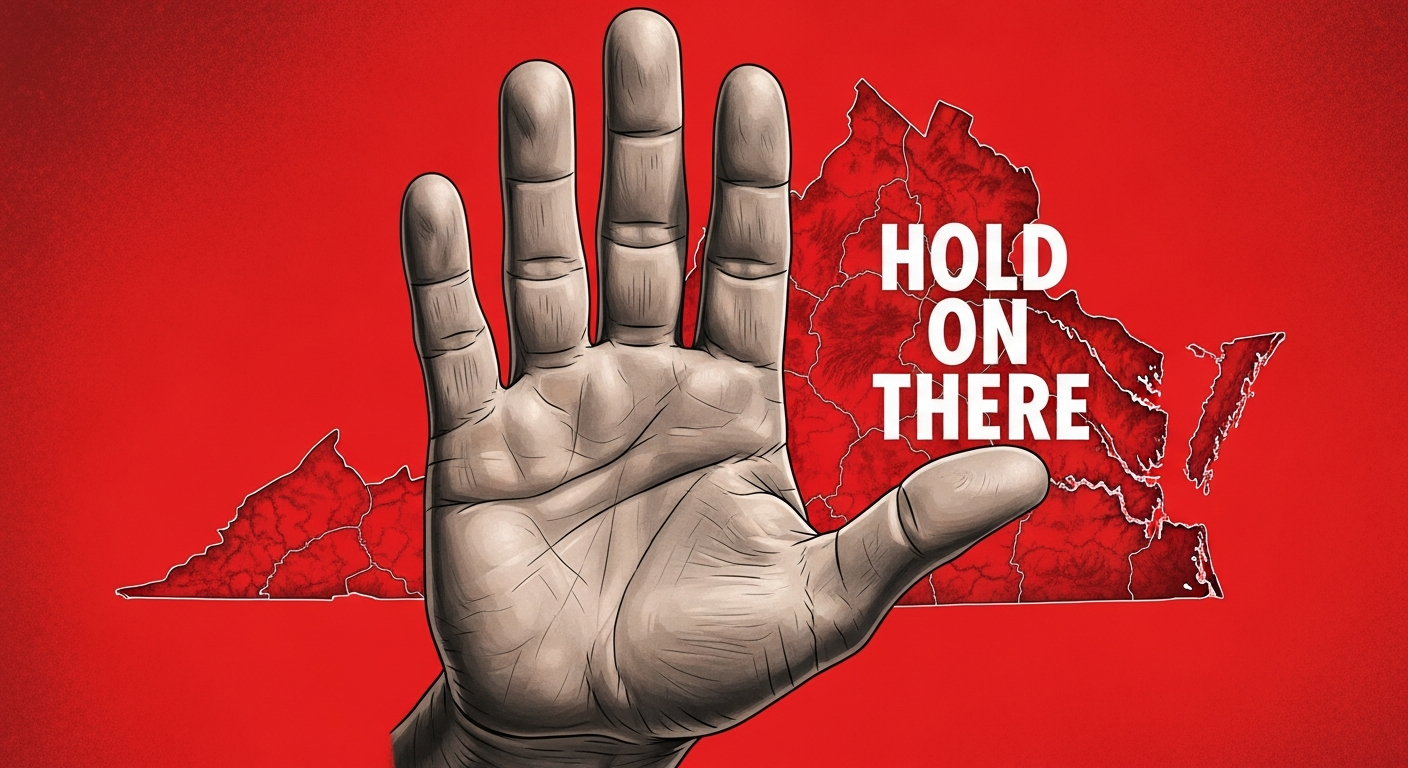
A circuit court judge in Tazewell County, Virginia, issued an order on April 22, 2026, blocking the certification of recent election results, hours after voters had narrowly approved a controversial redistricting referendum in what was described as a special election on April 21. Judge Jack Hurley Jr.'s ruling cited constitutional concerns tied to the proposal and the process used to bring it forward, effectively stopping officials from finalizing the election outcome and freezing any rollout of a new congressional map that could significantly alter representation across the state, according to WVIR.
"Virginia voters have spoken, and an activist judge should not have veto power over the People’s vote." — Jay Jones, Virginia Attorney General
The decision immediately shifted the battle from the ballot box to the courtroom, raising questions about the extent of judicial authority once voters have weighed in on a referendum. It also placed the state’s election apparatus in legal limbo, prohibiting officials from advancing certification while the case moves forward. Virginia Attorney General Jay Jones responded swiftly to the ruling, confirming his office would challenge the decision and sharply criticizing the court’s intervention. "Virginia voters have spoken, and an activist judge should not have veto power over the People’s vote," Jones stated, adding, "We look forward to defending the outcome of last night’s election in court."
Jones’ appeal signals an expedited legal escalation expected to bring the dispute quickly before the Supreme Court of Virginia. The state’s highest court was already preparing to weigh related challenges tied to the same referendum, having previously allowed the measure to appear on the ballot. This prior decision suggested that disputes over the process itself should be handled after voters had their say, rather than blocking the election in advance, according to Just the News.
At the center of the dispute is a proposed overhaul of Virginia’s congressional districts, which, if ultimately upheld, could dramatically reshape the state’s political map for years to come. The plan has the potential to transform a narrow partisan edge into near-total control for Democrats, potentially locking in dominance of Virginia’s U.S. House delegation through the end of the decade.
Supporters of the referendum argue that the measure reflects voter intent and falls within the authority granted to the legislature to adjust congressional boundaries. They maintain that the process, while contested, remains a legitimate exercise of state power aimed at aligning representation with current political realities. Opponents, however, contend the effort violated state law and bypassed required procedural safeguards, arguing that the process itself undermines the legitimacy of the outcome. These challenges have fueled multiple lawsuits seeking to block implementation of the new map entirely.
The Republican National Committee (RNC) quickly backed the ruling, calling the redistricting effort a "blatant power grab." The group also accused Democrats of misleading voters and advancing a plan they argue does not comply with state law, further intensifying the partisan divide surrounding the case, 7News reported.
The judge’s order introduces immediate uncertainty into Virginia’s election system, bringing any transition to new district lines to a standstill. Election officials, including members of the State Board of Elections, are now barred from proceeding with certification while litigation continues to unfold in multiple courts, according to WTRV.
Beyond Virginia, the case reflects a broader national trend in which both parties are increasingly pursuing mid-decade redistricting strategies outside the traditional post-census cycle. These efforts have intensified political tensions across several states, with redistricting becoming a key battleground ahead of upcoming elections.
Despite the setback, the final outcome remains unresolved. If higher courts ultimately side with the state and uphold the referendum, the revised congressional map could take effect immediately and remain in place until the next scheduled redistricting cycle, when a bipartisan commission is expected to resume oversight of the process. For now, Virginia’s congressional map has become the center of a widening legal and political fight, with the courts now positioned to determine not only the fate of this referendum but also how much power voters and judges each hold in shaping the state’s electoral future.