


Breaking
Sponsor Advertisement
Epstein's Alleged Suicide Note Unsealed Years Later
Epstein's Alleged Suicide Note Unsealed Years Later - Source: Federal Bureau of Prisons

Epstein's Alleged Suicide Note Unsealed Years Later

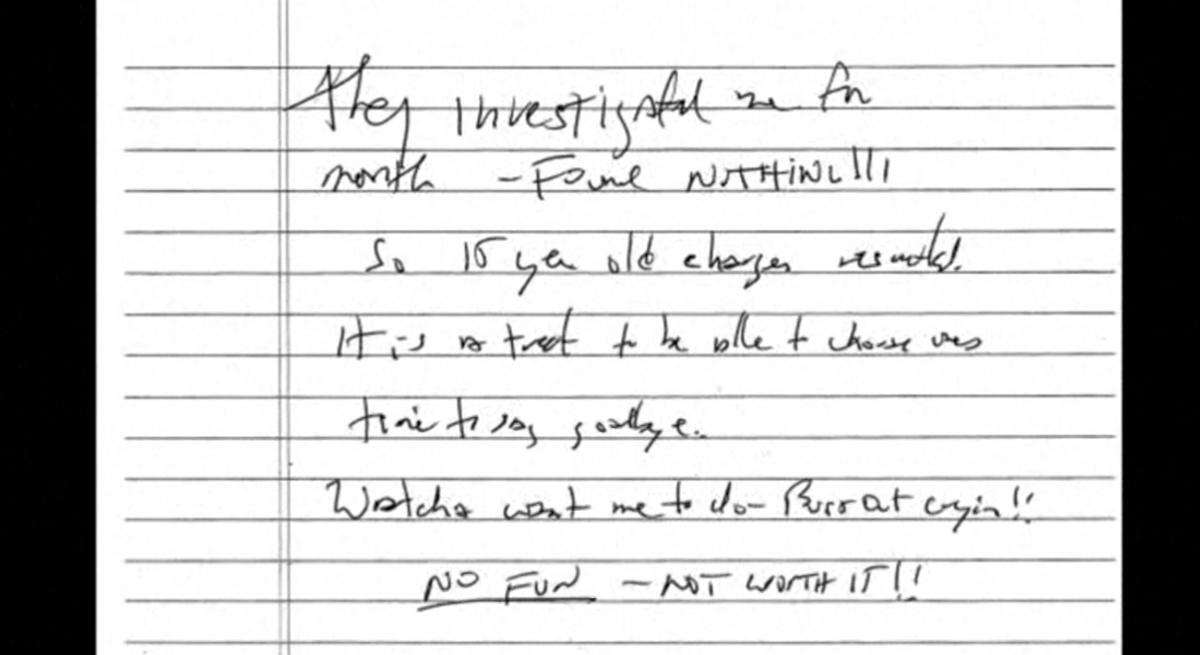
A handwritten note believed to be from Jeffrey Epstein, found after his initial suicide attempt in July 2019, has been unsealed following a legal push by The New York Times.
Jump to The Flipside Perspectives

A handwritten note, believed to have been penned by Jeffrey Epstein weeks before his death, has finally been unsealed and made public, providing new insight into the financier's mindset following an initial suicide attempt. The document, which had been hidden from public view for years, was released after a legal effort by The New York Times. Its contents have reignited public discussion surrounding the circumstances of Epstein's death in federal custody.

"They investigated me for months — FOUND NOTHING!!!" — Jeffrey Epstein, Suicide Note

The note was discovered in July 2019, shortly after Epstein was found in his cell at the Metropolitan Correctional Center (MCC) in New York City with a strip of cloth around his neck. Though he survived this initial incident, he was subsequently moved to a different housing unit. It was in this new unit that his former cellmate, Nicholas Tartaglione, discovered the note concealed within a graphic novel. Tartaglione, who was facing federal murder charges at the time, passed the note to his defense attorneys. His motivation stemmed from Epstein's accusation that Tartaglione was responsible for his injuries, making the note a piece of evidence in Tartaglione’s own legal battle to counter that claim.

The note's content, rather than expressing fear or remorse, reportedly conveyed a defiant and taunting tone. Epstein wrote that investigators had "combed through his affairs for months and walked away empty-handed." He further framed his "ability to exit life on his own terms not as desperation, but as privilege," and questioned why anyone would expect him to "weep over it." The note concludes with two underlined phrases for emphasis: “NO FUN” and “NOT WORTH IT!!”

Despite its discovery and its potential relevance, the note notably did not appear in the official inquiry into Epstein’s eventual death. It existed in a legal "gray zone," circulating among various legal teams, as detailed in a chronological account buried within the extensive Epstein files. Tartaglione’s attorneys later confirmed the note’s authenticity, though the specific process for this authentication was not made part of the public record.

The decision to unseal the document was made by Judge Kenneth Karas, who solicited opinions from all parties involved. Federal prosecutors from the Manhattan U.S. Attorney’s Office, which had previously handled the Tartaglione prosecution, supported the unsealing, asserting that "the public has a legitimate stake in understanding everything connected to how Epstein died." This sentiment has intensified in recent months, particularly following the Department of Justice's release of over three million documents related to Epstein earlier this year. This disclosure revived public debate over the circumstances of his August 2019 death, which was officially ruled a suicide, occurring within the same MCC facility where he had survived the earlier attempt just weeks prior.

Surveillance footage released alongside the documents provided a timeline for the morning of Epstein's death. At 6:30 a.m., a guard was observed moving toward a desk near Epstein’s cell. Seconds later, the guard reached the cell door, followed by more than a minute of back-and-forth movement between the desk and the cell. A second and third guard subsequently arrived, and the group began running. By 6:39 a.m., Epstein was declared dead. His autopsy detailed three distinct fractures in his neck: one on the left hyoid bone, one on the right side of the thyroid cartilage, and one on the left side.

At the time of his death, Epstein was awaiting trial on federal sex trafficking and conspiracy charges, having entered a not guilty plea. His passing immediately fueled widespread theories that powerful figures connected to his alleged crimes had orchestrated his death to prevent exposure and protect themselves.

To date, the only individual to face criminal consequences in connection with Epstein's operation is Ghislaine Maxwell, a British socialite and Epstein’s former partner. A federal court sentenced Maxwell to 20 years in prison in June 2022 for her role in recruiting and grooming underage victims. Last summer, Maxwell engaged in discussions with then-Deputy Attorney General Todd Blanche, where she reportedly shared information about Epstein's network. Records of these conversations, now in the public domain, have not yielded evidence implicating prominent individuals, including President Donald Trump. Maxwell also reportedly "flatly rejected" the existence of a so-called "client list," a document that has never been confirmed to exist but continues to be a subject of widespread speculation. The unsealed note adds another layer to the complex and contentious narrative surrounding Jeffrey Epstein's life and death.


Advertisement

The Flipside: Different Perspectives

Progressive View

The release of Jeffrey Epstein's alleged suicide note, with its defiant and taunting language, serves as a stark reminder of the systemic failures that enabled his predatory behavior and the continuing lack of comprehensive accountability. For progressives, the note's tone—framing his ability to "exit life on his own terms" as "privilege"—epitomizes the impunity often afforded to wealthy and powerful individuals. It underscores the urgent need for social justice and equity, particularly for the countless victims of Epstein's sex trafficking network who have long sought full transparency and justice.

The fact that this note was hidden for years and omitted from official inquiries into his death points to deeper systemic issues within the justice and carceral systems. Progressives argue that this secrecy erodes public trust and suggests potential cover-ups designed to protect powerful individuals who may have been connected to Epstein's crimes. The ongoing speculation and the demand for a "client list" reflect a collective desire to expose those who benefited from or enabled his abuses, ensuring that justice extends beyond Ghislaine Maxwell to all complicit parties. This incident highlights the critical importance of robust oversight, victim-centered investigations, and a commitment to dismantling the networks of power that shield perpetrators from accountability, prioritizing the collective well-being and safety of vulnerable populations.

Conservative View

The unsealing of Jeffrey Epstein's alleged suicide note underscores fundamental conservative principles regarding transparency, the rule of law, and individual accountability. The note's defiant tone, claiming investigators "found nothing," highlights a perceived failure of the justice system to hold powerful individuals fully accountable, a concern that resonates deeply with those who believe in equal application of the law. From a conservative perspective, the prolonged secrecy surrounding this document, despite its potential relevance to an official inquiry, raises questions about government transparency and the public's right to information regarding significant events, especially those involving federal institutions.

The circumstances of Epstein's death in federal custody, and the subsequent controversies, call for rigorous oversight of government agencies. Conservatives emphasize the importance of ensuring that correctional facilities maintain order and security, preventing both self-harm and external interference, to uphold the integrity of the justice process. The note's unsealing, therefore, is not merely about Epstein's final words but about the broader implications for public trust in institutions. It reinforces the need for clear, unbiased investigations and full disclosure of facts, ensuring that all citizens, regardless of their wealth or connections, are subject to the same legal standards and that justice is served without political influence.

Common Ground

Despite differing ideological approaches, conservatives and progressives share significant common ground regarding the Jeffrey Epstein case and the recent unsealing of his alleged suicide note. Both sides generally agree on the paramount importance of truth and transparency in matters of public interest, particularly when they involve the justice system and the death of an individual in federal custody. There is a shared desire to ensure that justice is served for the victims of Epstein's horrific crimes, and that all individuals, regardless of their status, are held accountable for their actions.

Both viewpoints advocate for a thorough and uncompromised investigation into the circumstances surrounding Epstein's death, seeking to dispel lingering doubts and conspiracy theories. The integrity of the correctional system and the broader justice apparatus is a shared concern, with calls for improved oversight and accountability to prevent similar incidents or perceived cover-ups in the future. Ultimately, the goal is to reinforce public trust in institutions and the rule of law, ensuring that legal processes are fair, impartial, and transparent for all citizens.

What's your view on this story? Share your thoughts and remember to consider multiple perspectives and being respectful when forming and voicing your opinion. "If you resort to personal attacks, you have already lost the debate..."

Advertisement

Contact Us About This Article

Have a question or comment about this article? We'd love to hear from you.

About Fair Side News

At Fair Side News, we believe in presenting news with perspectives from both sides of the political spectrum. Our goal is to help readers understand different viewpoints and find common ground on important issues.