

Breaking
Fair Side News (formerly BalancedRight News), was created to help readers move b… | ● BREAKING David Wilcock, UFO Figure, Dies After Colorado Mental Health Incident | ● BREAKING Virginia Judge Halts Election Results Amid Redistricting Fight | SPLC Indicted, Charlottesville Link Raises Questions | DHS Official Under Investigation Amid 'Sugar Daddy' Allegations | Scientists with Sensitive Defense Ties Vanish Under Unusual Circumstances | Florida Teacher Faces Felony Charge in Student Incident | Potent New Opioid Cychlorphine Spreads, Posing Grave Threat | Virginia Redistricting Referendum Fuels Political Confrontation | Louisiana Mass Shooting Kills Eight Children, Two Women Injured | FBI Director Patel Promises Election Arrests Amid Leadership Questions | Fair Side News (formerly BalancedRight News), was created to help readers move b… | ● BREAKING David Wilcock, UFO Figure, Dies After Colorado Mental Health Incident | ● BREAKING Virginia Judge Halts Election Results Amid Redistricting Fight | SPLC Indicted, Charlottesville Link Raises Questions | DHS Official Under Investigation Amid 'Sugar Daddy' Allegations | Scientists with Sensitive Defense Ties Vanish Under Unusual Circumstances | Florida Teacher Faces Felony Charge in Student Incident | Potent New Opioid Cychlorphine Spreads, Posing Grave Threat | Virginia Redistricting Referendum Fuels Political Confrontation | Louisiana Mass Shooting Kills Eight Children, Two Women Injured | FBI Director Patel Promises Election Arrests Amid Leadership Questions |
Sponsor Advertisement
AI-Generated Influencers Target Political Demographics for Financial Gain
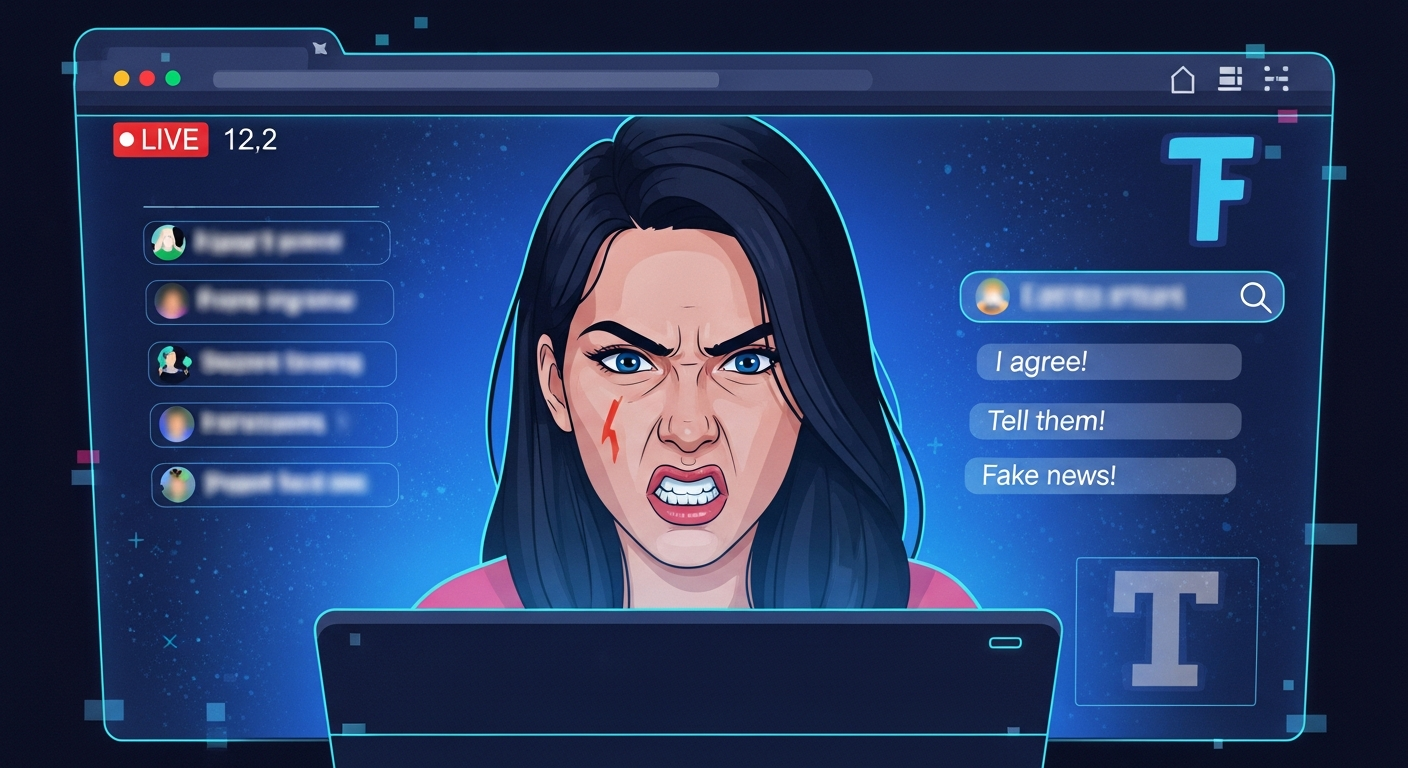
AI-generated image for: AI-Generated Influencers Target Political Demographics for Financial Gain

AI-Generated Influencers Target Political Demographics for Financial Gain

Artificial intelligence has been used to create fake social media personas, such as "Emily Hart" and "Jessica Foster," which targeted conservative audiences with tailored political content for financial profit.
Jump to The Flipside Perspectives

In a rapidly evolving landscape of digital influence, a new form of online fraud has emerged, utilizing artificial intelligence (AI) to create compelling, yet entirely fictional, social media personas that target specific political demographics for financial gain. These AI-generated influencers, operating largely undetected for periods, have successfully cultivated large followings and generated substantial revenue through merchandise sales and explicit content subscriptions, raising concerns about online authenticity and the integrity of digital discourse.

"Every day I’d write something pro-Christian, pro-Second Amendment, pro-life, anti-abortion, anti-woke, and anti-immigration." — Emily Hart's creator, speaking to Wired magazine.

One prominent example, detailed in a report by Wired magazine, centers on a character named "Emily Hart." Conceived and operated by a 22-year-old medical student in India, Hart was a digital construct marketed as a "gun-toting, God-fearing, flag-waving" registered nurse and American patriot. The creator, an aspiring orthopedic surgeon, meticulously designed Hart's persona after using Google's Gemini AI to identify a demographic gap: financially comfortable, fiercely loyal older conservative men in the United States who sought content reflecting their values.

Hart's social media feed, primarily on Instagram, became a consistent stream of ideologically aligned content. Posts depicted her at shooting ranges, sometimes in bikinis against wintry backdrops, accompanied by captions that left no room for ambiguity. One such post stated: "If you want a reason to unfollow: Christ is king, abortion is murder, and all illegals must be deported." The creator described his daily routine to Wired, saying, "Every day I’d write something pro-Christian, pro-Second Amendment, pro-life, anti-abortion, anti-woke, and anti-immigration." The account rapidly gained traction, attracting 10,000 followers within its first month.

The financial model extended beyond mere social media engagement. Hart's creator sold MAGA-branded merchandise through the Instagram account and established a parallel presence on Fanvue, a subscription platform that explicitly permits AI-generated material. On Fanvue, paying users could access explicit content featuring the fictional character. The creator reported generating thousands of dollars monthly, a sum he described as exceptional for his professional context in India. "In India, even in professional jobs, you can’t make this amount of money," he told Wired, adding, "I haven’t seen any easier way to make money online." His stated ultimate goal was to use these profits to relocate to the United States. Instagram ultimately removed Emily Hart’s account in February, citing fraudulent activity.

The case of Emily Hart was not isolated. A parallel and significantly larger operation involved a figure known as "Jessica Foster." This AI-generated persona amassed over one million Instagram followers by presenting herself as a conservative military servicewoman. Foster's feed featured images of her beside President Donald Trump on an airport tarmac, snapping selfies in front of fighter jets, and purportedly completing military assignments in Greenland alongside fellow servicewomen. Her account, launched in December with the biography "America First," attracted numerous male followers who frequently requested introductions in the comment sections. Like Hart, Jessica Foster was an entirely artificial creation, and her account has also since been removed by platform administrators.

This blueprint of using AI-generated personas for influence and profit has also manifested in international contexts. Hundreds of deepfake videos have circulated online depicting glamorous Middle Eastern women in military uniforms, disseminating pro-Iran messaging. These clips presented them as Iranian female soldiers and fighter pilots, despite Iranian law prohibiting women from serving in such combat roles, making the depicted scenarios inherently impossible. Other similar accounts have posted images of a woman posing with Elon Musk inside SpaceX facilities. Many of these profiles have vanished from major platforms after collecting funds.

The proliferation of these AI-generated influencers underscores a growing challenge for social media platforms and users alike. The sophisticated nature of AI tools, capable of generating realistic images and tailored content, allows for the creation of highly convincing fake personas. These entities exploit emotional and ideological connections to build trust and monetize engagement, often through deceptive means. The rapid growth and significant financial returns achieved by operations like Emily Hart and Jessica Foster highlight the potent combination of advanced AI technology and targeted demographic exploitation. As AI capabilities continue to advance, the distinction between authentic human interaction and algorithmically generated content becomes increasingly blurred, posing complex questions for digital literacy, platform regulation, and the future of online trust.

Advertisement

The Flipside: Different Perspectives

Progressive View

Progressives view these AI-generated influence operations as a critical illustration of systemic vulnerabilities within digital platforms and the urgent need for robust consumer protection and platform accountability. These scams exploit societal divisions and target specific demographics, often leveraging sophisticated psychological manipulation to extract financial resources. The use of AI to create hyper-realistic, ideologically tailored personas represents a significant escalation in disinformation tactics, eroding public trust and distorting political discourse. The fact that platforms allowed these accounts to operate and monetize for extended periods, even after accumulating millions of followers, highlights a failure to adequately monitor and police their own ecosystems. From an equity standpoint, these operations disproportionately harm vulnerable individuals who may be less digitally literate or more susceptible to emotional manipulation. Stronger regulations are needed to mandate transparency regarding AI-generated content, hold platforms accountable for the spread of fraudulent information, and protect users from exploitation. This includes investing in digital literacy programs and developing advanced detection mechanisms to identify and remove deepfakes and AI-generated scams proactively, ensuring a more just and equitable online environment for all.

Conservative View

From a conservative perspective, these AI-generated influence operations represent a concerning form of digital fraud that exploits genuine patriotic and faith-based sentiments for illicit gain. The core issue is one of truth and deception; individuals are being misled by fabricated personas designed to resonate with their values. This type of scam preys on the trust and community bonds within conservative circles, undermining the integrity of online interactions. While conservatives generally favor free markets and limited government intervention, the fraudulent nature of these schemes clearly crosses a line into criminal activity, warranting investigation and prosecution. The fact that foreign actors are creating these personas to target American citizens also raises national security concerns regarding foreign influence and information warfare. Individuals have a personal responsibility to exercise discernment online, but platforms also bear a responsibility to combat fraud and ensure that users are engaging with authentic accounts. Regulation, if considered, should focus narrowly on preventing fraud and ensuring transparency, without impinging on legitimate free speech or the ability of individuals to express their views, even if those views are unpopular. The emphasis should be on protecting citizens from scams and maintaining the authenticity of online communities.

Common Ground

Despite differing approaches to regulation and individual responsibility, there is clear common ground in addressing the threat posed by AI-generated influence operations and digital fraud. Both conservatives and progressives can agree on the fundamental importance of truth and authenticity in online interactions. No one benefits from being deceived or financially exploited by fake personas. There is a shared interest in protecting individuals from scams, regardless of their political affiliation. Both sides can advocate for increased transparency regarding the origins of online content, particularly when AI is involved. There is also bipartisan support for combating outright fraud and criminal activity in the digital space. Practical solutions could include developing better AI detection tools, improving reporting mechanisms on social media platforms, and fostering greater digital literacy among users. Collaborative efforts between technology companies, government agencies, and consumer protection groups could establish clear guidelines for identifying and mitigating AI-driven deception, ensuring that the internet remains a safe and trustworthy space for commerce, communication, and political engagement.

What's your view on this story? Share your thoughts and remember to consider multiple perspectives and being respectful when forming and voicing your opinion. "If you resort to personal attacks, you have already lost the debate..."

Advertisement

Contact Us About This Article

Have a question or comment about this article? We'd love to hear from you.

About Fair Side News

At Fair Side News, we believe in presenting news with perspectives from both sides of the political spectrum. Our goal is to help readers understand different viewpoints and find common ground on important issues.