


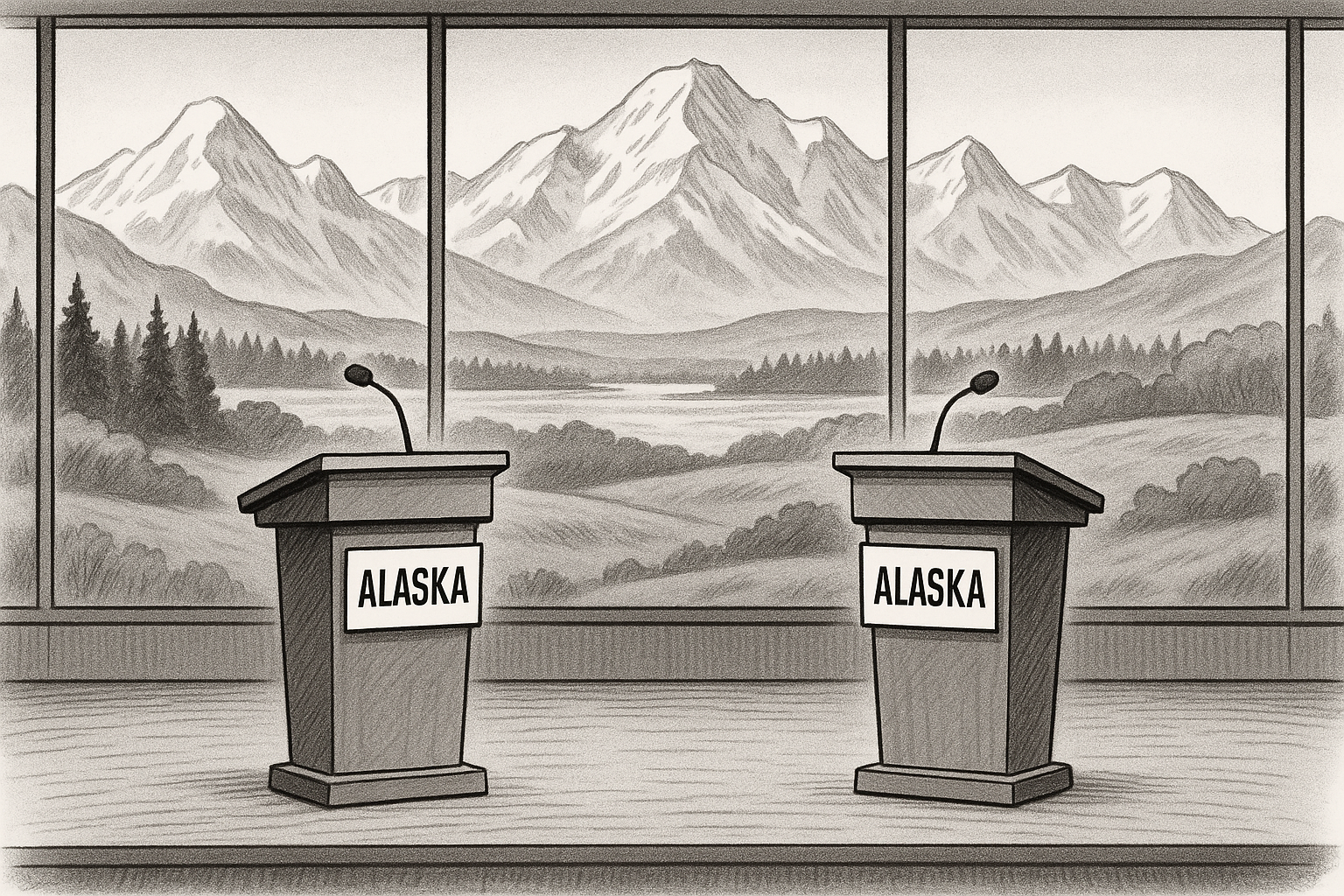
Anchorage, Alaska – A unique political dispute is unfolding in Alaska’s closely watched U.S. Senate race, where the National Republican Senatorial Committee (NRSC) has filed a formal complaint aimed at removing a candidate who shares the exact name of the incumbent Republican Senator Dan Sullivan. The NRSC alleges that the presence of Daniel J. Sullivan on the ballot could confuse voters and potentially sway the outcome of a critical election. The complaint was submitted to state election officials ahead of the August primary, triggering an intensified debate over election integrity and ballot access.
"It’s my name, my grandfather’s name: Dan Sullivan. My dad’s name: Dan Sullivan." — Daniel J. Sullivan, U.S. Senate Candidate
Senator Dan Sullivan’s campaign has strongly escalated its response to the situation, accusing opposing political forces of attempting to interfere with the election process. In a statement provided to CNN, the senator asserted that opponents are "trying to cheat in this election," emphasizing that a namesake candidate risks misleading voters, particularly given Alaska’s distinctive open primary and ranked-choice voting system.
At the heart of the controversy is Daniel J. Sullivan, a former teacher who is seeking a U.S. Senate seat. Republicans highlight that the challenger has no prior record of Republican party registration and, according to their assessment, a history that includes support for Democratic candidates. The NRSC’s complaint specifically targets the combination of the challenger's name, his campaign branding, and his political background as factors that, they argue, raise significant concerns about whether his candidacy could either unintentionally or deliberately create confusion for voters attempting to identify the incumbent senator on the ballot.
Further details in the complaint, as reported by Fox News, suggest that materials associated with Daniel J. Sullivan’s campaign show ties to Democratic-aligned consulting networks. The NRSC cited metadata from campaign assets that allegedly indicates involvement from a progressive strategist. Additionally, the complaint points to branding elements utilized by the challenger that Republicans claim closely resemble Senator Sullivan’s campaign colors, design language, and overall visual presentation. GOP officials contend that these similarities could significantly blur the distinctions between the two candidates, especially within the context of a crowded ballot environment.
Both Democrats and the challenger, Daniel J. Sullivan, have vehemently rejected these allegations. The campaign for Representative Mary Peltola, a prominent Democrat in Alaska, has denied any involvement in recruiting or coordinating with the challenger, as reported by NBC News. Daniel J. Sullivan himself has pushed back against the claims, asserting the legitimacy of his candidacy and its foundation in his personal and family identity. "It’s my name, my grandfather’s name: Dan Sullivan. My dad’s name: Dan Sullivan," he told CNN, dismissing accusations that his campaign is engineered to mislead voters.
The dispute is unfolding against the backdrop of Alaska’s unique electoral framework, which combines an open primary system with ranked-choice voting. This structure permits all candidates, regardless of their party affiliation, to appear on a single primary ballot. The top four vote-getters from this primary then advance to the general election. In the general election, voters rank candidates in order of preference, and lower-performing candidates are eliminated in successive rounds until a single winner emerges. Republicans argue that within such a complex system, the presence of similar or identical names could substantially elevate the risk of voter confusion, particularly when many voters cast mail-in ballots where quick recognition of candidates often plays a crucial role.
As of now, election officials in Alaska have not issued a ruling on the NRSC's formal complaint. Both Senator Dan Sullivan and Daniel J. Sullivan are currently expected to remain on the ballot while the review process continues. The ultimate decision by state officials could determine whether Alaska voters will encounter two individuals named "Dan Sullivan" on the same November ballot, a scenario that Republicans warn could significantly reshape the dynamics and outcome of the race.
The controversy has also served to intensify political tensions within Alaska, a state already recognized as a key battleground in national Senate races. Recent election cycles have seen Alaska’s contests become increasingly competitive, prompting national political parties to closely monitor whether the complaint will lead to any alterations in ballot access rules or the enforcement of existing election regulations in advance of the upcoming voting period. Supporters of incumbent Senator Sullivan argue that the issue transcends partisan politics, focusing instead on fundamental principles of election integrity and voter clarity, especially in a system where ranked-choice voting already introduces an additional layer of complexity for the electorate. Conversely, critics of the complaint contend that it is politically motivated, designed primarily to diminish the visibility and viability of a challenger.
The NRSC maintains that Alaska election law explicitly prohibits candidate names from appearing on ballots in a manner that is misleading or compromises the fairness of the election. The committee is urging state officials to intervene decisively before ballots are finalized for the August primary. As this legal and political dispute continues, Senator Dan Sullivan finds himself not only campaigning to defend his Senate seat but also navigating an unusual challenge deeply intertwined with identity, ballot design, and voter perception in one of the most closely watched races of the 2026 election cycle.

