


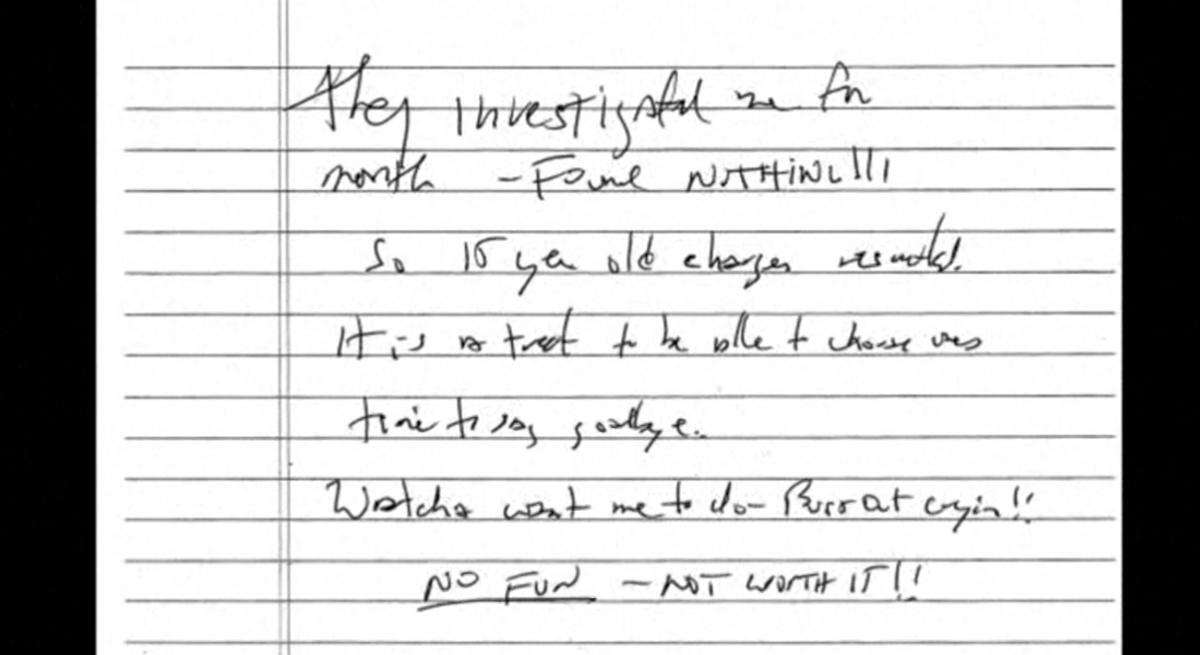
A handwritten note, believed to have been penned by Jeffrey Epstein weeks before his death, has finally been unsealed and made public, providing new insight into the financier's mindset following an initial suicide attempt. The document, which had been hidden from public view for years, was released after a legal effort by The New York Times. Its contents have reignited public discussion surrounding the circumstances of Epstein's death in federal custody.
"They investigated me for months — FOUND NOTHING!!!" — Jeffrey Epstein, Suicide Note
The note was discovered in July 2019, shortly after Epstein was found in his cell at the Metropolitan Correctional Center (MCC) in New York City with a strip of cloth around his neck. Though he survived this initial incident, he was subsequently moved to a different housing unit. It was in this new unit that his former cellmate, Nicholas Tartaglione, discovered the note concealed within a graphic novel. Tartaglione, who was facing federal murder charges at the time, passed the note to his defense attorneys. His motivation stemmed from Epstein's accusation that Tartaglione was responsible for his injuries, making the note a piece of evidence in Tartaglione’s own legal battle to counter that claim.
The note's content, rather than expressing fear or remorse, reportedly conveyed a defiant and taunting tone. Epstein wrote that investigators had "combed through his affairs for months and walked away empty-handed." He further framed his "ability to exit life on his own terms not as desperation, but as privilege," and questioned why anyone would expect him to "weep over it." The note concludes with two underlined phrases for emphasis: “NO FUN” and “NOT WORTH IT!!”
Despite its discovery and its potential relevance, the note notably did not appear in the official inquiry into Epstein’s eventual death. It existed in a legal "gray zone," circulating among various legal teams, as detailed in a chronological account buried within the extensive Epstein files. Tartaglione’s attorneys later confirmed the note’s authenticity, though the specific process for this authentication was not made part of the public record.
The decision to unseal the document was made by Judge Kenneth Karas, who solicited opinions from all parties involved. Federal prosecutors from the Manhattan U.S. Attorney’s Office, which had previously handled the Tartaglione prosecution, supported the unsealing, asserting that "the public has a legitimate stake in understanding everything connected to how Epstein died." This sentiment has intensified in recent months, particularly following the Department of Justice's release of over three million documents related to Epstein earlier this year. This disclosure revived public debate over the circumstances of his August 2019 death, which was officially ruled a suicide, occurring within the same MCC facility where he had survived the earlier attempt just weeks prior.
Surveillance footage released alongside the documents provided a timeline for the morning of Epstein's death. At 6:30 a.m., a guard was observed moving toward a desk near Epstein’s cell. Seconds later, the guard reached the cell door, followed by more than a minute of back-and-forth movement between the desk and the cell. A second and third guard subsequently arrived, and the group began running. By 6:39 a.m., Epstein was declared dead. His autopsy detailed three distinct fractures in his neck: one on the left hyoid bone, one on the right side of the thyroid cartilage, and one on the left side.
At the time of his death, Epstein was awaiting trial on federal sex trafficking and conspiracy charges, having entered a not guilty plea. His passing immediately fueled widespread theories that powerful figures connected to his alleged crimes had orchestrated his death to prevent exposure and protect themselves.
To date, the only individual to face criminal consequences in connection with Epstein's operation is Ghislaine Maxwell, a British socialite and Epstein’s former partner. A federal court sentenced Maxwell to 20 years in prison in June 2022 for her role in recruiting and grooming underage victims. Last summer, Maxwell engaged in discussions with then-Deputy Attorney General Todd Blanche, where she reportedly shared information about Epstein's network. Records of these conversations, now in the public domain, have not yielded evidence implicating prominent individuals, including President Donald Trump. Maxwell also reportedly "flatly rejected" the existence of a so-called "client list," a document that has never been confirmed to exist but continues to be a subject of widespread speculation. The unsealed note adds another layer to the complex and contentious narrative surrounding Jeffrey Epstein's life and death.

