


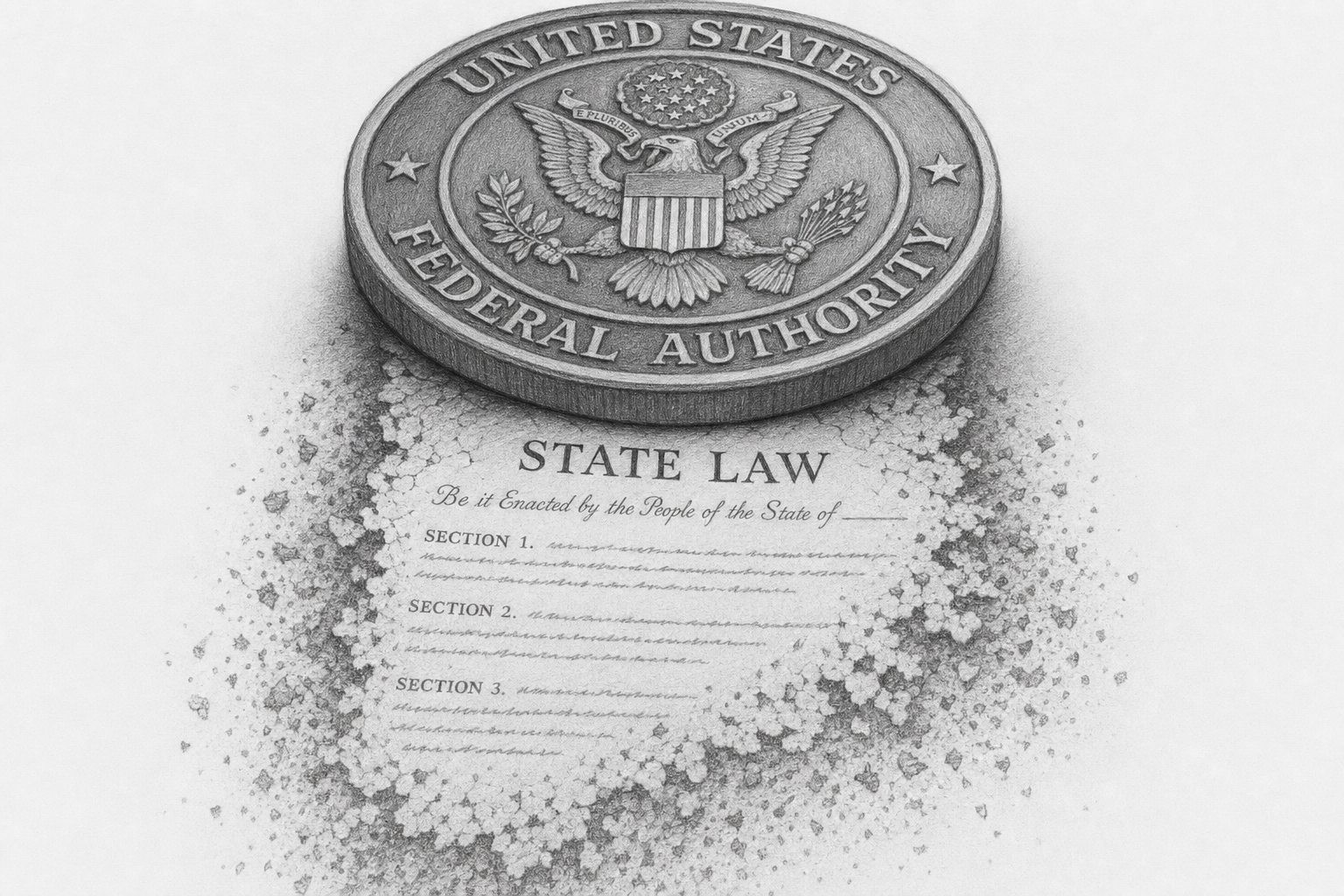
A federal judge in New York delivered a significant legal victory to the Department of Justice this week, issuing an injunction against key provisions of a New York state law that would have mandated federal immigration and law enforcement agents to display identification and operate without face coverings during public encounters. The ruling, handed down Monday by U.S. District Judge Mae A. D’Agostino of the Northern District of New York, spans 51 pages and firmly sided with the federal government's arguments, citing constitutional grounds.
"New York cannot impose its own uniform requirements on federal agents simply because it disagrees with how the Federal Government is exercising its authority." — U.S. District Judge Mae A. D’Agostino, Northern District of New York
Judge D’Agostino, an appointee of President Obama, highlighted the U.S. Constitution’s Supremacy Clause in her decision, asserting that states cannot dictate the operational policies of federal agencies. Her opinion stated, "New York cannot impose its own uniform requirements on federal agents simply because it disagrees with how the Federal Government is exercising its authority." This decision marks a notable rebuke to New York’s Democrat-controlled legislature and Governor Kathy Hochul, who signed the controversial measures into law.
The challenged state provisions, known as the Face Covering and Identification Acts, were part of New York’s 2026 state budget, signed by Governor Hochul on May 27. These specific mandates were set to take effect on June 26, prompting a swift legal response from the Department of Justice. The laws aimed to prohibit agents from federal agencies such as Immigration and Customs Enforcement (ICE), the Federal Bureau of Investigation (FBI), the Drug Enforcement Administration (DEA), and Customs and Border Protection (CBP) from concealing their identities with face coverings. Additionally, they would have required agents to visibly display identifying information, including names, badges, or shield numbers, during public interactions.
The Department of Justice filed a lawsuit against New York in late June, arguing that the state law not only violated the U.S. Constitution but also jeopardized the safety of federal agents. Federal attorneys contended that stripping agents of anonymity could expose them to doxxing, harassment, and physical violence, particularly from activists who have increasingly targeted immigration officers. Judge D’Agostino found the federal government likely to prevail on the merits of both its constitutional and safety claims regarding the mask and identification rules, leading to the injunction.
While acknowledging New York lawmakers' stated goal of promoting transparency in policing, Judge D’Agostino was unequivocal that good intentions cannot override constitutional authority. She reiterated this point in her opinion, noting, "The issue now before the Court is about constitutionality—not transparency or preferable policy decisions." She further elaborated that "settled law establishes that federal, not state, authorities make the policies that animate the enforcement of federal immigration laws," anchoring her decision in decades of legal precedent governing the intricate relationship between state and federal power.
Supporters of the New York law, primarily Democratic legislators and immigrant advocacy groups, framed the provisions as a necessary check on what they described as an increasingly aggressive federal deportation apparatus operating under President Trump. They argued that transparency would foster accountability and build trust between law enforcement and communities. However, opponents, including federal agencies and the Justice Department, warned of the severe risks posed to agent safety and the operational effectiveness of federal law enforcement.
Not every aspect of the ruling favored Washington. Judge D’Agostino declined to block New York’s separate Local Cops Local Crimes Act, also known as the Termination Act. This law, slated to take effect on August 25, bars local police departments and jails from entering into 287(g) partnerships with ICE for civil immigration enforcement. On this particular point, Judge D’Agostino ruled in New York’s favor, determining that states retain broad authority over how they allocate their own law enforcement personnel and resources. She characterized this restriction as falling within New York’s legitimate police powers.
Despite this partial setback for the federal government, Monday’s outcome aligns with a broader pattern of federal courts generally siding against Democrat-led states in similar immigration enforcement disputes. Comparable mask bans in California have been blocked by federal courts, and the Ninth Circuit Court of Appeals has previously intervened to rein in related identification mandates in other jurisdictions.
New York's leadership swiftly reacted to the ruling. Governor Hochul and Attorney General Letitia James issued a joint statement, asserting their belief that "masked agents do not make New York safer" and confirming that the state is evaluating its legal next steps, including a potential appeal. Conversely, the Department of Justice hailed the ruling as a vindication. A DOJ spokesperson emphasized the department's stance that it "will not tolerate any violence directed toward law enforcement officials working tirelessly to keep Americans safe."
For the immediate future, the split decision leaves New York’s policy of restricting local cooperation with ICE in place, while removing the mask and identification requirements that had been a significant point of contention for federal officials. This balance largely preserves ICE’s operational latitude as President Trump’s administration continues to pursue an aggressive deportation and border security agenda. The legal battle is far from over, with the case moving towards a full trial and New York retaining the option to appeal the injunction. Nevertheless, Judge D’Agostino’s forceful language regarding the Supremacy Clause serves as a clear warning to other progressive states contemplating similar legislation aimed at regulating federal law enforcement operations.

