


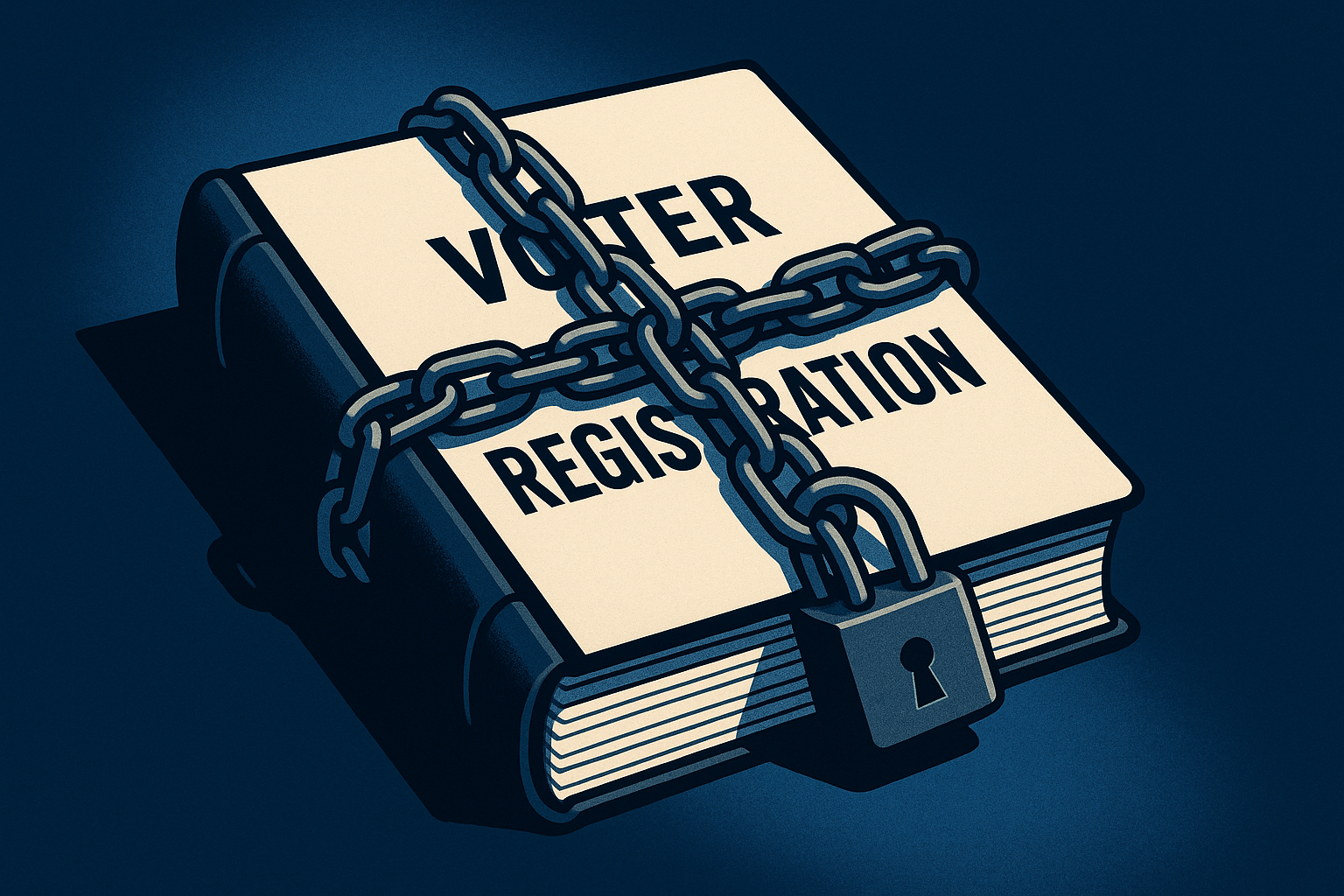
A legal dispute between the State of California and the federal government concerning access to the state’s voter registration records has intensified, reaching the Ninth Circuit Court of Appeals. The confrontation centers on federal demands for California's comprehensive voter data, which federal officials assert is necessary to ensure compliance with national election integrity laws.
"If California genuinely wants voters to trust its elections, it should open its records, not fight to keep them closed. What are they afraid of?" — Los Angeles U.S. Attorney Bill Essayli
Los Angeles U.S. Attorney Bill Essayli publicly voiced his concerns on Sunday via a post on X, calling for a formal federal examination of California’s voter rolls and administration practices. Essayli's comments coincided with a notable reversal in a recent Los Angeles mayoral primary. In that election, Democratic candidate Nithya Raman initially appeared to lose on election night, placing third in early returns. However, subsequent days of ballot counting shifted the outcome, ultimately securing Raman a second-place finish and a spot in the runoff election. This outcome has fueled skepticism among critics who argue that California's post-election ballot counting process lacks adequate oversight.
Essayli highlighted a recurring pattern where late-arriving ballots in California have frequently altered final election results, often benefiting Democratic candidates. This trend, according to Essayli, is a key factor in his office's interest in scrutinizing the state's election procedures more closely. His concerns extend beyond the counting process to encompass various aspects of California's voter registration and ballot handling protocols.
One specific area of federal scrutiny involves California’s identification requirements for first-time registrants. The state permits individuals who cannot provide a driver’s license number or Social Security number to verify their identity using alternative documents. These accepted forms of identification include gym membership cards, workplace employee badges, prescription medication labels, credit cards, debit cards, and insurance documents. Essayli described this policy as "surprising" to most Americans and suggested it warrants serious federal examination rather than automatic approval.
Furthermore, Essayli raised questions about the accuracy and maintenance of California’s voter rolls. He specifically inquired whether the state is effectively removing ineligible voters from the system, such as deceased residents, individuals who have moved out of the state, and felony convicts who are legally barred from voting. The integrity of the voter database is a central point of the federal government's inquiry.
California’s ballot harvesting rules have also drawn federal criticism. The state allows third parties to collect completed ballots from voters and submit them on their behalf. Essayli contends that this practice creates a significant "accountability gap," making it difficult to trace the chain of custody for individual ballots from receipt to submission.
The federal government's push to obtain California’s voter registration data is not a recent development, having been ongoing for over a year. The effort aims to determine if California is fulfilling its obligations under federal statutes designed to uphold election integrity and prevent fraud, specifically the National Voter Registration Act (NVRA) and the Help America Vote Act (HAVA).
In August 2025, the Justice Department’s Civil Rights Division, operating under Harmeet Dhillon, sent a letter to California Secretary of State Shirley Weber. This letter explicitly demanded the complete voter registration database, stating that federal officials needed the data to assess California’s compliance with federal law. The Justice Department asserted that California's resistance to providing a full copy of the records was legally indefensible, clarifying that their access could not be limited to mere inspection. Federal officials also requested all voter registration applications filed between December 2023 and July 2025, arguing that federal election law takes precedence over any privacy concerns California might cite for withholding the data.
California's standard registration requirements mandate applicants to provide a state driver’s license number, a state-issued ID number, or the final four digits of a Social Security number. For those unable to meet these criteria, election authorities issue a unique identifier. First-time federal election voters are subject to a distinct verification framework as established by the Help America Vote Act.
U.S. Attorney Essayli concluded his public statements by emphasizing the importance of transparency. "If California genuinely wants voters to trust its elections, it should open its records, not fight to keep them closed," he wrote, adding, "What are they afraid of?" The escalating legal and public confrontation underscores ongoing tensions between federal oversight and state control over election administration practices.

