

Breaking
Sponsor Advertisement
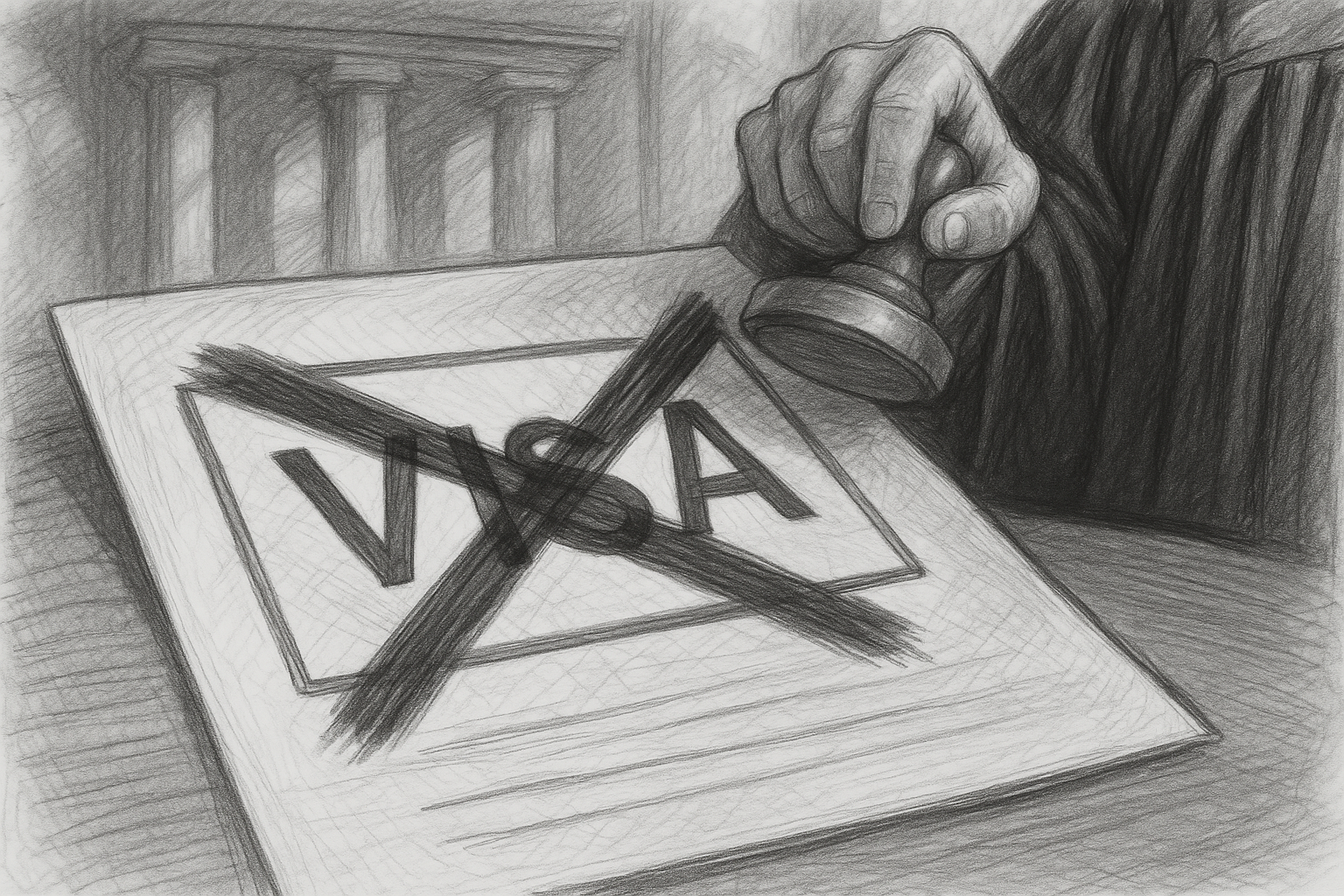
Judge Blocks Trump's $100K H-1B Visa Fee
Image for: Judge Blocks Trump's $100K H-1B Visa Fee

Judge Blocks Trump's $100K H-1B Visa Fee

A federal judge in Boston has struck down the Trump administration's $100,000 fee on new H-1B visa applications, ruling it an unlawful tax that Congress never authorized. The White House plans to appeal this decision, which vacates a September presidential proclamation.
Jump to The Flipside Perspectives

A federal judge in Boston on Monday struck down a key immigration policy enacted by the Trump administration, ruling that a $100,000 fee imposed on new H-1B visa applications amounted to an unlawful tax. U.S. District Judge Leo Sorokin, an appointee of former President Barack Obama, concluded that the payment structure exceeded executive authority, finding that it functioned as a tax rather than a regulatory fee. This decision vacates a September presidential proclamation that introduced the fee as part of a broader effort to reshape the H-1B program.

"These federal judges are really giving us a hard time. It’s really crazy what’s going on with the court system… They’re hurting our country very badly." — President Trump

Judge Sorokin's 42-page ruling stated, "The substance and application of the $100,000 payment reveal that it is a tax, regardless of what the payment is called." He further declared, "The Policy implementing the Proclamation is declared unlawful and is vacated in its entirety." The legal challenge was initiated by a coalition of Democratic state attorneys general, who contended that the administration had violated the Administrative Procedure Act and overstepped its authority regarding immigration fee structures.

The H-1B visa program is a significant component of U.S. immigration policy, allocating 65,000 visas annually, with an additional 20,000 designated for individuals holding advanced degrees. This program is heavily utilized in sectors such as technology, engineering, and healthcare, and has long been a focal point in discussions concerning high-skilled immigration and labor market competition. Critics of the program frequently argue that it has been exploited to reduce wages and increase dependence on foreign labor, thereby displacing American workers in specific industries.

Prior to the Trump administration's policy change, employers typically incurred filing-related costs ranging from $2,000 to $5,000 for H-1B applications. The administration defended the substantial increase in fees as an essential part of its strategy to curb what it described as long-standing abuses within the program. Officials asserted that major technology companies had excessively relied on H-1B visas to access lower-cost labor, which they argued contributed to wage depression and the displacement of American workers.

Court filings presented in the case indicated an immediate and sharp decline in participation following the implementation of the $100,000 fee. U.S. Citizenship and Immigration Services reportedly received only 85 payments of the elevated fee as of mid-February, suggesting a significant reduction in the program's usage after the policy took effect. This data was central to arguments about the fee's prohibitive nature.

The White House has confirmed its intention to appeal the ruling. White House spokesperson Taylor Rogers stated, "President Trump has clear legal authority to restrict entry of any class of aliens he determines is not in America’s best interests," adding that the administration is confident the decision will be overturned on appeal. President Trump also commented on the judiciary in response to questions on Monday, saying, “These federal judges are really giving us a hard time. It’s really crazy what’s going on with the court system… They’re hurting our country very badly.”

Supporters of the administration's policy have maintained that higher fees are necessary to prevent the misuse of the H-1B system and to ensure that employers prioritize American workers during the hiring process. Conversely, opponents of the policy warned that it carried the risk of disrupting critical industries, including technology, healthcare, and research institutions, which heavily depend on skilled foreign labor.

This ruling adds to a growing body of litigation that scrutinizes the boundaries of executive authority over immigration policy, particularly in instances where financial penalties or fees are employed as tools to influence behavior. Legal experts observe that courts have increasingly examined presidential attempts to implement fee structures as policy instruments without explicit congressional authorization. The upcoming appeal's outcome is anticipated to further delineate the extent of executive power in regulating legal immigration channels, such as employment-based visa programs, and the ability to set such fees. The case now leaves the policy in a state of legal uncertainty as the appeals process commences, establishing a broader legal confrontation over executive authority in immigration regulation and fee-setting capabilities. The resolution could have substantial implications for future policy actions impacting legal immigration programs.

Advertisement

The Flipside: Different Perspectives

Progressive View

The federal judge's ruling against President Trump's $100,000 H-1B visa fee is a critical affirmation of legal checks and balances, preventing an executive overreach that could have severely hampered key American industries. Progressives emphasize that the H-1B program, when properly managed, is vital for attracting global talent in sectors like technology, healthcare, and research, where specific skills may be in short supply domestically. An exorbitant fee, ruled as an unauthorized tax, would not only disproportionately affect smaller businesses and startups but also deter highly skilled individuals from contributing to the U.S. economy, ultimately undermining American competitiveness and innovation.

The arbitrary imposition of such a high fee, without congressional approval, demonstrates a systemic disregard for established legislative processes and regulatory norms. While concerns about wage depression and worker displacement are valid, the solution lies in comprehensive immigration reform that addresses these issues through legislation, not through punitive executive actions that bypass democratic accountability. Policies should foster an inclusive economy that benefits all workers, both native-born and immigrant, by ensuring fair labor practices and robust worker protections, rather than erecting barriers that could lead to economic stagnation and a loss of global leadership in critical fields.

Conservative View

The federal court's decision to block President Trump's $100,000 H-1B visa fee represents a setback for efforts to protect American jobs and wages through executive action. Conservatives largely support the President's commitment to prioritizing American workers and believe that policies like increased H-1B fees are necessary to curb potential abuses of the program. The H-1B system, while intended to bring in highly skilled talent, has often been criticized for allowing companies to replace American workers with cheaper foreign labor, thereby depressing wages. The administration's fee was a direct attempt to level the playing field, ensuring that companies truly need specialized foreign talent rather than simply seeking cost savings.

From a limited government perspective, while the judge ruled the fee an "unlawful tax," the executive branch must retain sufficient authority to manage immigration in the national interest, especially when Congress is gridlocked. The President's constitutional role includes protecting the nation's economic security. If H-1B visas are being misused, a higher fee can act as a market-based disincentive, promoting personal responsibility among employers to invest in American talent. The White House's intention to appeal underscores the importance of this policy in the broader strategy to reform immigration and strengthen the domestic labor market. This ruling highlights the ongoing tension between executive authority and judicial review, particularly concerning policies designed to secure economic borders.

Common Ground

Despite differing views on the H-1B visa fee, there is common ground regarding the need for a functional and fair immigration system that serves the national interest. Both conservatives and progressives acknowledge that the H-1B program, like other immigration channels, requires careful management to prevent abuse and ensure its effectiveness. There is a shared interest in maintaining robust economic growth and innovation, which benefits from both a strong domestic workforce and the ability to attract top global talent when necessary.

Discussions around the H-1B program often highlight a bipartisan desire to prevent fraud and ensure that visa programs are not exploited to undercut American wages or displace qualified workers. Furthermore, both sides can agree on the importance of adhering to legal and constitutional processes in policymaking. The judicial review of executive actions, while sometimes contentious, serves as a crucial mechanism for upholding the rule of law. A legislative solution that clarifies fee structures and program regulations, arrived at through bipartisan consensus, could provide greater stability and predictability for businesses and workers alike, avoiding the legal challenges that arise from executive unilateralism.

What's your view on this story? Share your thoughts and remember to consider multiple perspectives and being respectful when forming and voicing your opinion. "If you resort to personal attacks, you have already lost the debate..."

Advertisement

Contact Us About This Article

Have a question or comment about this article? We'd love to hear from you.

About Fair Side News

At Fair Side News, we believe in presenting news with perspectives from both sides of the political spectrum. Our goal is to help readers understand different viewpoints and find common ground on important issues.