


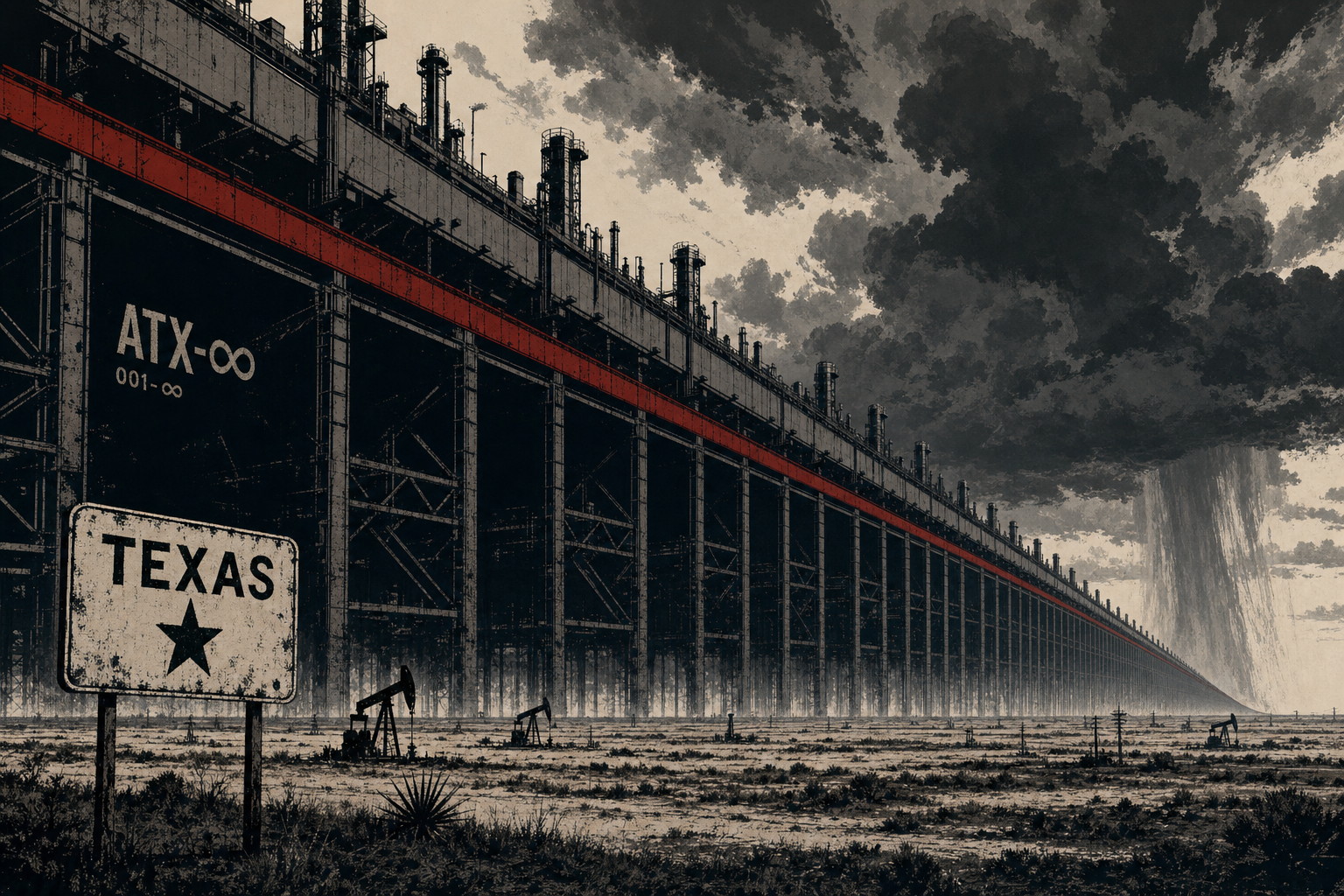
Tesla and SpaceX, companies led by entrepreneur Elon Musk, have unveiled ambitious plans to construct a massive semiconductor manufacturing facility in Grimes County, Texas, outside Houston. Dubbed "Terafab," the proposed complex is projected to become the largest building on Earth, significantly surpassing existing structures by floor area. The joint venture, announced Thursday, entails an initial investment of approximately $16.8 billion, with total costs potentially reaching $119 billion across all proposed phases.
"Both Tesla & SpaceX will need far more chips than current & future global production can supply." — Tesla, X Post
The planned Terafab facility is expected to cover more than 100 million square feet, a scale that dwarfs current global benchmarks. For context, China's New Century Global Center in Chengdu, presently recognized as the world's largest building by floor area, measures around 18.9 million square feet. Terafab’s proposed footprint would exceed this figure more than five times over. Domestically, the project would also eclipse several iconic American structures; the Pentagon occupies approximately 6.6 million square feet, Minnesota's Mall of America spans roughly 5.6 million square feet, and Apple Park covers about 2.82 million square feet. Even the combined area of these three enormous developments would represent only a fraction of Terafab’s planned size, underscoring the unprecedented scale of Musk’s vision. Renderings released for the project depict an enormous wing-shaped facility sprawling across the Texas landscape.
Elon Musk articulated the project's grand scope, stating it would be "the largest and most valuable building on Earth by far." He further commented on its aesthetic, noting on X, "It will be stunningly beautiful." The immense size of the facility is directly linked to the burgeoning demand for semiconductors across both Tesla and SpaceX operations. Tesla highlighted this necessity on X, stating, "Both Tesla & SpaceX will need far more chips than current & future global production can supply." The companies are targeting an annual production capacity exceeding one terawatt of computing power.
SpaceX elaborated that Terafab would consolidate several crucial stages of semiconductor production under a single roof, encompassing logic chips, memory, packaging, and testing. This integrated approach aims to streamline the manufacturing process and enhance efficiency. "The facility will be an advanced semiconductor fab that will bridge the divide between current global chip supply and the compute demand of the future," SpaceX affirmed. The high-powered chips produced within this facility are anticipated to support a range of Musk's cutting-edge technology initiatives. Tesla plans to utilize Terafab chips for its Optimus humanoid robots and autonomous Cybercabs, while SpaceX intends to deploy them in its envisioned space-based data centers. Intel has also confirmed its involvement with Terafab, though its specific role in the project has not been publicly detailed.
Beyond its technological aspirations, the construction of Terafab is expected to generate significant economic benefits for the surrounding Texas communities. Tesla and SpaceX project the creation of at least 3,000 jobs, with a focus on hiring from Grimes County and neighboring Brazos County. The companies have cited their hiring track records at other Texas facilities, where they report that 60% to 80% of new employees have been local residents.
However, the massive development has already sparked controversy among some local residents. Hundreds of Grimes County residents attended a county meeting on Wednesday to voice concerns regarding tax incentives and what critics described as insufficient transparency surrounding agreements connected to the project. Texas Gov. Greg Abbott’s office has offered SpaceX a $30 million Texas Enterprise Fund grant, and the development also qualifies for another state economic incentive program, which has drawn scrutiny.
Water consumption has emerged as another key concern surrounding the semiconductor complex, as chip manufacturing is a water-intensive process. Terafab is slated to be located at the Gibbons Creek Reservoir, a site that previously supplied cooling water to a coal-fired power plant which ceased operations in 2018. SpaceX has stated its intention to utilize reservoir water, thereby avoiding drawing from local groundwater supplies, a move aimed at mitigating potential environmental impacts on community water resources. The ultimate realization of Terafab's record-breaking scale remains contingent on the successful completion of the colossal facility as currently planned by Musk's companies.

