


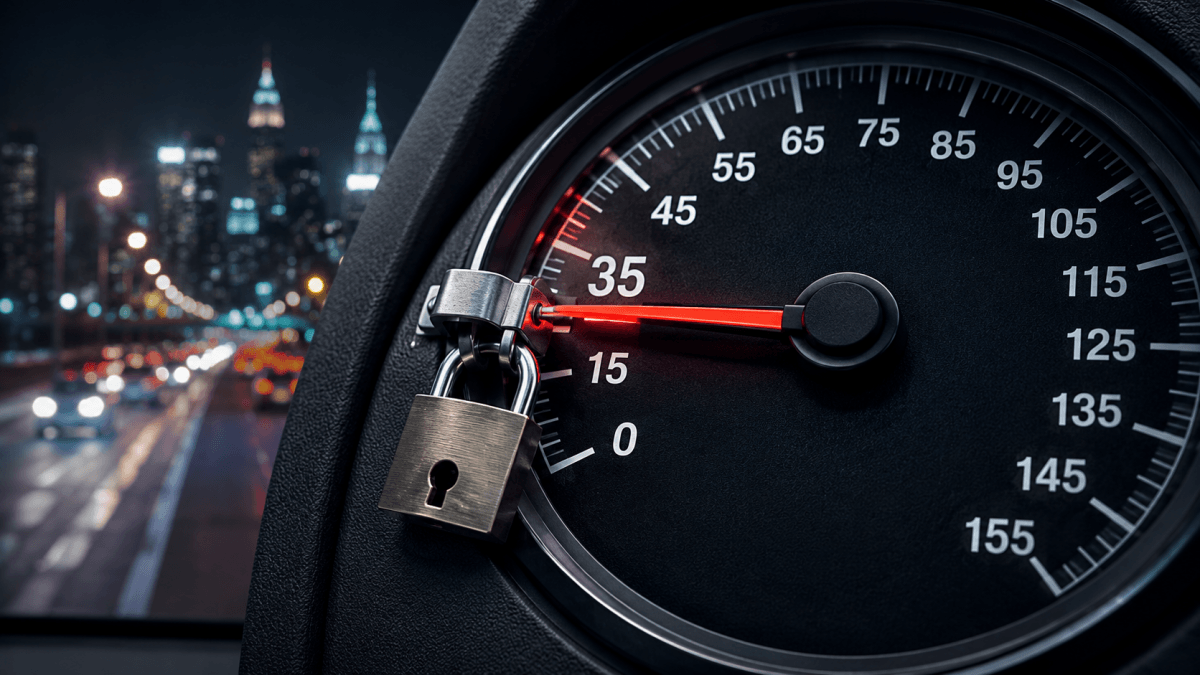
New York State is advancing a new traffic enforcement strategy targeting habitual speeders, mandating the installation of speed-governing technology in their vehicles. The initiative, championed by Gov. Kathy Hochul, is being rolled out as a pilot program in New York City and has already garnered considerable attention for its novel approach to traffic safety.
"We have to protect people and if someone is so flagrantly violating the laws that there’s a callous disregard of human life—that’s the only way I can describe it—there have to be consequences have to be." — Gov. Kathy Hochul, New York
The program specifically focuses on "super speeders," defined as drivers who accumulate 16 or more speed camera violations within a 12-month period. These qualifying drivers will be legally required to equip their vehicles with a speed-limiting device. This technology utilizes GPS and mapping data to monitor local speed limits and physically restrict a vehicle from exceeding them, typically allowing for a buffer of approximately five miles per hour above the posted limit, according to reports.
Governor Hochul underscored the necessity of the measure, stating its purpose is to safeguard the public from individuals who consistently disregard traffic laws. "We have to protect people and if someone is so flagrantly violating the laws that there’s a callous disregard of human life—that’s the only way I can describe it—there have to be consequences have to be," Hochul said. She also issued a stern warning regarding non-compliance: "If you don’t install it after 45 days, you lose your registration and you should not be on the roads if you don’t care about whether or not you’re going to kill somebody."
The speed-limiting technology functions similarly to ignition interlock devices, which are currently used in some cases involving drunk-driving offenses. In addition to the existing pilot, a separate proposal is under consideration in the New York State Senate. This legislative effort could mandate the installation of such devices for drivers who accrue 11 or more points on their licenses within a 24-month period or receive multiple speed camera or red-light camera violations, requiring the device to remain installed for at least one year.
Proponents of the technology argue that it represents a proactive approach to addressing dangerous driving by intervening before violations escalate into serious accidents. They contend that relying solely on post-violation tickets and fines is insufficient to deter a small cohort of repeat offenders, who are often responsible for a disproportionate share of hazardous incidents on public roadways. This preventive measure, they believe, directly mitigates the risk posed by persistent lawbreakers.
However, the initiative has not been met with universal approval. Concerns have been raised by some New Yorkers regarding the potential implications for individual privacy and the expansion of governmental authority. Steven Brandon, a resident of Rochester, acknowledged the merit in encouraging safer driving among repeat offenders but voiced apprehension about potential government overreach. Brandon told WHEC, "However, the one thing that I was concerned with personally is an increase in state or local power to kind of enforce almost like a social credit score, so to speak, on our driving."
Conversely, many others express strong support for the program. Annie Jankowski, a driver, shared her perspective with WABC, citing her professional experience: "I think it’s a good idea, I worked in a level one trauma unit, and I’ve seen what tolls speeding can take, so I’m for it." Charles Hanks, also a Rochester resident, echoed this sentiment, suggesting the proposal could significantly contribute to reducing accidents and enhancing overall public safety.
New York is not unique in exploring such technological solutions. A growing number of jurisdictions across the United States are experimenting with speed-limiting technology. Washington state, Washington, D.C., and Virginia have already adopted similar laws or programs, and several other states are actively considering comparable measures. State officials indicate that the New York City pilot program will serve as a critical evaluation phase, providing data and insights to determine the feasibility and effectiveness of expanding the technology to other communities throughout the state. The program, which came into effect with the governor's backing, is set to evolve based on its initial performance and public reception.

