


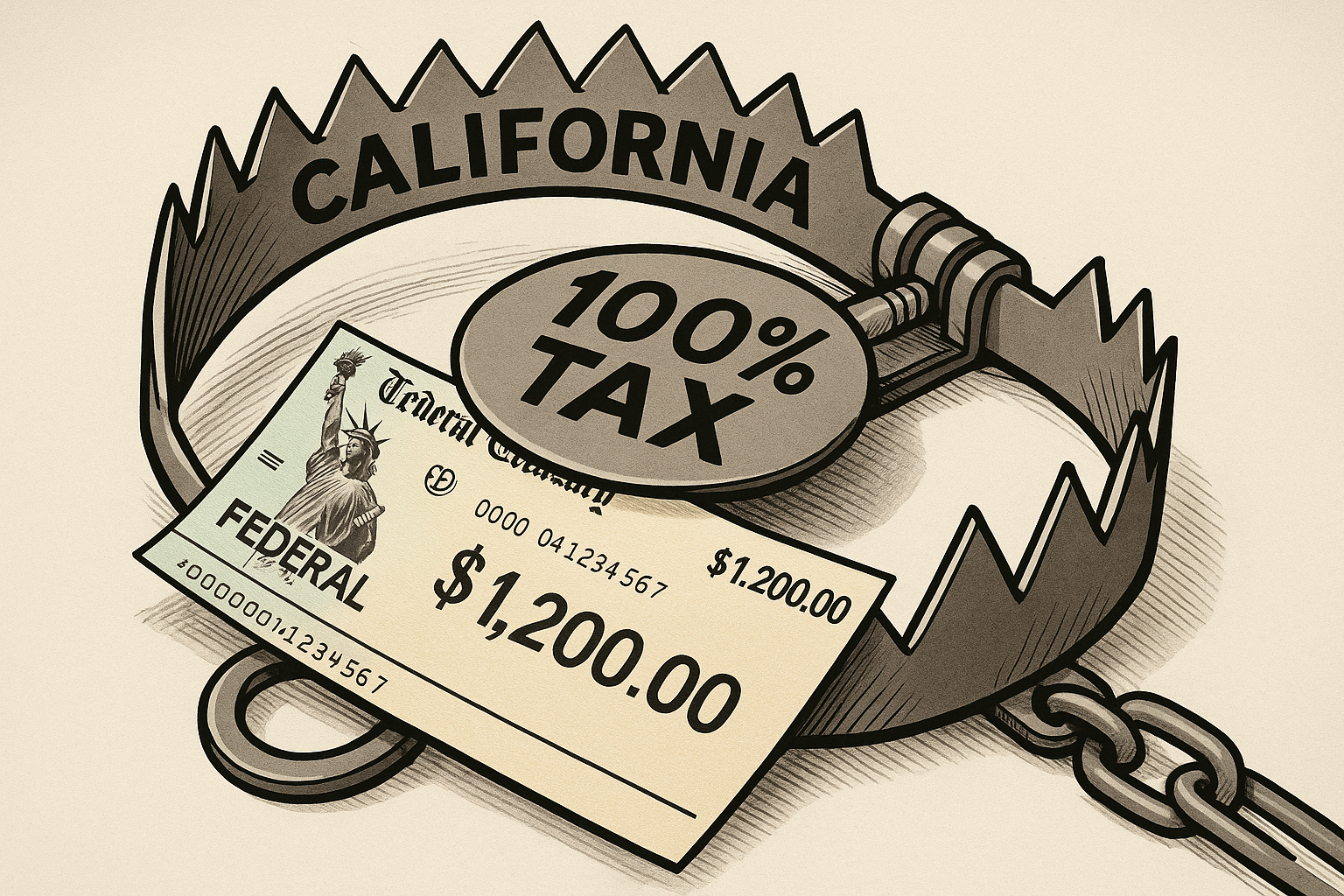
California Governor Gavin Newsom (D) unveiled a new proposal on Wednesday that would implement a 100% state tax on any Californian receiving money from President Donald Trump's recently created Anti-Weaponization Fund. The Democratic governor announced the plan during a press conference, stating his intent to prevent state residents from financially benefiting from the federal settlement program.
"Anyone from California that receives any of those funds. We want to tax 100% of those proceeds and that’s an action the state of California can take. It’s an action we look forward to taking." — Gavin Newsom, Governor of California
"Anyone from California that receives any of those funds," Newsom stated, "We want to tax 100% of those proceeds and that’s an action the state of California can take. It’s an action we look forward to taking."
The fund in question, totaling $1.776 billion, was established through a Justice Department settlement involving President Trump and the Internal Revenue Service. Proponents of the fund assert that it is designed to provide compensation to Americans who can demonstrate they were unfairly targeted by federal government agencies. However, the program has faced significant criticism, with detractors arguing it could result in financial payouts to President Trump's supporters and individuals implicated in the events surrounding January 6, 2021.
Governor Newsom amplified these concerns in a post on X, directly linking the fund to President Trump's pardons and commutations. "He pardoned all of those folks that were beating up cops and absolved them, providing them 1.776 billion dollars," Newsom wrote. "So not only do you get a pardon, you get rewarded. That’s why this is needed," he added in his post, which also included a visual stating, "If you get a payout from Trump’s January 6 slush fund, California will tax it at 100%. People who assault cops and overthrow democracy don’t deserve a taxpayer-funded payday."
This proposal emerges as Governor Newsom continues to position himself as a prominent Democratic critic of the President Trump administration. The California governor, frequently cited as a potential 2028 presidential candidate, has engaged in repeated clashes with President Trump on various policy fronts, including immigration, climate regulations, legal disputes, and federal spending.
Republicans swiftly condemned Newsom's latest initiative, accusing him of attempting to politically target President Trump's supporters. Conservative critics argued that such a tax would unfairly penalize Californians who successfully prove they were wrongfully targeted by government agencies, effectively denying them rightful compensation. They also highlighted California's own history of spending controversies. For instance, they pointed to a $25 million legal fund previously backed by Newsom to challenge President Trump administration policies, which California Senate Minority Leader Brian Jones (R) had characterized as a "slush fund."
Governor Newsom has also faced scrutiny regarding California's emergency spending decisions during the COVID-19 pandemic, including questions surrounding billions of dollars in no-bid contracts awarded during the crisis. The debate over the new tax proposal also unfolds against a backdrop of financial pressures for California, with the state confronting a projected $2.9 billion budget shortfall for the 2027 fiscal year. Critics have additionally drawn attention to major state projects experiencing significant cost overruns, such as California’s long-delayed high-speed rail project. Transportation Secretary Sean Duffy recently derided another California infrastructure project as a "bridge to nowhere" after its costs reportedly climbed millions over budget.
California is not the sole state where Democratic lawmakers are targeting the Anti-Weaponization Fund. Democratic legislators in New York have introduced measures aimed at blocking these payments, and a state lawmaker in Connecticut has also put forward a proposal for a 100% tax on the proceeds received from the fund. This developing situation is anticipated to become another significant political confrontation between President Trump and Democratic leaders, further fueling ongoing national debates concerning government accountability, political investigations, and the appropriate scope of compensation for individuals claiming unfair targeting by federal authorities. The legislative efforts in California, New York, and Connecticut signal a coordinated push among some Democrats to challenge the fund's legitimacy and prevent its disbursements from reaching certain recipients within their states.

