

Breaking
Sponsor Advertisement
Report Details President Trump's Extensive Influence Over House Leadership
Image for: Report Details President Trump's Extensive Influence Over House Leadership

Report Details President Trump's Extensive Influence Over House Leadership

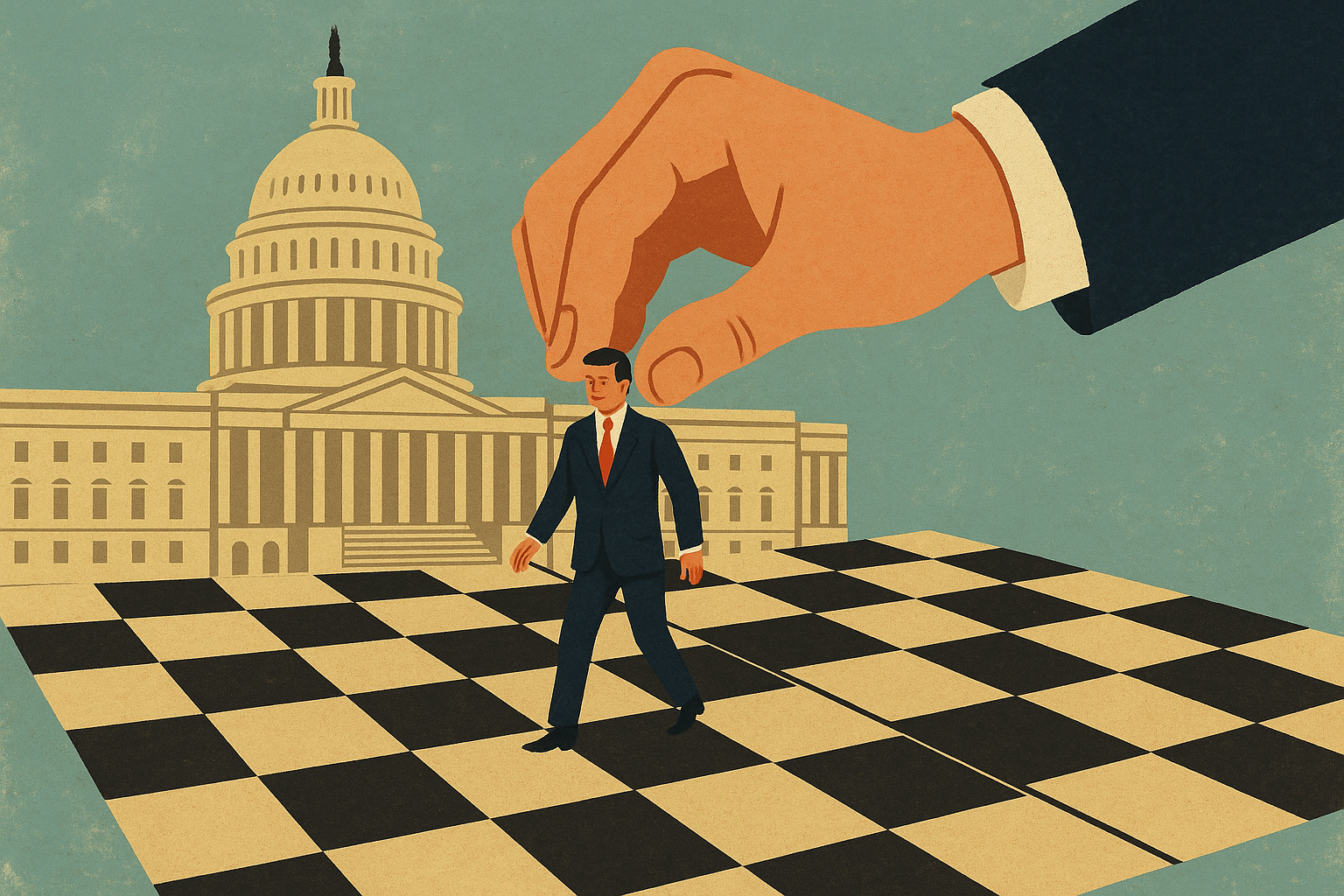
A recent report has unveiled the significant influence President Donald Trump reportedly wields over House Speaker Mike Johnson and the legislative process, leading some House Republicans to express concerns about the executive branch's direct involvement in congressional affairs.
Jump to The Flipside Perspectives

A recent report by NOTUS has cast light on the extensive influence President Donald Trump reportedly exerts over House Speaker Mike Johnson and the legislative operations of the U.S. House of Representatives. The report details instances where President Trump has directly intervened in congressional matters, from legislative strategy to individual votes, prompting both support for party unity and concerns among some House Republicans regarding the balance of power.

"I have no fucking idea what she just said." — President Donald Trump

The scope of this influence was starkly illustrated by President Trump himself, who, during a meeting in the Oval Office with Speaker Johnson present, reportedly stated, "I have two jobs: being president and being speaker." This remark, which drew laughter but also underlying concern among some, points to a dynamic where the executive branch plays a central role in guiding the legislative agenda. Speaker Johnson, a Louisiana Republican navigating a historically slim House majority, has reportedly leaned on President Trump to unify the Republican conference and advance legislative priorities.

According to the NOTUS report, President Trump's involvement goes beyond mere consultation. Speaker Johnson has reportedly directed members of his conference to clear legislation through the White House before it proceeds to the House floor. This practice effectively grants the executive branch a preliminary review and potential veto over congressional initiatives, significantly shaping the legislative pipeline. Furthermore, President Trump has reportedly engaged directly during floor votes, contacting lawmakers mid-vote to encourage them to alter their positions.

This level of executive involvement has elicited varied reactions within the Republican conference. While some view it as a necessary measure to maintain party cohesion and achieve legislative success, others have voiced apprehension. Two anonymous Republican members, speaking to NOTUS, described the situation in unsparing terms. One lawmaker characterized it as "a total shirking of responsibilities to the White House," implying a delegation of legislative duties. Another expressed frustration with the perceived lack of autonomy, stating, "Everything has to be preordained and pre-blessed, and there’s very little that we’re able to have our own will on." This member underscored a desire for greater independence, adding, "We should be empowered to pass our own priorities, not just follow what the mandate of the day is."

A particularly intense episode highlighted in the report occurred during last year's budget negotiations. As Republican holdouts threatened to derail the measure, President Trump reportedly made direct phone calls to sway votes. One such call was made to Representative Victoria Spartz of Indiana. The report describes a highly emotional exchange, with Spartz reportedly in tears while speaking with the president from the House cloakroom. Following the call, President Trump, still audible on speakerphone, reportedly uttered four words that astonished those nearby: "I have no fucking idea what she just said."

President Trump's influence extends to critical leadership matters as well. When Speaker Johnson faced a challenge to his speakership in January of last year, it was President Trump who reportedly intervened, contacting dissenting Republicans and securing the necessary votes to preserve Johnson's position.

Asked for comment on the NOTUS report, Speaker Johnson's office did not dispute its findings. Instead, a spokesperson emphasized the positive outcomes of the collaboration, stating, "Speaker Johnson is proud to have a strong and productive working relationship with the President that has delivered countless positive legislative results for the American people." The statement also maintained that "healthy tension between the legislative and executive branches" continues to exist.

However, this framing did not fully address the concerns of all members. Representative Steve Womack, an Arkansas Republican with decades of experience in Washington, offered a sobering assessment of the current dynamics. "In my adult lifetime, I have not seen an executive branch with as much input and influence over the chamber than this one has," Womack told NOTUS, underscoring the perceived unprecedented nature of President Trump's involvement in congressional affairs. The reported extent of President Trump's influence continues to be a subject of discussion regarding the traditional separation of powers within the federal government.

Advertisement

The Flipside: Different Perspectives

Progressive View

From a progressive viewpoint, the reported extent of President Trump's influence over the House of Representatives raises serious concerns about the integrity of democratic institutions and the foundational principle of separation of powers. The idea that the executive branch effectively holds a "first-look veto" over congressional priorities or intervenes directly in legislative votes undermines the independence of the legislative branch, which is designed to be a co-equal body. This centralization of power can stifle genuine debate and independent thought among lawmakers, potentially leading to legislation that serves narrow political interests rather than the collective well-being of all Americans.

The reported pressure on individual members, such as Representative Spartz, creates an environment where dissent may be discouraged, and accountability to constituents could be overshadowed by loyalty to a party leader. This erodes the systemic checks and balances intended to prevent authoritarian tendencies and ensure diverse voices are heard. Progressives emphasize that a healthy democracy requires a robust, independent legislative body capable of challenging and scrutinizing the executive. The reported "shirking of responsibilities" by the House to the White House represents a dangerous precedent that could weaken democratic norms and ultimately harm the pursuit of social justice and equitable governance.

Conservative View

From a conservative perspective, President Trump's active involvement in House legislative affairs can be viewed as a strategic necessity, particularly given the narrow Republican majority and the imperative to advance a conservative agenda. In this view, a strong leader like President Trump, who commands significant influence within the party, is crucial for unifying a diverse conference and preventing internal divisions that could derail key legislation. His direct engagement ensures that legislative efforts align with the broader conservative movement's principles, reflecting the mandate given by voters who elected him and a Republican House.

This approach prioritizes efficient governance and the practical implementation of policy over strict adherence to traditional procedural norms, especially when facing political headwinds. The reported coordination, including clearing legislation through the White House, can be seen as a mechanism to streamline the legislative process, reduce gridlock, and ensure that bills reaching the floor have the best chance of success. This pragmatic leadership is essential for delivering "countless positive legislative results for the American people," as highlighted by Speaker Johnson's office. The focus remains on achieving conservative policy goals through decisive leadership and party cohesion, ultimately serving the interests of individual liberty and limited government by passing legislation that reflects these values.

Common Ground

Despite differing perspectives on the nature and appropriateness of executive influence, there are areas of common ground regarding the functioning of government. Both conservatives and progressives generally agree on the importance of effective governance and the need to avoid legislative gridlock. There is a shared desire for the timely passage of important bills that address national challenges, even if the content of those bills is a point of contention.

Furthermore, both sides value the concept of accountability, albeit interpreted through different lenses. Constituents expect their elected representatives to be responsive and effective. Acknowledging concerns about the balance of power, there could be bipartisan interest in establishing clearer, more transparent guidelines for executive-legislative communication and cooperation. This could involve exploring mechanisms that facilitate productive dialogue while safeguarding the institutional independence of both branches. Ultimately, ensuring that the legislative process functions efficiently, transparently, and with integrity, while upholding the spirit of the U.S. Constitution, serves the broader public interest and is a goal both sides can genuinely support.

What's your view on this story? Share your thoughts and remember to consider multiple perspectives and being respectful when forming and voicing your opinion. "If you resort to personal attacks, you have already lost the debate..."

Advertisement

Contact Us About This Article

Have a question or comment about this article? We'd love to hear from you.

About Fair Side News

At Fair Side News, we believe in presenting news with perspectives from both sides of the political spectrum. Our goal is to help readers understand different viewpoints and find common ground on important issues.