


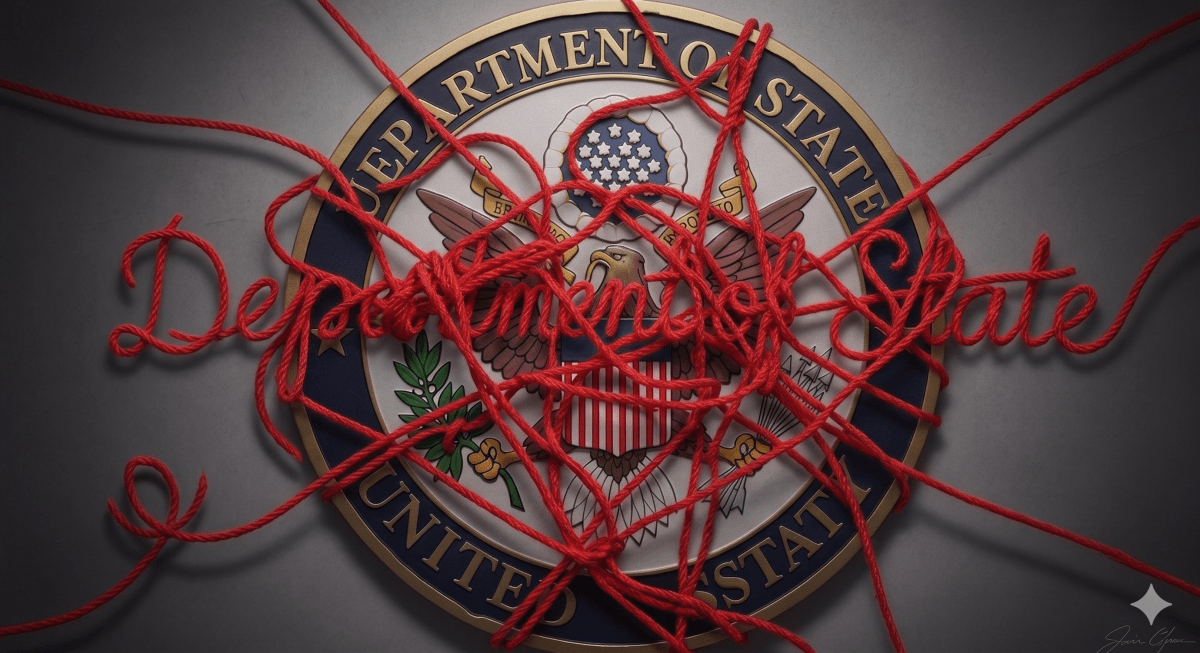
The U.S. State Department has terminated Daniel Choi, a high-ranking official, following an internal review that revealed his failure to disclose a romantic relationship with a Chinese national whose family is reportedly linked to the Chinese Communist Party (CCP). The dismissal, which underscores heightened counterintelligence concerns, was ordered by Secretary of State Marco Rubio and approved by President Donald Trump, according to department officials.
"I defied my government for love" — Daniel Choi, State Department Official
The case gained public attention after undercover footage released by O’Keefe Media Group showed Choi admitting to the relationship and acknowledging his girlfriend’s father was "straight-up Communist Party." In the footage, Choi also stated he did not report the relationship to U.S. security officials, despite being aware of the requirements for disclosing foreign contacts. He was quoted saying, "I defied my government for love," and also speculated that the woman "could have been a spy."
A State Department spokesperson confirmed that officers are mandated to disclose any "close and continuing contact" with foreign nationals, especially those with potential ties to foreign governments. This protocol is designed to mitigate risks such as coercion, blackmail, or intelligence compromise. The department stated that Choi's failure to adhere to these established security protocols constituted a significant breach.
The termination was carried out under the authority granted by Executive Order 14211, which permits the discipline or removal of personnel who fail to comply with national security and foreign policy directives. Officials stated that Choi's on-camera admission of concealing the relationship, despite understanding the reporting requirements, justified his separation from service.
This incident highlights longstanding concerns within the intelligence community regarding foreign influence operations. Security officials have consistently warned that personal relationships can be exploited as a means to gather sensitive information or to create leverage over government employees. A former intelligence official cited in a related report emphasized that romantic relationships are "one of the most commonly exploited methods in espionage efforts," particularly when disclosure rules are disregarded.
The State Department declined to provide comprehensive details of its internal investigation but affirmed that Choi’s actions were deemed a significant security risk. Foreign service officers undergo extensive training that specifically instructs them to immediately report such contacts, especially when individuals may be connected to governments considered strategic competitors to the United States. Choi reportedly described his girlfriend’s father as holding a position within the CCP structure, possibly in an education-related role, though these specific details were not independently confirmed in the initial report.
Secretary Rubio has been a vocal proponent of stricter enforcement of disclosure rules and has advocated for expanded vetting procedures for government personnel, particularly those who have access to sensitive information. The decision to remove Choi aligns with a broader departmental push to reinforce compliance with rigorous security standards across all diplomatic roles, reflecting growing concerns about the scope and intensity of foreign intelligence activities targeting U.S. interests. This action signals a firm stance by the current administration on upholding national security protocols within its foreign policy apparatus.

