

Breaking
Sponsor Advertisement
State Department Partners with UFC for Global Sports Diplomacy
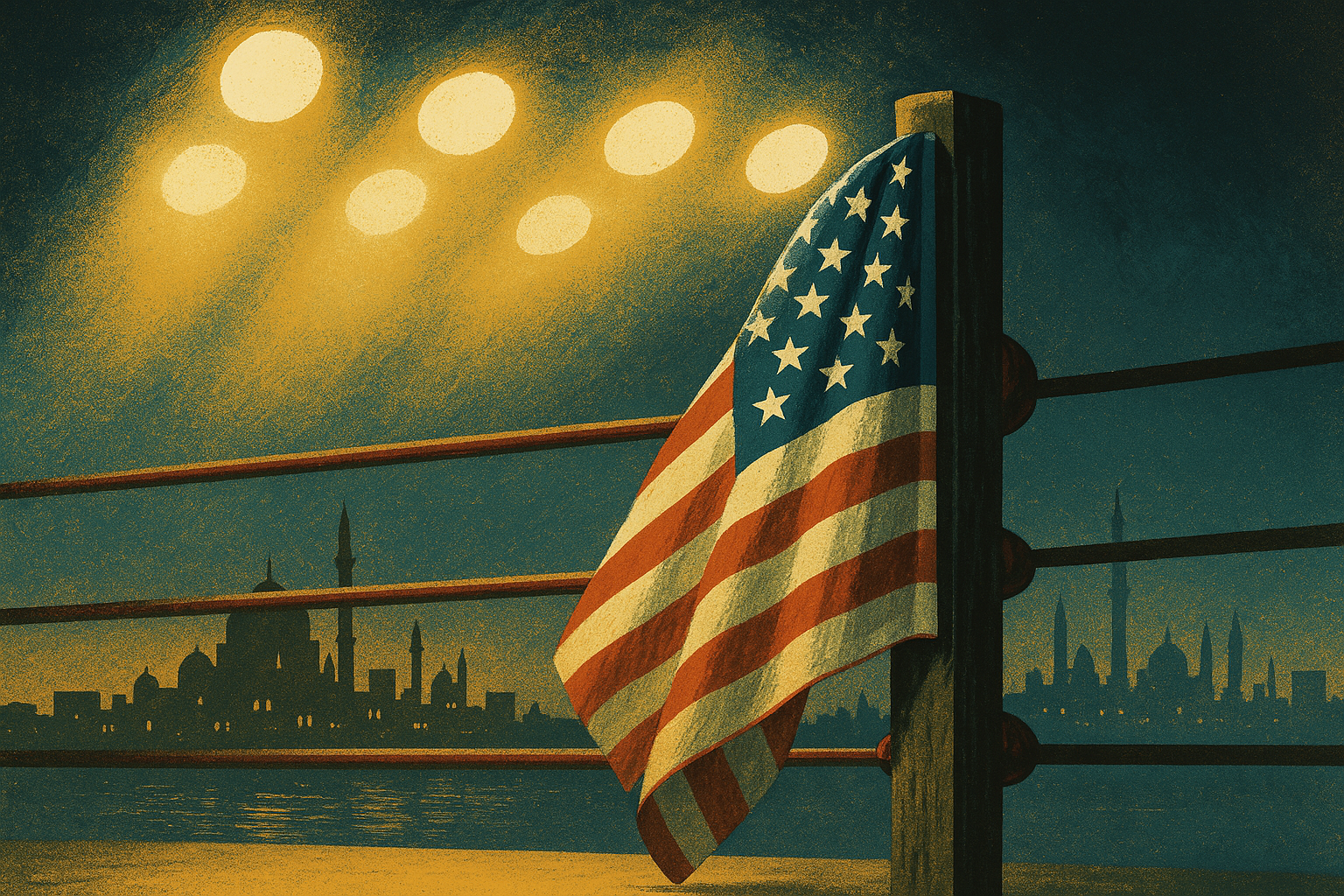
Image for: State Department Partners with UFC for Global Sports Diplomacy

State Department Partners with UFC for Global Sports Diplomacy

The State Department and UFC will formalize a public-private partnership on Thursday, leveraging professional mixed martial arts for American diplomatic outreach globally.
Jump to The Flipside Perspectives

Washington, D.C. – The U.S. State Department and the Ultimate Fighting Championship (UFC) are set to formalize a public-private partnership on Thursday, aiming to position professional mixed martial arts (MMA) as a key component of American diplomatic outreach worldwide. Secretary of State Marco Rubio and UFC chief executive Dana White will sign a memorandum of understanding (MOU) at the State Department, according to an announcement released Monday. This agreement precedes a seven-fight UFC card scheduled to take place on the White House South Lawn this Sunday, just steps from the Oval Office.

"Its events are broadcast worldwide and contribute to the United States’ broader cultural and sports influence through professional competition and athlete development." — U.S. State Department, Official Press Release

The initiative, described by officials as "sports diplomacy," seeks to harness the UFC's extensive international footprint to exert strategic cultural influence globally. The UFC, an American-founded organization with a 33-year history, has grown into one of the most-watched combat sports entities on the planet, commanding a significant worldwide broadcast audience. The State Department highlighted this reach in its official press release, stating, "Its events are broadcast worldwide and contribute to the United States’ broader cultural and sports influence through professional competition and athlete development."

While the administration views the UFC's global presence as a valuable asset worthy of formalization, the specific obligations and commitments for both parties under the new MOU have not yet been made public. The concept of a memorandum of understanding has recently gained prominence in Washington, particularly in the context of ongoing, unsettled negotiations between the United States and Iran. Those talks, centered on reopening the critical Strait of Hormuz — a waterway whose closure has contributed to a war now extending beyond three months — have also revolved around hammering out a similar diplomatic agreement concerning sanctions relief and Iran’s enriched uranium stockpile.

Against this backdrop of complex geopolitical negotiations, the administration is proceeding with a distinct form of MOU. This partnership with the UFC is driven not by traditional geopolitical pressures, but by the organization's widespread appeal, pay-per-view audiences, and championship competitions. The upcoming event at the White House is designed to showcase the global appeal the State Department intends to leverage, featuring 14 competitors from six different countries.

The Sunday card, which will unfold in a purpose-built octagon ring erected in a large steel structure just south of the White House, includes several high-profile matchups. Georgia’s Ilia Topuria is slated to challenge American Justin Gaethje for the lightweight championship, a bout anticipated to be the evening's main attraction. Additionally, the interim heavyweight title will be contested between Brazil’s Alex Pereira and Ciryl Gane of France, further underscoring the international dimension of the unprecedented event.

The relationship between UFC chief Dana White and President Donald Trump is well-established, with White having previously welcomed President Trump to numerous UFC events. White has openly expressed his enthusiasm for staging this particular card at the nation’s most iconic address. The timing of Sunday’s event adds another layer of symbolism, as it coincides with President Trump’s 80th birthday. Furthermore, organizers are framing the event as the inaugural act of America’s 250th anniversary celebrations, leading up to the July 4th holiday. This strategic alignment aims to blend sports, culture, and national commemoration, reinforcing the administration's broader diplomatic objectives through a unique public-private collaboration. The partnership signifies a novel approach to soft power, utilizing a popular global sport to foster international connections and project American influence.

Advertisement

The Flipside: Different Perspectives

Progressive View

Progressives might view this partnership with a nuanced lens, acknowledging the potential for cultural exchange while scrutinizing the underlying motivations and implications. While sports can indeed foster international goodwill and understanding, the use of a combat sport like MMA for official diplomacy raises questions about the message being sent, particularly when contrasted with other forms of cultural exchange. The focus on commercial appeal and pay-per-view audiences could be seen as prioritizing corporate interests over genuine diplomatic engagement. Furthermore, while the event features international athletes, the framing of it as an "arm of American diplomatic outreach" could be interpreted as a form of cultural imperialism, rather than true mutual exchange. While promoting American soft power is a valid goal, the emphasis should be on equitable partnerships and ensuring that such initiatives genuinely contribute to collective well-being and social justice, rather than simply extending national influence through commercialized entertainment.

Conservative View

From a conservative perspective, this partnership between the State Department and UFC exemplifies a pragmatic approach to foreign policy, leveraging private sector success for national interest. It highlights the power of American free enterprise, as the UFC has grown into a global powerhouse through market innovation and individual achievement, without direct government subsidies. Utilizing such a successful American business for "sports diplomacy" is seen as a cost-effective way to project American soft power and cultural influence abroad. This initiative aligns with principles of limited government, as it seeks to achieve diplomatic goals through public-private collaboration rather than expanding government bureaucracy or spending. It promotes American values of competition, individual excellence, and fair play on a global stage. The partnership also subtly reinforces national pride, especially with the event coinciding with President Trump's birthday and the kickoff of America's 250th anniversary celebrations, showcasing American cultural exports and entrepreneurial spirit to a global audience.

Common Ground

Despite differing perspectives, both conservatives and progressives can find common ground in recognizing the value of cultural exchange and international engagement. There is shared agreement that fostering positive relationships with other nations is crucial for global stability and American interests. Both sides can appreciate the power of sports to transcend cultural barriers and unite people, offering a platform for peaceful competition and mutual respect. The idea of leveraging uniquely American successes, whether in business or culture, to enhance the nation's standing abroad can be seen as a bipartisan goal. Furthermore, the potential for such partnerships to promote healthy lifestyles, discipline, and the pursuit of excellence among youth globally, regardless of political affiliation, represents a constructive outcome that both viewpoints can support.

What's your view on this story? Share your thoughts and remember to consider multiple perspectives and being respectful when forming and voicing your opinion. "If you resort to personal attacks, you have already lost the debate..."

Advertisement

Contact Us About This Article

Have a question or comment about this article? We'd love to hear from you.

About Fair Side News

At Fair Side News, we believe in presenting news with perspectives from both sides of the political spectrum. Our goal is to help readers understand different viewpoints and find common ground on important issues.