


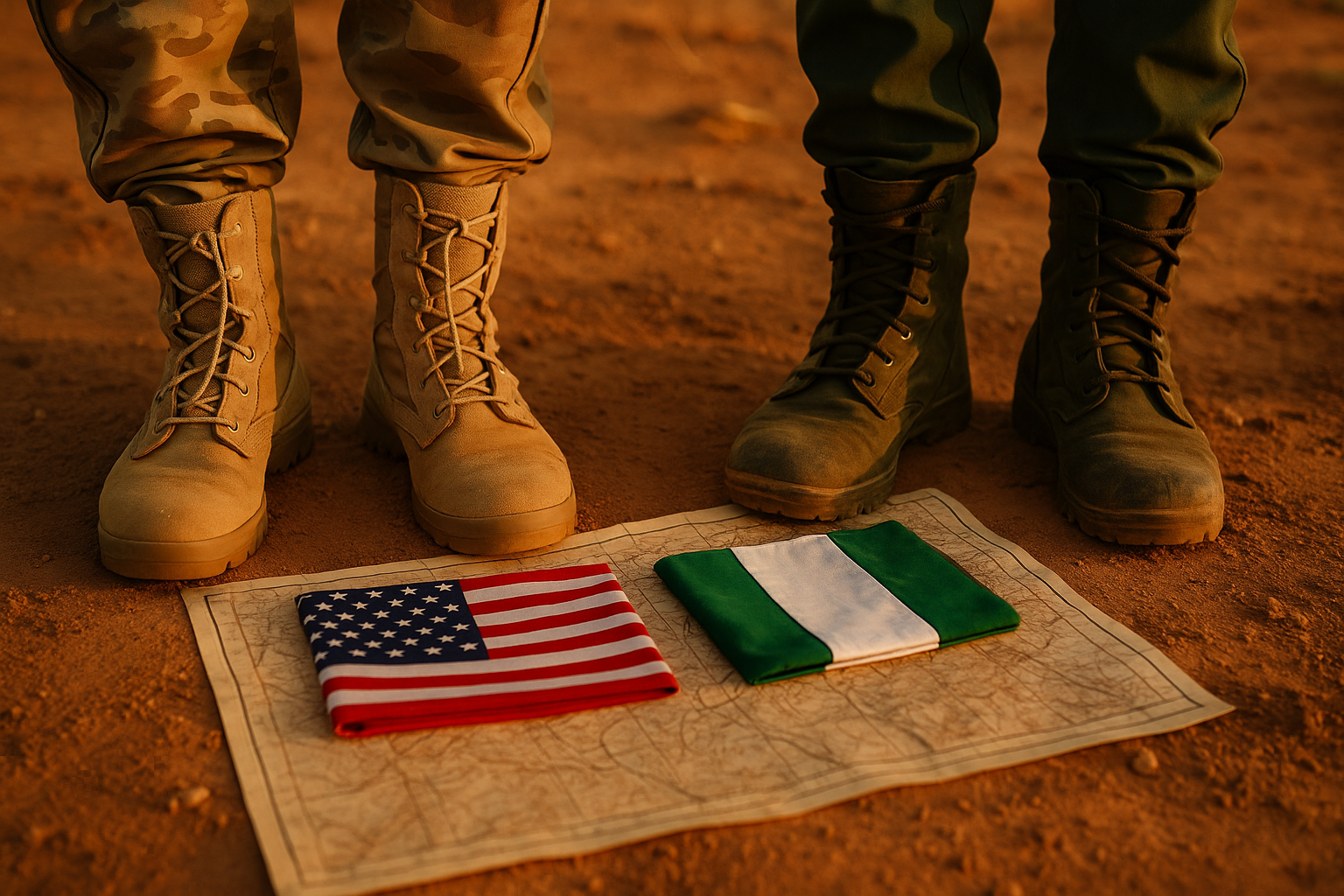
A clandestine joint operation involving U.S. and Nigerian military forces last month resulted in the deaths of 199 suspected ISIS fighters, along with a senior terrorist leader, Abu-Bilal al-Minuki, operating in Nigeria. The mission, authorized by President Donald Trump, was revealed by Dr. Sebastian Gorka, the Senior Director for Counterterrorism at the National Security Council, who characterized it as one of the most significant counterterrorism successes since the attacks of September 11, 2001.
"This is a historic moment, because that operation in Nigeria … that one operation led to the killing of 199 enemies. That is the most successful counterterrorism operation since September 11." — Dr. Sebastian Gorka, Senior Director for Counterterrorism at the National Security Council.
Dr. Gorka, speaking on the "Just the News, No Noise" television program, detailed that the operation successfully eliminated al-Minuki and led to the recovery of substantial intelligence materials. These materials are believed to be related to ISIS activities across West Africa and could prove instrumental in future counterterrorism endeavors throughout the region. This disclosure offers a rare public glimpse into the ongoing U.S. counterterrorism operations in Africa, a continent where ISIS-affiliated groups have significantly expanded their presence in recent years.
The expansion of these extremist groups in Africa has been fueled by a complex interplay of political instability, weak governance, and persistent regional conflicts. These conditions have enabled terrorist networks to establish operational bases, recruit new members, and solidify their presence across multiple countries. According to Gorka, the recent strike delivered a substantial blow to these efforts, effectively disrupting both the leadership structure and the critical communications channels of the targeted ISIS cell.
Beyond the immediate impact of the Nigeria operation, Gorka highlighted a broader trend under President Trump's second term. He stated that approximately 1,031 jihadists have been neutralized through a series of coordinated counterterrorism operations spanning various regions. This figure underscores a sustained and aggressive approach to combating global terrorism.
Emphasizing the magnitude of the recent mission, Gorka remarked, "This is a historic moment, because that operation in Nigeria … that one operation led to the killing of 199 enemies. That is the most successful counterterrorism operation since September 11." He attributed the success to robust coordination among key U.S. agencies, including the National Security Council, the Department of Defense, and the State Department, describing the operation as a prime example of integrated interagency planning. The intelligence gathered during the mission is expected to support ongoing efforts to map ISIS networks, identify hierarchical structures, and preempt future attacks not only in Africa but globally.
The counterterrorism adviser also drew a distinction between the current administration's strategy and those of previous administrations. Gorka asserted that President Trump adopted a more aggressive stance against ISIS during his first term, moving away from a strategy of merely containing the group towards a policy aimed at eliminating its operational capacity entirely. He cited the collapse of ISIS's self-declared caliphate in Iraq and Syria as evidence of this strategy's effectiveness.
Gorka further contended that remnants of ISIS managed to reconstitute and regain strength after a period of reduced counterterrorism pressure during a subsequent administration. He argued that these surviving elements exploited existing gaps in enforcement and capitalized on instability in regions like Nigeria and broader West Africa to rebuild their recruitment networks and operational capabilities. The latest operation, Gorka explained, reflects a renewed and focused effort to disrupt these rebuilding activities before they can escalate into expanded attacks or attempts to establish territorial control.
Officials involved in counterterrorism efforts indicate that the mission aligns with a wider strategic objective: preventing ISIS-linked groups from re-emerging and establishing significant footholds outside the Middle East. The successful execution of the Nigeria operation is seen as a critical component in this overarching strategy, aiming to degrade the group's ability to plan and execute attacks on a global scale. The intelligence yield from the operation is anticipated to provide valuable insights that could shape future counterterrorism policies and actions.

