


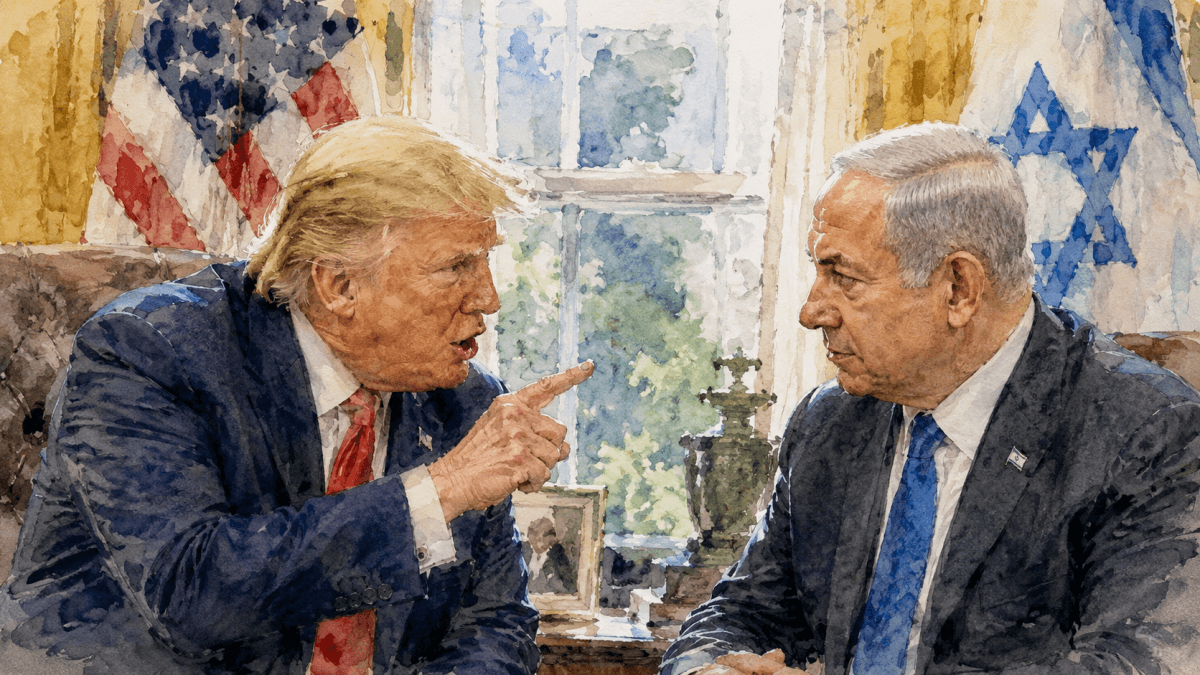
President Donald Trump delivered a stark warning to Israeli Prime Minister Benjamin Netanyahu on Monday, reportedly telling him, "Bibi, you better be careful, or you will be on your own very soon." This extraordinary ultimatum, revealed by Axios, came after a weekend of escalating military actions in the Middle East, during which Israel and Iran exchanged missile strikes despite direct appeals from President Trump for restraint. The diplomatic intervention followed a period of heightened tensions that saw Israel initiate military operations in Lebanon and Iran, prompting retaliatory strikes and raising concerns about regional stability.
"Bibi, you better be careful, or you will be on your own very soon." — President Donald Trump, speaking to Israeli Prime Minister Benjamin Netanyahu
The recent escalation began when Israel launched a strike on a residential building in Beirut, Lebanon, on Sunday morning, resulting in two fatalities and twenty injuries, as confirmed by Lebanon’s health ministry. This action reportedly occurred despite President Trump having privately warned Prime Minister Netanyahu against targeting Lebanon’s capital, with reports indicating he described such considerations as "f***ing crazy." Iran had previously signaled that an attack on Lebanon would elicit a response, and Tehran subsequently made good on its word. Iranian forces launched a wave of missiles at Israel over the weekend, citing the Beirut strike and Israel’s ongoing shelling of Hezbollah, an Iran-backed militant group operating in Lebanon, as justification.
Following the Iranian retaliation, Prime Minister Netanyahu reportedly set his sights on further strikes against Iran. President Trump called the Israeli prime minister on Sunday evening, specifically asking him not to retaliate. However, Israel proceeded with its planned actions. The Israel Defense Forces (IDF) announced in an official statement that "The Israeli Air Force struck military targets belonging to the Iranian terror regime in western and central Iran." Among the targets destroyed was a petrochemical plant in Mahshahr, located in southwestern Iran near the Persian Gulf, a facility whose damage was confirmed by both Israeli and Iranian state media.
The exchange of strikes continued briefly before both nations ultimately complied with President Trump’s demand to stand down. By Monday, President Trump had publicly expressed his frustration, posting on Truth Social and instructing both countries to "immediately stop shooting." Both Israel and Iran acknowledged the directive and indicated a temporary halt to hostilities, though they also made clear that any new provocation could quickly reignite the conflict. Behind the scenes, Prime Minister Netanyahu had reportedly been preparing plans for what officials described as the most intense Israeli assault on Iran since April. This operation was reportedly called off only after President Trump’s Monday phone call, which delivered the blunt message about potential isolation if Israel did not align with US requests.
The implications of this diplomatic strain and military escalation extend beyond the immediate battlefield. The United States is currently engaged in ongoing negotiations with Israel and Iran, focusing on two critical issues: Tehran’s nuclear program and the reopening of the Strait of Hormuz. The Strait is a vital waterway through which a significant portion of global oil, natural gas, and fertilizer supplies pass. President Trump has consistently maintained a firm stance that Iran will not be permitted to obtain a nuclear weapon, asserting that no deal would be finalized otherwise.
Domestically, President Trump is facing political scrutiny, particularly concerning economic factors. The national average price for a gallon of gasoline has risen sharply to $4.20, an increase from $2.98 before the recent conflict began. With midterm elections approaching in November, the cost of fuel at the pump carries significant political weight. Administration officials have repeatedly voiced optimism that a long-term agreement with Iran is within reach. However, the recent volatile situation on the ground has yet to reflect such optimism, highlighting the complex challenges in achieving regional stability and diplomatic breakthroughs.
The relationship between President Trump and Prime Minister Netanyahu, historically considered a cornerstone of American-Israeli diplomatic ties, now appears to be under considerable strain. This tension is reportedly being tested by competing military objectives and a peace process that has proven difficult to advance amidst defiance and conflict. The immediate calm in the region remains fragile, underscoring the delicate balance of power and the intricate web of alliances and rivalries in the Middle East.

