


Breaking
Sponsor Advertisement
Justice Thomas Warns of Ideological Drift from Founding Principles
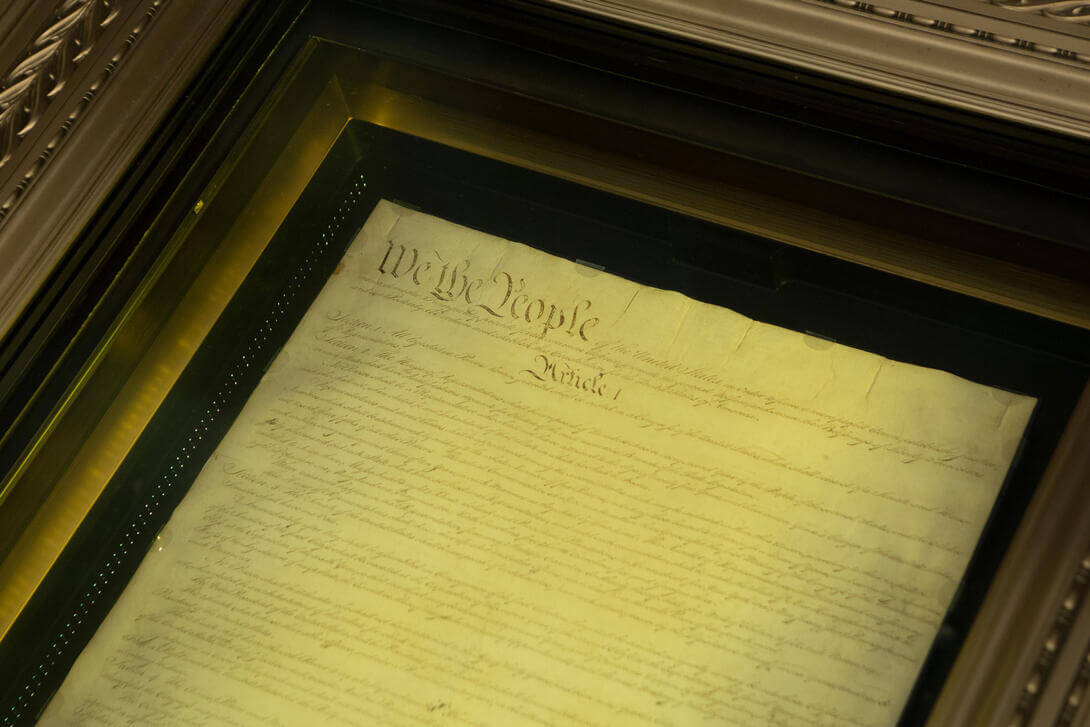
The constitution in it's encasement at the National Archives Museum

Justice Thomas Warns of Ideological Drift from Founding Principles

Supreme Court Justice Clarence Thomas recently articulated concerns that modern political thought is diverging from the foundational principles of the American constitutional order.
Jump to The Flipside Perspectives

Supreme Court Justice Clarence Thomas delivered a stark warning this week regarding the philosophical direction of the United States, suggesting the nation is increasingly moving away from the founding principles that underpin its constitutional framework. Speaking at the University of Texas at Austin School of Law, Thomas framed his remarks around a perceived long-term struggle over the country's core ideals, during an event commemorating the 250th anniversary of the Declaration of Independence.

"It has coexisted uneasily with the principles of the Declaration because it is opposed to those principles. It is not possible for the two to coexist forever." — Justice Clarence Thomas, Supreme Court Justice

Justice Thomas, who was appointed to the high court in 1991 by President George H.W. Bush and is currently the longest-serving justice, addressed law students, delving into legal and historical themes. He described a widening divide between the Founders’ original vision for government and subsequent developments in political thought that, he argued, have expanded the role of the state.

During his address, Thomas traced shifts in American political philosophy over the past century, identifying the early 1900s as a crucial turning point. He highlighted President Woodrow Wilson as a central figure in advancing a governing approach that subsequently gained significant influence across American institutions and public policy. According to Thomas, this philosophical evolution reflects a fundamental redefinition of liberty itself. He suggested a departure from the concept of inherent, pre-political rights—rights that exist independently of government—towards a framework in which rights are increasingly viewed as contingent upon government authority.

Thomas asserted that this modern approach stands in tension with the principles enshrined in the Declaration of Independence, which grounds rights outside the reach of the state. "It has coexisted uneasily with the principles of the Declaration because it is opposed to those principles," Thomas stated, according to Breitbart. He added, "It is not possible for the two to coexist forever." He further elaborated that this competing philosophy envisions rights as originating from governmental authority rather than existing independently.

The Justice also noted that early proponents of these ideas advocated for governance models that concentrated authority within administrative and bureaucratic systems, rather than dispersing it through structures of limited government. This, he maintained, contrasts sharply with the American constitutional design, which he argued was specifically intended to restrain centralized power and preserve individual autonomy, as reported by RealClearPolitics.

Expanding on the potential consequences of such concentrated systems, Thomas referenced historical examples where expansive state authority led to destructive outcomes. He cited regimes led by Joseph Stalin, Adolf Hitler, Benito Mussolini, and Mao Zedong as historical instances where governments rejected the concept of inherent rights in favor of pervasive state control.

Thomas also connected these broader ideological shifts to landmark Supreme Court decisions, contending that evolving interpretations of governmental authority have influenced legal outcomes. He specifically mentioned *Plessy v. Ferguson*, which upheld racial segregation, and *Buck v. Bell*, which affirmed forced sterilization policies, as examples of how constitutional rights interpretations can change over time. These cases, he implied, illustrate periods where the understanding of fundamental rights diverged from what he considers the Founders' original intent.

To reinforce his argument about the enduring nature of foundational principles, Thomas quoted President Calvin Coolidge. "If all men are created equal, that is final," Coolidge said, as quoted by Thomas. "If they are endowed with unalienable rights, that is final." Thomas presented these ideas as immutable truths that should not be subject to shifting political trends or interpretations.

As his remarks drew to a close, Justice Thomas pivoted to the theme of civic responsibility, urging individuals to remain actively engaged in public life and steadfast in defending foundational principles. He encouraged the students to participate in local governance, voice their opinions in public forums, and stand firm in their convictions, even when faced with opposition. "I think if we don’t stand up and take ownership of our country, and take responsibility for it, we are slowly letting others control how we think and what we think," he cautioned. Thomas concluded by emphasizing that the preservation of the ideals articulated in the Declaration of Independence depends not solely on institutions, but critically on individual participation and vigilance.


Advertisement

The Flipside: Different Perspectives

Progressive View

A progressive viewpoint acknowledges Justice Thomas's historical analysis but interprets the evolution of American political thought differently. While recognizing the significance of founding documents, progressives argue that the "founding principles" were often imperfectly applied, particularly concerning the rights of all individuals, including enslaved people, women, and indigenous populations. They contend that the expansion of governmental roles, often associated with figures like President Woodrow Wilson, was a necessary response to industrialization, economic inequality, and social injustices that the original framework was not equipped to address. From this perspective, rights are not static but must evolve to ensure social justice and equity for all members of society. Government, rather than solely being a threat to liberty, is also seen as a crucial instrument for protecting vulnerable populations, regulating markets, and providing collective well-being. The idea of "pre-political rights" can be viewed as insufficient in a complex, interconnected society where systemic issues require collective action and regulatory frameworks to ensure true equality and opportunity. Progressives would argue that a dynamic interpretation of the Constitution is essential to adapt to changing societal needs and to realize a more inclusive vision of liberty and justice for all.

Conservative View

From a conservative perspective, Justice Thomas's remarks underscore a critical concern regarding the erosion of America's founding principles, particularly the concept of inherent, pre-political rights. This viewpoint emphasizes that individual liberty and limited government are paramount, deriving from a natural rights tradition predating state authority. The shift Thomas describes, from rights endowed by a creator to rights granted by the state, is seen as fundamentally dangerous, paving the way for governmental overreach and the suppression of individual autonomy. Conservatives often view "progressivism" as a movement that, while perhaps well-intentioned, inevitably leads to an expansion of state power at the expense of individual freedom and free markets. They argue that the Founders' vision of a government constrained by a written constitution and decentralized power structures is essential to prevent tyranny, as evidenced by Thomas's historical references to authoritarian regimes. Adherence to original intent in constitutional interpretation is crucial to safeguard these principles against evolving political philosophies that might redefine liberty based on the whims of the majority or the state. The call for civic responsibility resonates deeply, as conservatives believe active, informed citizens are the ultimate bulwark against governmental encroachment.

Common Ground

Despite differing interpretations of American political philosophy, common ground can be found in several areas. Both conservative and progressive viewpoints share a fundamental commitment to the U.S. Constitution and the rule of law as the bedrock of the nation's governance. There is also a shared belief in the importance of fundamental rights, even if their origins and scope are debated. Both sides generally agree on the necessity of civic engagement and an informed citizenry for a healthy democracy. Justice Thomas's call for individuals to "stand up and take ownership of our country" resonates across the political spectrum, highlighting a shared value in active participation and responsibility. Furthermore, a bipartisan commitment to preventing tyranny and abuses of power is universal, even if the perceived sources of such threats differ. Constructive dialogue about how best to balance individual liberty with collective well-being, and how to adapt constitutional principles to modern challenges while preserving core values, represents a vital area for ongoing collaboration and mutual understanding.

What's your view on this story? Share your thoughts and remember to consider multiple perspectives and being respectful when forming and voicing your opinion. "If you resort to personal attacks, you have already lost the debate..."

Advertisement

Contact Us About This Article

Have a question or comment about this article? We'd love to hear from you.

About Fair Side News

At Fair Side News, we believe in presenting news with perspectives from both sides of the political spectrum. Our goal is to help readers understand different viewpoints and find common ground on important issues.