

Breaking
Sponsor Advertisement
Fetterman Apologizes to Kirk After WHCD Shooting
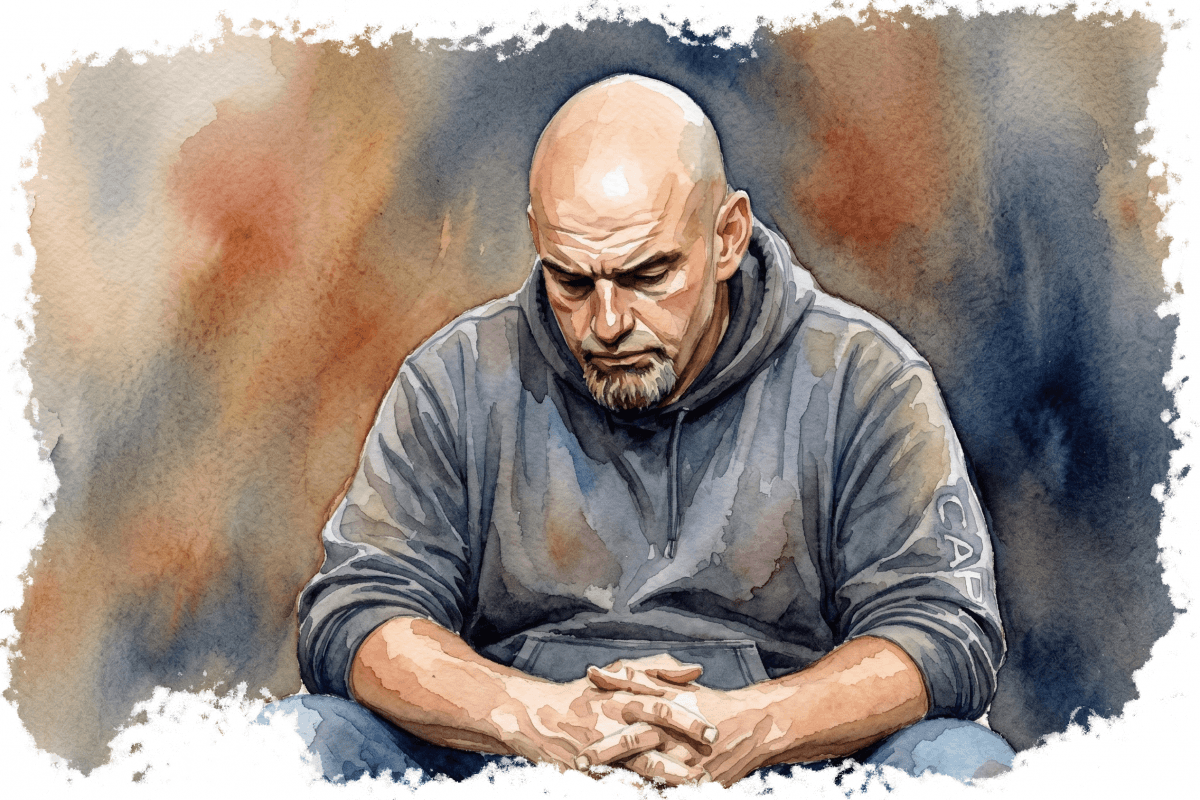
AI generated image: Senator John Fetterman offered an emotional apology to Erika Kirk

Fetterman Apologizes to Kirk After WHCD Shooting

Senator John Fetterman offered an emotional apology to Erika Kirk following a shooting incident at the White House Correspondents’ Dinner. The private gesture occurred amidst chaos after an attempted assassination of President Donald Trump.
Jump to The Flipside Perspectives

A private gesture by Pennsylvania Senator John Fetterman has garnered attention across the political spectrum following a shooting incident at the annual White House Correspondents’ Dinner (WHCD) in Washington last Saturday. The incident, which federal prosecutors have labeled a deliberate attempt to kill the president, saw a gunman open fire at the event, leading to the arrest of suspect Cole Tomas Allen, 31. Allen now faces federal charges including attempted assassination of President Donald Trump, interstate transportation of firearms with felonious intent, and discharging a weapon during a violent crime. Prosecutors detailed that Allen crossed state lines armed with a 12-gauge pump-action shotgun, a .38-caliber semi-automatic pistol, and three knives.

"There was a moment with John Fetterman and Erika that I heard about where he was pretty emotional, and he just apologized for whatever he could." — Andrew Kolvet, Turning Point USA Spokesman

The Washington Hilton, the venue for the attack, has historical significance as the site where President Ronald Reagan was shot in 1981. In the immediate aftermath of Saturday’s event, Cabinet officials and high-profile attendees were evacuated. Among them was Erika Kirk, widow of conservative activist Charlie Kirk, who was fatally shot last year. Camera footage captured Kirk leaving the venue visibly distressed, telling those nearby, “I just want to go home.” It was during this tumultuous period that Senator Fetterman reportedly approached Kirk personally.

The interaction was brought to public light by Andrew Kolvet, spokesman for Turning Point USA and executive producer of “The Charlie Kirk Show,” during a phone appearance on “The Glenn Beck Program” this week. Kolvet described the moment, stating, “There was a moment with John Fetterman and Erika that I heard about where he was pretty emotional, and he just apologized for whatever he could.” Kolvet emphasized the significance of the gesture, noting it was unsolicited: “He didn’t need to. That was after everything happened. An emotional moment, and good for John Fetterman. That’s a real moment.”

Conservative radio host Glenn Beck, during the same program, expressed his admiration for Fetterman, revealing he has personally reached out to the senator multiple times. Beck praised Fetterman’s willingness to diverge from his party’s established positions, a stance Beck believes will come at a political cost for the senator. Beck predicted Fetterman would face a primary challenge from the far left and would “never win again.”

Beck extended his critique beyond Fetterman, offering a broad indictment of the Democratic Party. He argued, “Somebody who just says commonsense stuff that is a Democrat, who doesn’t agree with me … is so chased out of their own party, they can’t have anybody who is at all, not a radical.” He continued, “They must have radicals in there. And that’s the number one thing. Democrats, you’re not an innocent bystander at this point. There’s just too much evidence.” Beck employed strong rhetoric, invoking imagery of national decline: “These people want to destroy the United States of America. If you want a violent destruction of your country, you just keep going down this road. Keep going.” He warned of severe consequences for future generations, stating, “Anybody who loses freedom like this will not get it back for at least three generations. Your children and your grandchildren will suffer under Marxism, and fascism, and death, and squalor, and you will be responsible for it! Wake up!”

Senator Fetterman has demonstrated a pattern of independent thought on issues related to presidential security and political civility. He publicly defended the President Trump administration’s proposed White House ballroom, arguing that the Washington Hilton was never designed to host events involving the full presidential line of succession. Furthermore, Fetterman had previously rebuked members of his own political alignment for online attacks against Erika Kirk. On X, he wrote, “It’s gross and dehumanizing to attack a widow with young children after just witnessing his public assassination. It shouldn’t be controversial to put our political views aside and extend the grace for a deeply traumatized family to grieve.”

The recent attack at the WHCD adds to a disturbing trend of political violence in the United States. This pattern includes the assassination of Charlie Kirk, the 2024 assassination attempt against President Trump in Butler, Pennsylvania, and the killing of former Minnesota House Speaker Melissa Hortman and her husband last July. The senator’s private apology to Erika Kirk and his public statements highlight a call for empathy and a departure from partisan animosity in the face of such incidents.

Advertisement

The Flipside: Different Perspectives

Progressive View

The emotional apology from Senator John Fetterman to Erika Kirk after the White House Correspondents’ Dinner shooting, regardless of political affiliation, is a testament to the power of human empathy in moments of collective trauma. Progressives would acknowledge Fetterman’s willingness to extend grace and compassion, especially given his prior public statements condemning online attacks against Kirk. This act underscores the importance of recognizing shared humanity, particularly when individuals are experiencing profound grief or fear, and it can serve as a model for de-escalating the vitriol often present in political discourse.

However, a progressive analysis would also look beyond individual actions to the systemic issues contributing to the broader climate of political violence. The attempted assassination of President Donald Trump and other recent violent acts are not isolated incidents but symptoms of deeper societal divisions, economic anxieties, and the spread of misinformation. While Fetterman's personal apology is commendable, it highlights a need for collective action to address the root causes of extremism and polarization. Progressives would argue that while individual gestures of empathy are vital, they must be coupled with policies that promote social cohesion, economic equity, and responsible civic engagement to truly heal national divisions and prevent future violence. The focus remains on collective well-being and understanding the complex interplay of factors that fuel such dangerous environments.

Conservative View

From a conservative perspective, Senator Fetterman’s unsolicited apology to Erika Kirk exemplifies a commendable act of personal responsibility and empathy that transcends partisan divides. This gesture, particularly in the chaotic aftermath of an attempted presidential assassination, highlights the importance of individual character over strict party loyalty. Conservatives often champion figures who demonstrate independent thought and a willingness to prioritize human decency, even when it means challenging their own political base. Glenn Beck's praise for Fetterman's willingness to break from "party orthodoxy" resonates deeply, reflecting a desire for politicians who adhere to common sense and traditional values rather than ideological purity.

The incident at the WHCD, along with other recent acts of political violence, underscores conservative concerns about the erosion of civility and the dangerous rise of radicalism. The focus on law and order, and the protection of high-ranking officials, is paramount. Beck's broader critique of the Democratic Party, suggesting a suppression of moderate voices in favor of "radicals," aligns with conservative warnings about the potential for societal decay when extreme ideologies dominate. This viewpoint emphasizes that such radicalism can lead to a "violent destruction" of the nation, stressing the urgent need for a return to fundamental principles of liberty, order, and personal accountability to safeguard the republic for future generations.

Common Ground

Despite deep ideological divides, the incident involving Senator Fetterman and Erika Kirk, and the broader context of political violence, reveals several areas of potential common ground. First and foremost, there is a shared condemnation of political violence and attempted assassinations. Citizens across the political spectrum agree that such acts are unacceptable and pose a fundamental threat to democratic institutions and the rule of law. The need for robust security measures to protect public figures and event attendees is a bipartisan concern.

Secondly, the act of human empathy and compassion, as demonstrated by Senator Fetterman, resonates universally. The recognition that individuals, regardless of their political leanings, can experience trauma and grief is a shared human experience. Fostering a culture where personal decency and respect can transcend partisan animosity, especially in the face of tragedy, is a goal both conservatives and progressives can support. Both sides can agree on the importance of civility in public discourse and the need to reduce the dehumanizing rhetoric that can contribute to a climate of violence. Finally, there is a mutual interest in safeguarding the future of the nation, ensuring stability and peace for future generations, even if the pathways to achieving this differ significantly.

What's your view on this story? Share your thoughts and remember to consider multiple perspectives and being respectful when forming and voicing your opinion. "If you resort to personal attacks, you have already lost the debate..."

Advertisement

Contact Us About This Article

Have a question or comment about this article? We'd love to hear from you.

About Fair Side News

At Fair Side News, we believe in presenting news with perspectives from both sides of the political spectrum. Our goal is to help readers understand different viewpoints and find common ground on important issues.