


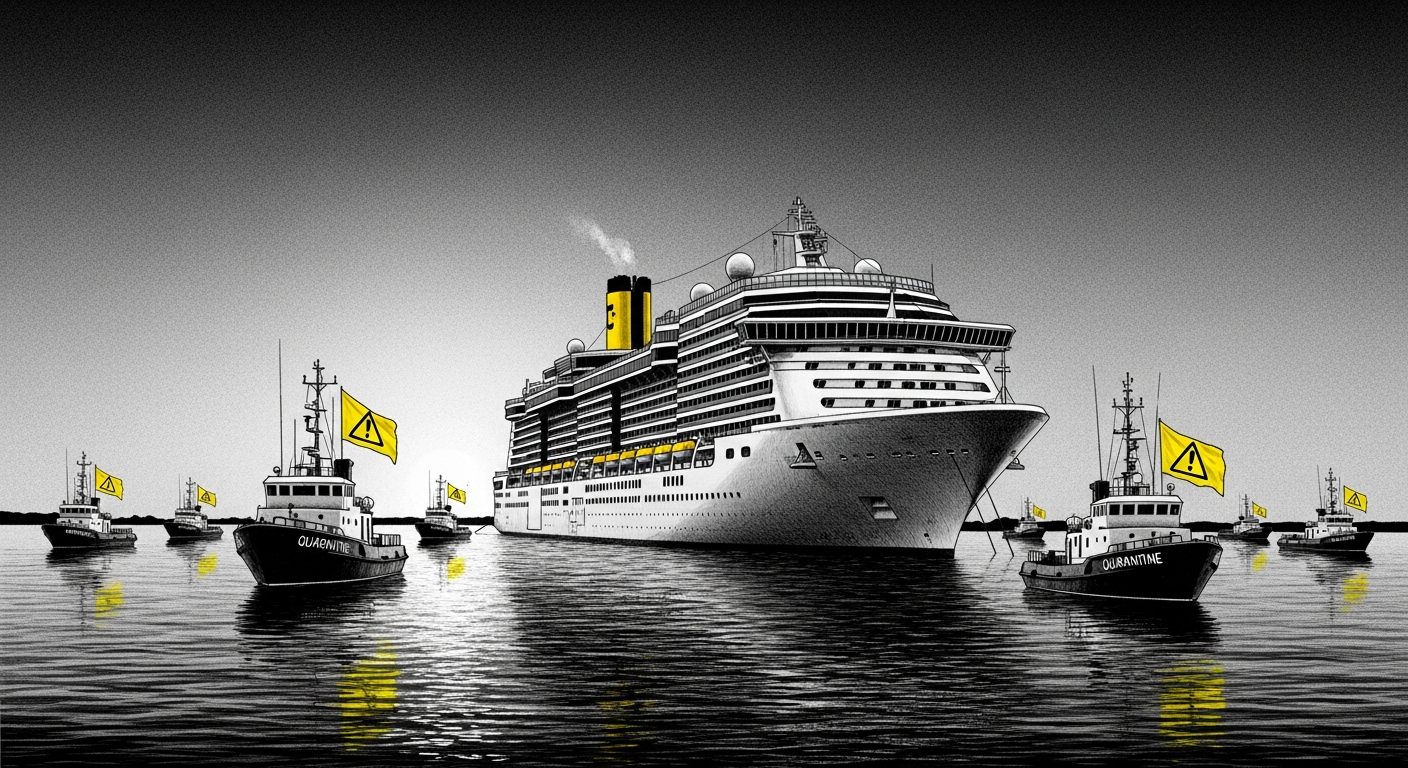
Seventeen American citizens who were aboard the MV Hondius cruise ship, which has been linked to a fatal hantavirus outbreak, are currently en route to the United States for a mandatory 42-day quarantine period. The passengers began disembarking Sunday in Spain’s Canary Islands, where international health operations were coordinated to manage the outbreak’s global impact. These Americans will be transported to the National Quarantine Unit at the University of Nebraska Medical Center for monitoring.
"The outbreak should not be compared to the COVID-19 pandemic and stressed that public panic is not warranted." — Jay Bhattacharya, Acting CDC Director
The MV Hondius arrived near Tenerife in the Canary Islands early Sunday morning, initiating a complex international operation to repatriate passengers from more than a dozen countries. Health officials confirmed that the outbreak, specifically involving the Andes strain of hantavirus, has resulted in at least three deaths and multiple confirmed or suspected infections. Passengers, donning protective gear, were transported ashore in small groups for initial medical screening before being directed to evacuation flights bound for their respective home countries. Spanish authorities quickly established temporary medical facilities near the port to facilitate these screenings and ensure safe transitions.
The World Health Organization (WHO) has recommended a 42-day monitoring period for all exposed passengers, a measure necessitated by the hantavirus’s extended incubation period, which can span several weeks after initial exposure. This lengthy incubation period presents significant challenges for health officials, requiring meticulous follow-up to detect delayed symptom onset and prevent further transmission. The 17 Americans are being evacuated on a government-chartered medical flight, underscoring the serious nature of the public health response and the specialized logistical requirements for managing such an infectious disease exposure.
Acting CDC Director Jay Bhattacharya has sought to reassure the public, stating that "the outbreak should not be compared to the COVID-19 pandemic and stressed that public panic is not warranted." This clarification aims to mitigate widespread anxiety, distinguishing the current situation from past global health crises. Health officials have noted that all remaining passengers aboard the MV Hondius were asymptomatic during the disembarkation process. However, the potential for delayed symptom development means continuous monitoring remains critical for all individuals who were on the vessel.
The Andes virus strain of hantavirus is a rare subtype known for its capacity for limited person-to-person transmission, typically through prolonged close contact. This characteristic makes it distinct from other hantavirus strains, which are primarily transmitted to humans via contact with rodent droppings, urine, or saliva. The cruise ship environment, characterized by close quarters and shared spaces, can, however, present a unique challenge for containing any infectious agent capable of human-to-human spread, even if limited.
The global response to the MV Hondius outbreak has involved significant international coordination. French Prime Minister Sebastien Lecornu announced Sunday that one French passenger developed symptoms during a repatriation flight after leaving the ship. This individual, along with four additional French nationals, was immediately placed into strict isolation upon arrival for testing and medical evaluation, highlighting the ongoing vigilance required. Similarly, British authorities launched emergency operations after a British passenger linked to the cruise ship fell ill on the remote Atlantic island of Tristan da Cunha. Due to the island's lack of an airport and limited medical infrastructure, the British military parachuted medics and medical supplies onto the island to provide urgent care, illustrating the extraordinary measures taken to address health emergencies in isolated locations.
Once all evacuation procedures are concluded and most passengers have disembarked, the MV Hondius is slated to sail to the Netherlands for a comprehensive disinfection process. This step is crucial for ensuring the vessel is thoroughly decontaminated before it can resume operations, preventing any lingering viral presence. The World Health Organization and national governments worldwide continue to monitor exposed passengers, while consistently emphasizing that the broader public health risk associated with this specific hantavirus outbreak remains low, provided containment protocols are strictly followed. The coordinated efforts underscore the commitment of international and national health agencies to manage the immediate crisis and prevent wider public health implications.

