

Breaking
Sponsor Advertisement
Judge Blocks Trump Voter Eligibility Database Expansion
Image for: Judge Blocks Trump Voter Eligibility Database Expansion

Judge Blocks Trump Voter Eligibility Database Expansion

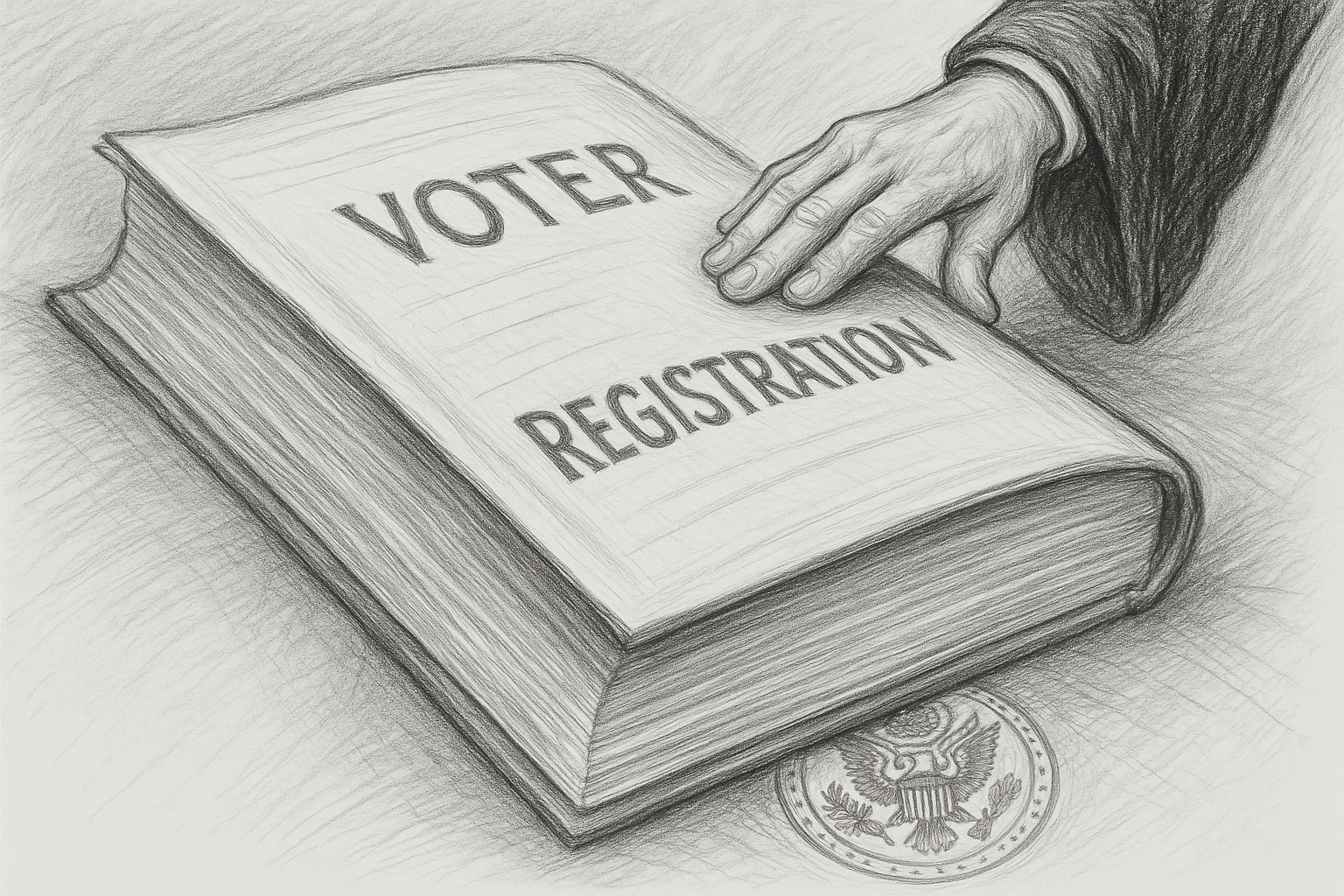
A federal judge has halted a Trump administration initiative that aimed to expand voter eligibility verification using a combined federal citizenship database. The ruling creates a legal challenge for the administration's efforts to implement election security measures.
Jump to The Flipside Perspectives

A federal court has blocked a Trump administration initiative designed to enhance voter eligibility verification through an expanded federal citizenship database. The ruling, issued Monday by U.S. District Judge Sparkle Sooknanan, appointed by President Joe Biden, presents a new legal obstacle for the administration as it pursues election-security measures ahead of upcoming federal elections.

"In a statement posted on social media, Percival said the ruling was another example of legal resistance to measures aimed at strengthening election security and verifying voter eligibility." — James Percival, DHS General Counsel

The dispute stems from a federal effort initiated after President Donald Trump's March 2025 executive order, which directed federal agencies to strengthen citizenship verification capabilities available to state election officials. The administration's plan sought to integrate information from multiple federal databases into a single system. This consolidated system was intended to assist states in verifying voter eligibility and citizenship status for maintaining accurate voter rolls.

At the core of the judicial challenge is the Department of Homeland Security’s (DHS) Systematic Alien Verification for Entitlements, or SAVE, program. Historically, the SAVE system has been utilized by government agencies to confirm immigration status for individuals applying for public benefits. Under the Trump administration's initiative, the database was expanded to incorporate additional information, including records from the Social Security Administration, thereby enabling broader citizenship verification searches.

In her extensive opinion, Judge Sooknanan determined that federal agencies had overstepped their legal authority by combining records from various government databases and by expanding access to what the court deemed sensitive personal information. The ruling specifically found that the administration’s actions were in conflict with provisions of the Social Security Act, the Privacy Act, and the Administrative Procedure Act, as reported by CBS News.

Court filings cited in the decision alleged that errors within the expanded database had resulted in some eligible citizens being incorrectly identified during voter-roll maintenance reviews conducted by several states that had already adopted the updated verification tool. These alleged inaccuracies, according to the decision, contributed to the cancellation of voter registrations in certain instances, raising alarm among advocacy organizations that subsequently challenged the system in court.

The lawsuit was brought forth by a coalition of groups, including the League of Women Voters and the Electronic Privacy Information Center, alongside several individual plaintiffs. These organizations contended that federal agencies had unlawfully consolidated personal information from multiple government databases. They argued that the creation of a centralized voter-verification system, by merging records from various federal agencies, was undertaken without adhering to required legal procedures or establishing adequate privacy safeguards.

The Trump administration has consistently defended the modernization effort, asserting that federal law permits information-sharing between government agencies. Justice Department attorneys argued that the expansion of the SAVE system was explicitly intended to assist states in maintaining accurate voter rolls and that only a limited number of records might contain inaccurate citizenship information.

Critics of the ruling, including DHS General Counsel James Percival, argued that the decision impedes crucial efforts to address concerns regarding noncitizen voting, according to The Hill. In a statement posted on social media, Percival characterized the ruling as "another example of legal resistance to measures aimed at strengthening election security and verifying voter eligibility."

Conversely, voting-rights organizations welcomed the court's decision, hailing it as a significant victory for privacy protections and sound election administration. Representatives for the League of Women Voters and Democracy Forward were quoted by USA Today, stating that the ruling effectively reduces the risk that administrative record errors could adversely affect an individual's voter-registration status.

The Trump administration retains the option to appeal the ruling to the U.S. Court of Appeals for the District of Columbia Circuit. This judicial setback adds to a growing series of court battles surrounding federal election-policy changes pursued during President Trump's second term, underscoring ongoing legal scrutiny of the administration's efforts to reshape election processes.

Advertisement

The Flipside: Different Perspectives

Progressive View

The federal court's decision to block the Trump administration’s expanded citizenship database is a crucial victory for voting rights and privacy protections. While the stated goal of election security is valid, the method proposed by the administration risked disenfranchising eligible voters through administrative errors and overreach. The ruling correctly identifies that federal agencies exceeded legal limits by consolidating sensitive personal information from multiple databases without proper legal procedures and privacy safeguards. Allegations of database errors leading to incorrect identification and voter-registration cancellations highlight the real-world harm such systems can inflict on citizens, particularly those with common names, hyphenated surnames, or complex immigration histories who are nevertheless citizens. The expansion of the SAVE program beyond its original scope, without adequate checks and balances, created a centralized system prone to inaccuracies and potential abuse. This decision upholds fundamental principles of privacy and due process, ensuring that the pursuit of election integrity does not come at the cost of citizens' rights or lead to discriminatory outcomes. It emphasizes that any reforms to voter verification must be meticulously crafted to protect all eligible voters.

Conservative View

The federal court's decision to block the Trump administration’s expanded citizenship database initiative is a significant blow to election integrity efforts, which are paramount for ensuring faith in democratic processes. The administration’s executive order and subsequent actions were a legitimate attempt to assist states in maintaining accurate voter rolls by verifying citizenship, a fundamental requirement for voting. Critics of the ruling emphasize that noncitizen voting, even if infrequent, erodes the principle of national sovereignty and dilutes the votes of legal citizens. Federal agencies are often permitted to share information to achieve governmental objectives, and the expansion of the SAVE database was a logical extension of existing programs aimed at verifying immigration status. The argument that agencies "exceeded legal limits" by combining data overlooks the necessity of robust data integration to prevent fraud and ensure that only eligible citizens cast ballots. This ruling represents judicial overreach, substituting a judge's policy preferences for the administration's constitutional duty to secure elections. It hinders proactive measures to prevent potential voter fraud and undermines states' abilities to uphold the integrity of their electoral systems.

Common Ground

Despite differing views on the recent court ruling, there is a shared interest in ensuring the accuracy and integrity of voter rolls while simultaneously protecting the privacy and voting rights of all eligible citizens. Both conservatives and progressives agree that elections must be fair and that only eligible individuals should cast ballots. The challenge lies in implementing verification systems that are both effective and equitable. Future efforts could focus on developing secure, transparent, and auditable verification processes that minimize the risk of errors and wrongful disenfranchisement. This might involve bipartisan legislative efforts to clarify data-sharing protocols between federal and state agencies, ensuring that any expanded use of databases adheres strictly to privacy laws and includes robust mechanisms for error correction and citizen redress. Investing in technology that can accurately verify eligibility without compromising privacy or creating barriers for legitimate voters is a goal that transcends ideological divides.

What's your view on this story? Share your thoughts and remember to consider multiple perspectives and being respectful when forming and voicing your opinion. "If you resort to personal attacks, you have already lost the debate..."

Advertisement

Contact Us About This Article

Have a question or comment about this article? We'd love to hear from you.

About Fair Side News

At Fair Side News, we believe in presenting news with perspectives from both sides of the political spectrum. Our goal is to help readers understand different viewpoints and find common ground on important issues.