

Breaking
Sponsor Advertisement
Utah Justice Hagen Resigns Amid Text Message Allegations
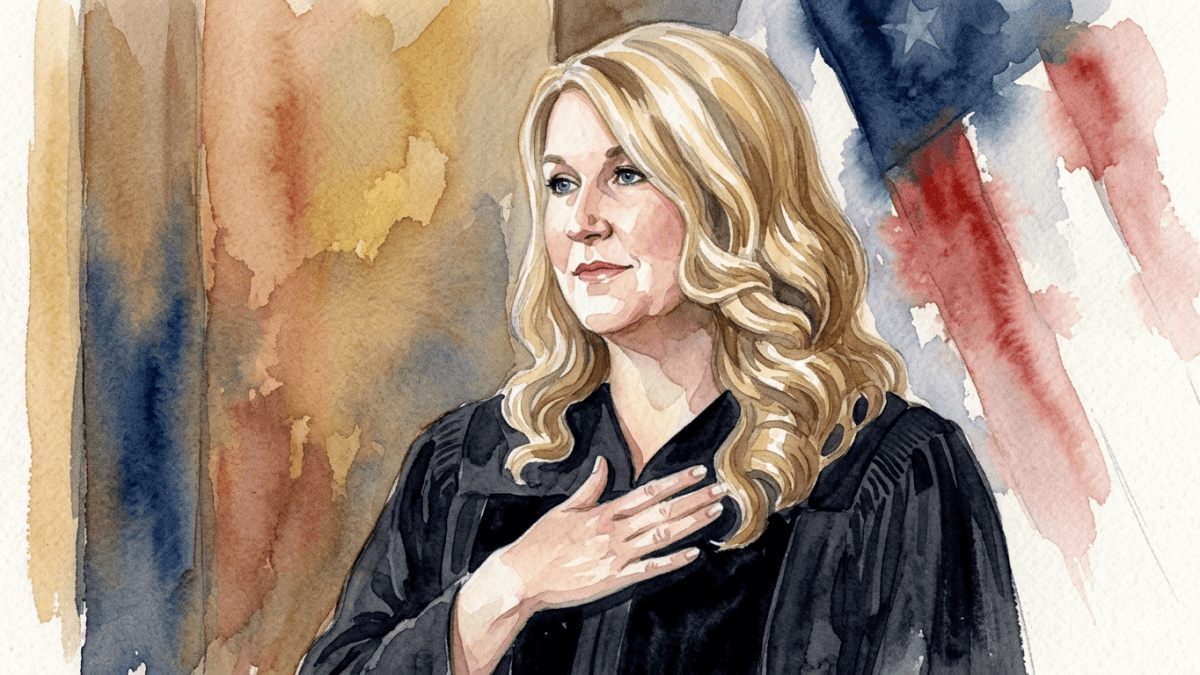
AI-generated image for: Utah Justice Hagen Resigns Amid Text Message Allegations

Utah Justice Hagen Resigns Amid Text Message Allegations

Justice Diana Hagen resigned from the Utah Supreme Court following allegations of inappropriate text messages with an attorney involved in a case before the court. Republican lawmakers had renewed calls for further investigation into the claims.
Jump to The Flipside Perspectives

Utah Supreme Court Justice Diana Hagen resigned from her position on Friday, May 8, 2026, following allegations that she exchanged inappropriate text messages with attorney David Reymann, who was involved in a redistricting case before the state's highest court. The resignation came amidst renewed pressure from Republican legislative leaders for a deeper investigation into the claims.

"We appreciate Justice Hagen’s resignation and her willingness to step aside in the best interest of the Institution." — Senate President J. Stuart Adams and House Speaker Mike Schultz, Utah Legislative Leaders.

The allegations against Justice Hagen first surfaced last year when her ex-husband, Tobin Hagen, filed a complaint with the Judicial Conduct Commission. Tobin Hagen claimed that the text messages between his then-wife and Reymann initially appeared harmless but gradually became more personal and inappropriate as their communication intensified during the deterioration of the Hagens' 30-year marriage. Both Justice Hagen and attorney Reymann had previously denied any allegations of a romantic relationship while Reymann was appearing before the Utah Supreme Court.

Following the initial complaint, the Judicial Conduct Commission conducted a preliminary investigation into the matter. However, the commission ultimately declined to pursue a deeper inquiry, dismissing some of the claims as misleading. This decision did not satisfy some Republican legislative leaders, including Senate President J. Stuart Adams and House Speaker Mike Schultz, who subsequently renewed their calls for additional investigation into Justice Hagen's conduct.

In the wake of Justice Hagen's resignation, Senate President Adams and House Speaker Schultz issued a joint statement, indicating that they now considered the matter resolved and would not pursue any further investigations into the allegations. "We appreciate Justice Hagen’s resignation and her willingness to step aside in the best interest of the Institution," the lawmakers stated, acknowledging the conclusion of the public controversy from their perspective.

Justice Hagen submitted her resignation letter to Utah Governor Spencer Cox. In her letter, she referenced the intense public scrutiny surrounding the dissolution of her marriage. She wrote, "As a public servant for twenty-six years, I am keenly aware that public service requires sacrifice." Hagen further articulated her concern for her family and friends, stating that they "did not choose public life" and should not be subjected to public scrutiny regarding the personal details connected to the end of her marriage. Governor Cox announced the resignation on Friday and expressed his gratitude for Justice Hagen's years of service to the state judiciary since her appointment to the Utah Supreme Court in 2022.

Court records and reports indicate a timeline of events leading up to the resignation. Justice Hagen reportedly requested a divorce from her husband in September 2024. Shortly thereafter, she began communicating with attorney Reymann on matters initially unrelated to court cases. Reymann was actively involved in significant litigation challenging Utah's congressional district maps, a case that sought to alter the maps which had maintained four Republican-leaning congressional seats following the state's redistricting process. Justice Hagen later recused herself from this specific redistricting case in 2025. Court records cited a recently "renewed friendship" with Reymann as the reason for her stepping aside from the case.

The resignation effectively brings to a close a period of public and political pressure on the Utah Supreme Court and Justice Hagen. It underscores the intense scrutiny faced by public officials, particularly those in the judiciary, regarding their personal conduct and potential conflicts of interest. The event also highlights the complex balance between a public servant's private life and the demands of maintaining public trust and the integrity of judicial institutions. The process involved a complaint from a private citizen, an initial review by a judicial ethics body, and subsequent pressure from legislative leaders, illustrating the multi-faceted avenues through which accountability can be sought in public office. The state will now begin the process of identifying and appointing a new justice to fill the vacancy on its highest court.

Advertisement

The Flipside: Different Perspectives

Progressive View

From a progressive viewpoint, the resignation of Justice Diana Hagen presents a complex situation that warrants a nuanced understanding. While acknowledging the critical importance of judicial ethics and impartiality, it is equally important to consider the human element and the immense personal toll public scrutiny can take, particularly during sensitive private matters like a divorce. Justice Hagen's reference to her family not choosing public life highlights the systemic pressures placed on individuals in public service, where personal lives can become subjects of intense public and political scrutiny. There is a concern that such allegations, even if unproven or partially dismissed by an initial investigation, can be weaponized or amplified, especially against women in high-profile positions. While accountability is crucial, the focus should also be on ensuring due process and a fair, thorough investigation that balances the public's right to know with an individual's right to privacy, rather than relying on political pressure alone to force a resolution. The swift end to the matter with the resignation might prevent a prolonged public spectacle, but it also leaves unanswered questions about the full truth of the allegations.

Conservative View

From a conservative perspective, the resignation of Justice Diana Hagen underscores the paramount importance of judicial integrity and the maintenance of public trust in the judiciary. The principle of personal responsibility dictates that individuals in positions of power, especially judges, must uphold the highest ethical standards both on and off the bench. Any allegations of impropriety, particularly those suggesting a conflict of interest with an attorney appearing before the court, demand thorough investigation and decisive action. The renewed calls for inquiry by Republican legislative leaders highlight a commitment to accountability and legislative oversight, ensuring that judicial bodies do not operate without proper checks. While the Judicial Conduct Commission initially dismissed some claims, the continued legislative pressure reflects a concern that public confidence could be eroded if such matters are not fully transparently addressed. Justice Hagen's resignation, therefore, can be viewed as a necessary step to protect the institution's credibility, demonstrating that even high-ranking officials are not exempt from the consequences of actions that could compromise the impartiality of the justice system.

Common Ground

Across the political spectrum, there is fundamental agreement on the necessity of an impartial and trusted judiciary. Both conservatives and progressives concur that judges must operate free from conflicts of interest and maintain the highest ethical standards to ensure fairness and equal justice under the law. There is shared recognition that public servants, particularly those in critical roles like Supreme Court justices, bear a significant responsibility to uphold the integrity of their institutions. Furthermore, there is common ground in acknowledging the personal sacrifices made by individuals who dedicate their lives to public service. While approaches to accountability may differ, both sides can agree on the need for clear, consistent ethical guidelines for judicial conduct and processes that ensure public confidence in the judicial system. The desire for a definitive resolution to ethical complaints, whether through investigation or resignation, is a shared objective to maintain institutional stability and focus on the core mission of justice.

What's your view on this story? Share your thoughts and remember to consider multiple perspectives and being respectful when forming and voicing your opinion. "If you resort to personal attacks, you have already lost the debate..."

Advertisement

Contact Us About This Article

Have a question or comment about this article? We'd love to hear from you.

About Fair Side News

At Fair Side News, we believe in presenting news with perspectives from both sides of the political spectrum. Our goal is to help readers understand different viewpoints and find common ground on important issues.