
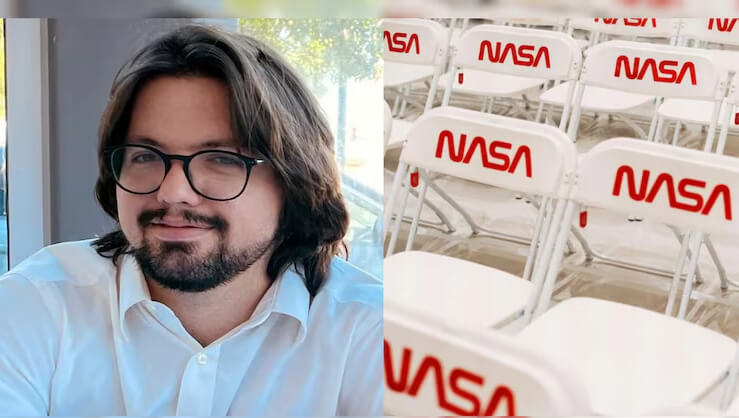
Joshua LeBlanc, a 29-year-old engineer involved in advanced nuclear propulsion programs for NASA, was found dead inside a burned Tesla following a violent crash in Huntsville, Alabama, on July 22, 2025. The incident, which occurred after his vehicle struck a guardrail, collided with several trees, and subsequently caught fire, has garnered increased attention as it is now being discussed in the context of other scientists and engineers whose recent deaths or disappearances are under review by congressional and FBI officials. Authorities have not publicly established any links between these cases.
The severity of the crash rendered LeBlanc's body initially unrecognizable, with identification confirmed days later through forensic procedures by the Alabama Department of Forensic Sciences. According to reports, LeBlanc’s family grew concerned early on the morning of his death when he failed to report to work and ceased communication. They officially reported him missing at approximately 4:32 a.m. Family members also noted that LeBlanc had uncharacteristically left behind his phone and wallet, a detail they found highly unusual and alarming, which fueled their fears that an incident might have occurred prior to the crash itself.
Investigators later reviewed data from the Tesla’s Sentry Mode system. The report indicated that the data showed LeBlanc’s vehicle stationary at Huntsville International Airport for approximately four hours during the early morning hours of his death. Relatives reportedly stated that travel west, in the direction of the airport, was not part of his expected plans for that day. The burned vehicle was discovered later that afternoon, around 2:45 p.m., according to the Alabama Law Enforcement Agency.
LeBlanc's professional background has also contributed to the public interest surrounding his death. His LinkedIn profile indicated more than five years of service at NASA, where he held significant roles. He reportedly served as a team lead for NASA’s Space Nuclear Propulsion Instrumentation and Control Maturation program. Subsequently, he transitioned to a team lead position on the Demonstration Rocket for Agile Cislunar Operation, known as DRACO. DRACO is a critical nuclear thermal propulsion project designed to develop faster and more capable deep-space transportation systems, integral to future space exploration endeavors.
Due to LeBlanc's specialized technical work in advanced propulsion, his death has become a subject of broader online speculation, particularly within communities following researchers in the aerospace, defense, and nuclear sectors. Despite this speculation, no public evidence has emerged thus far to suggest foul play or to connect LeBlanc’s death to any larger, unconfirmed pattern of incidents. The known official circumstance, as described in the report, remains a fatal crash followed by a vehicle fire.
However, the unanswered questions raised by LeBlanc’s family—including the unusual circumstances of his disappearance, the unexpected stop at the airport, and the overall timing of events—have sustained public and media interest in the case. Law enforcement agencies continue their investigation to provide a comprehensive understanding of the events leading to LeBlanc's death. The ongoing congressional and FBI reviews into the deaths and disappearances of other scientists and engineers add a layer of complexity to the public discourse, even in the absence of an official link to LeBlanc’s incident.