


Breaking
Sponsor Advertisement
Trump Cancels Pakistan Trip Amid Iran Leadership Confusion
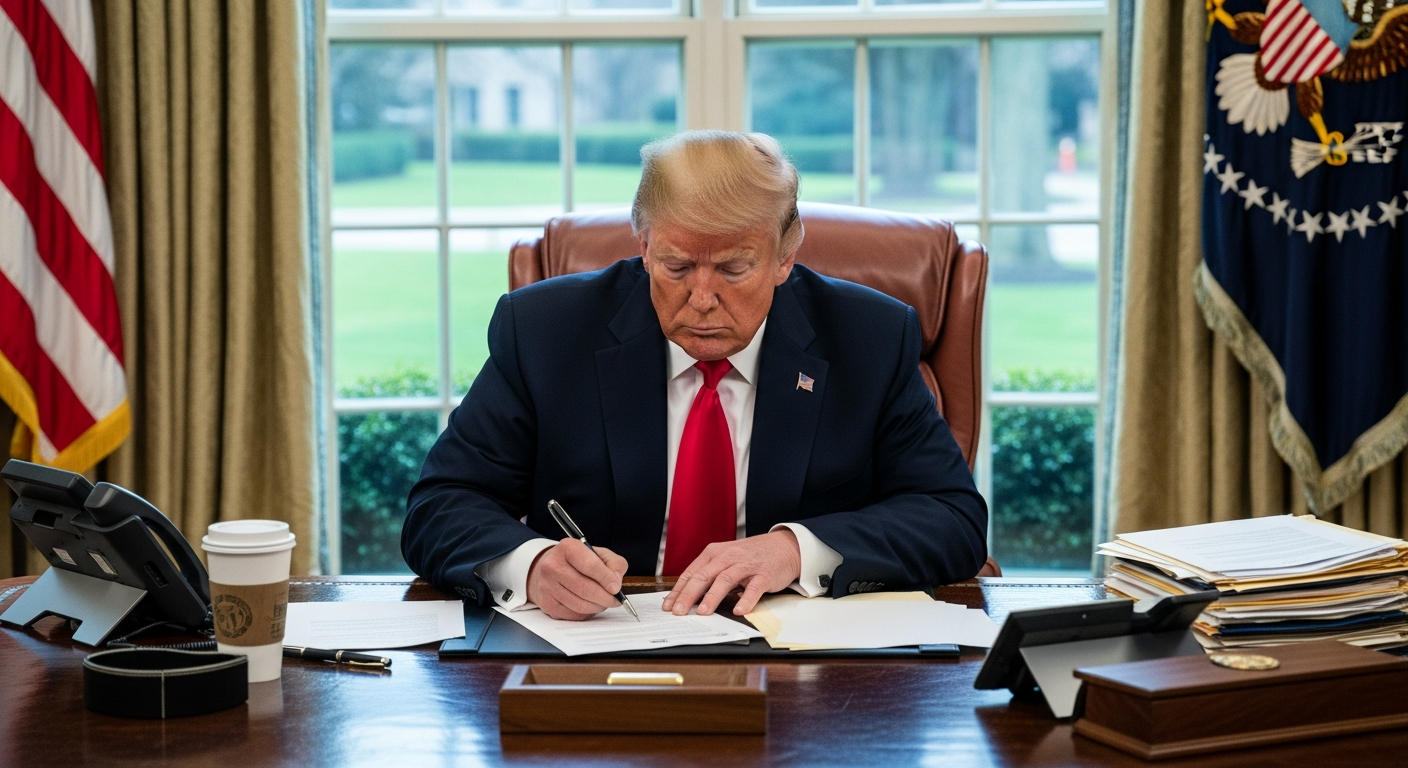
AI-generated image for: Trump Cancels Pakistan Trip Amid Iran Leadership Confusion

Trump Cancels Pakistan Trip Amid Iran Leadership Confusion

President Donald Trump canceled a US delegation's planned trip to Pakistan for talks with Iranian representatives, citing internal disorder within Iran's government. This decision halts a diplomatic effort intended to advance face-to-face discussions.
Jump to The Flipside Perspectives

President Donald Trump announced Saturday the cancellation of a planned U.S. delegation trip to Islamabad, Pakistan, where American officials were expected to continue negotiations with Iranian representatives. The President revealed his decision in a Truth Social post, attributing the halt in diplomatic efforts to internal disorder within Iran's government.

"I just cancelled the trip of my representatives going is Islamabad, Pakistan, to meet with the Iranians." — President Donald Trump

"I just cancelled the trip of my representatives going is Islamabad, Pakistan, to meet with the Iranians," President Trump wrote in his post. He further elaborated on the rationale, stating there was "tremendous infighting and confusion" within Iran's leadership. President Trump added, "Nobody knows who is in charge, including them," indicating a perceived lack of a unified negotiating partner on the Iranian side.

The canceled delegation was reportedly set to include Special Envoy Steve Witkoff and adviser Jared Kushner. Vice President JD Vance had also been placed on standby, signaling the potential importance of the planned discussions. Earlier White House statements had indicated the trip's purpose was to advance talks following Iran's reported interest in direct face-to-face discussions with U.S. officials.

President Trump also utilized his social media post to underscore what he views as the United States' strong negotiating position. "We have all the cards, they have none," he asserted. He added that if Iranian officials desired talks, they only needed to "call Washington directly." This statement suggests a belief within the Trump administration that the United States holds significant leverage and sees little reason to dispatch a delegation abroad while Iran grapples with internal divisions.

When questioned by Axios correspondent Barak Ravid about whether canceling the trip signified a return to war, President Trump denied such a conclusion. "No. It doesn’t mean that. We haven’t thought about it yet," he reportedly stated. This response leaves open questions about the precise nature of the diplomatic pause, specifically whether it is a temporary halt or a strategic shift towards pressure tactics over direct negotiation.

Pakistan had been actively attempting to serve as a mediator between the United States and Iran. Iranian Foreign Minister Abbas Araghchi recently met in Islamabad with Pakistani Prime Minister Shehbaz Sharif and Army Chief Asim Munir. Pakistani officials characterized these meetings as part of broader efforts aimed at promoting regional peace and stability.

However, reports indicate that Foreign Minister Araghchi departed Islamabad before the anticipated arrival of the U.S. delegation. Iranian state media, cited by Breitbart News, reported that Araghchi did not intend to meet American officials directly. Instead, he viewed Pakistan primarily as a conduit for relaying proposals between the two governments. This detail suggests a potential misalignment in expectations, where the United States may have anticipated direct dialogue while Iran planned for indirect messaging, potentially contributing to President Trump's stated frustration.

Publicly, Iranian officials have sought to project an image of governmental unity. Iranian President Masoud Pezeshkian and other high-ranking officials have issued statements affirming the cohesion of their government. Despite these public assertions, reports suggest underlying disagreements between factions described as moderates and hardliners, particularly concerning the approach to negotiations with Washington.

Earlier in the week, President Trump had already cited these internal divisions within Iran as a significant impediment to diplomatic progress. He had also extended an existing ceasefire beyond its initial two-week period without setting a new firm deadline. According to reports, President Trump attributed part of this extension to requests from Pakistani leadership and a recognition that Iran required additional time to consolidate a unified negotiating position. The cancellation of the delegation trip now adds another layer of complexity to the already intricate diplomatic landscape between Washington and Tehran.


Advertisement

The Flipside: Different Perspectives

Progressive View

The cancellation of the U.S. delegation's trip, while framed as a response to Iranian disunity, risks closing vital channels for de-escalation and miscalculation. From a progressive viewpoint, diplomacy, particularly with complex adversaries, often requires engaging even when internal conditions are challenging. Shutting down direct communication opportunities can heighten tensions and reduce the ability to understand or influence internal dynamics. Pakistan's role as a mediator highlights the importance of multilateral approaches and international cooperation in fostering regional stability. The reported disparity in expectations—U.S. desiring direct talks versus Iran viewing Pakistan as a channel—underscores the need for clearer pre-negotiation frameworks rather than outright cancellation. While Iranian internal divisions are a factor, a progressive approach would prioritize sustained engagement, perhaps through alternative channels, to prevent escalation and ensure that humanitarian concerns and long-term stability are not jeopardized by a breakdown in communication. The uncertainty regarding a "return to war" suggests that without consistent diplomatic efforts, the risk of unintended consequences remains elevated.

Conservative View

The cancellation of the U.S. delegation's trip to Pakistan demonstrates President Trump's commitment to negotiating from a position of strength and refusing to engage in talks lacking clear purpose or a unified counterpart. From a conservative perspective, direct engagement with a government experiencing "tremendous infighting and confusion" is unproductive and risks legitimizing a fractured regime. President Trump's assertion that "We have all the cards, they have none" underscores a belief in American exceptionalism and the importance of maintaining leverage. This approach prioritizes national interests and security by demanding that Iran resolve its internal divisions before expecting high-level diplomatic engagement. It aligns with the principle of personal responsibility, placing the onus on Iran to present a cohesive front. Engaging without such clarity would be seen as a concession, weakening the U.S. position and potentially emboldening factions within Iran that oppose genuine progress. The President's stance reinforces the idea that diplomacy, while valuable, must be pursued strategically and not at the expense of American strength or clarity of purpose.

Common Ground

Despite differing perspectives on the immediate diplomatic approach, both conservative and progressive viewpoints share a fundamental interest in avoiding military conflict and promoting stability in the Middle East. There is common agreement that clear communication is essential for effective international relations, and that internal instability within any nation, including Iran, can pose challenges to global security. Both sides can acknowledge the value of intermediary nations like Pakistan in facilitating dialogue, even if the directness of that dialogue is debated. Furthermore, a shared objective is to ensure that any future negotiations are productive and serve the interests of peace and regional security. While the method may differ, the ultimate goal of preventing escalation and fostering a more stable geopolitical environment remains a common priority. The extension of the ceasefire, partly at Pakistan's request, indicates a mutual desire to create space for diplomatic solutions, even if the path forward remains contested.

What's your view on this story? Share your thoughts and remember to consider multiple perspectives and being respectful when forming and voicing your opinion. "If you resort to personal attacks, you have already lost the debate..."

Advertisement

Contact Us About This Article

Have a question or comment about this article? We'd love to hear from you.

About Fair Side News

At Fair Side News, we believe in presenting news with perspectives from both sides of the political spectrum. Our goal is to help readers understand different viewpoints and find common ground on important issues.