
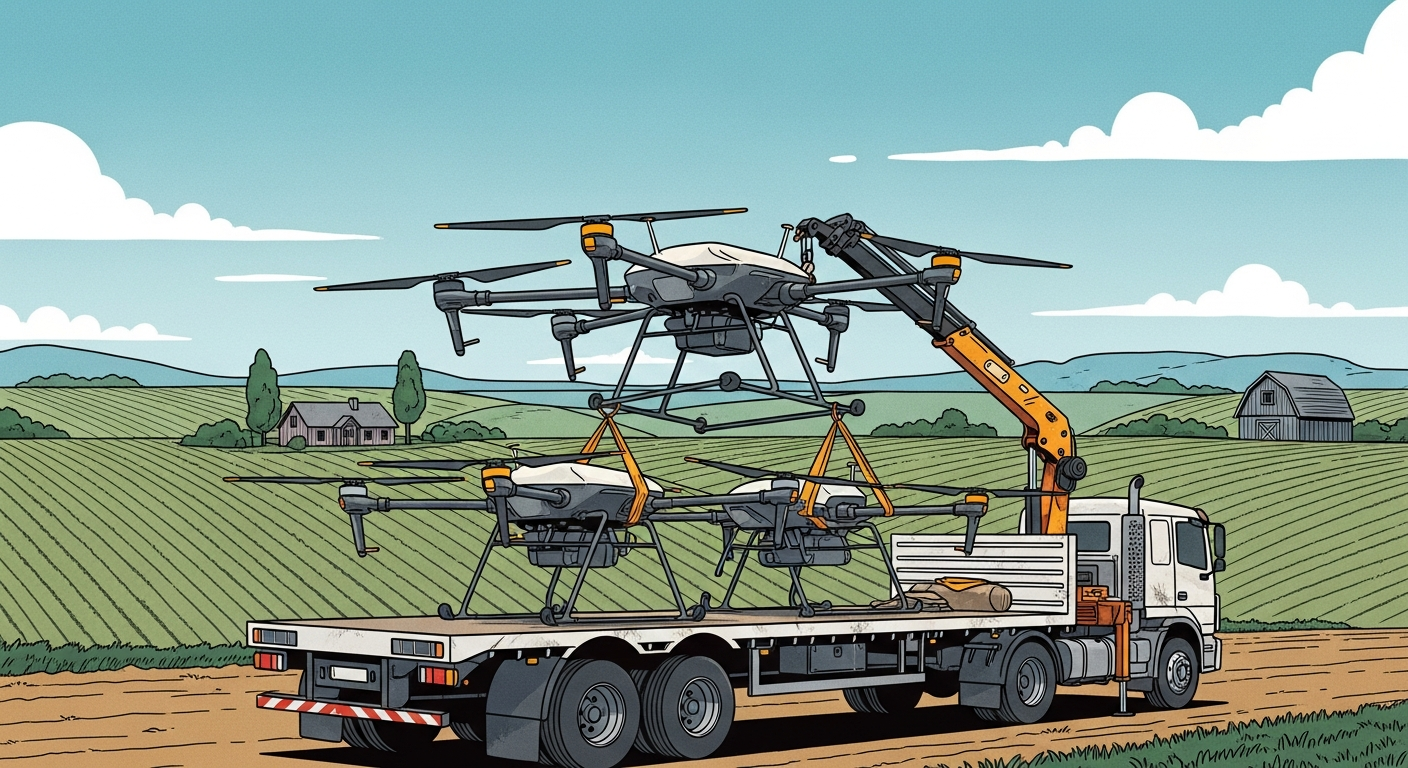
The Federal Bureau of Investigation (FBI) has launched an urgent inquiry into the theft of 15 advanced agricultural drones from a logistics facility in Harrison, New Jersey, on March 24. The incident, described by sources as one of the most sophisticated cargo thefts in years, involved suspects using forged shipping documents to unlawfully remove the high-value equipment from CAC International.
According to reports, an individual posing as a legitimate delivery driver presented a counterfeit bill of lading and a fake confirmation email to gain possession of the shipment. The stolen equipment consists of Ceres Air C31 models, industrial-grade drones designed for large-scale agricultural applications. Each C31 unit weighs approximately 500 pounds, comparable in size to an all-terrain vehicle, and is valued between $15,000 and $58,000. This places the total estimated loss between $225,000 and $870,000, depending on the specific configurations of the stolen drones.
The capabilities of the Ceres Air C31 drones are a primary concern for investigators. These machines are engineered for precision agriculture, capable of spraying fertilizers, pesticides, and other liquid treatments over extensive farmland. Specifications indicate each drone can carry up to 40 gallons of liquid per flight and cover an area of 15 to 20 acres in approximately seven minutes, utilizing GPS-guided autonomous navigation. This combination of large payload capacity, rapid area coverage, and autonomous functionality distinguishes them significantly from recreational drones.
The New York Post reported that the FBI's involvement underscores the complexity and urgency of the investigation. A source briefed on the matter characterized the theft as extraordinarily sophisticated, highlighting a growing national trend of cargo theft involving fraudulent pickups. Criminal organizations increasingly employ tactics such as fake identities, forged dispatch records, cloned trucking credentials, or spoofed emails to intercept valuable freight before it reaches its intended destination.
Retired FBI agent Steve Lazarus emphasized the gravity of the situation, stating, "These are not hobby drones but industrial sprayers built to disperse significant amounts of liquid quickly and accurately." Lazarus warned, as reported by Trending Politics, that even common agricultural chemicals, if misused, could pose serious public safety risks. The potential for misuse extends beyond agricultural chemicals, with a 2020 U.S. Army manual referenced in the report noting that commercially available agricultural drones could potentially be adapted as platforms for chemical or biological agent delivery, given their inherent design for aerial dispersion.
As of the current publication, no arrests have been announced in connection with the theft. Neither Ceres Air, CAC International, nor the Harrison Police Department has issued public statements regarding the incident. Investigators face the complex task of determining the drones' current whereabouts, including whether they have been dismantled for parts, resold domestically or internationally, or remain intact for illicit operations.
The nature of the stolen equipment presents unique challenges for the perpetrators. These advanced machines require specialized batteries, proprietary software, transport vehicles, and trained operators to function effectively, making them considerably more difficult to conceal or liquidate than ordinary stolen goods. The ongoing investigation aims to trace these components and the individuals responsible for what authorities consider a highly organized criminal operation with potentially far-reaching implications.