


Breaking
Sponsor Advertisement
President Trump Clashes With Anchor Over Suspect's Writings on '60 Minutes'
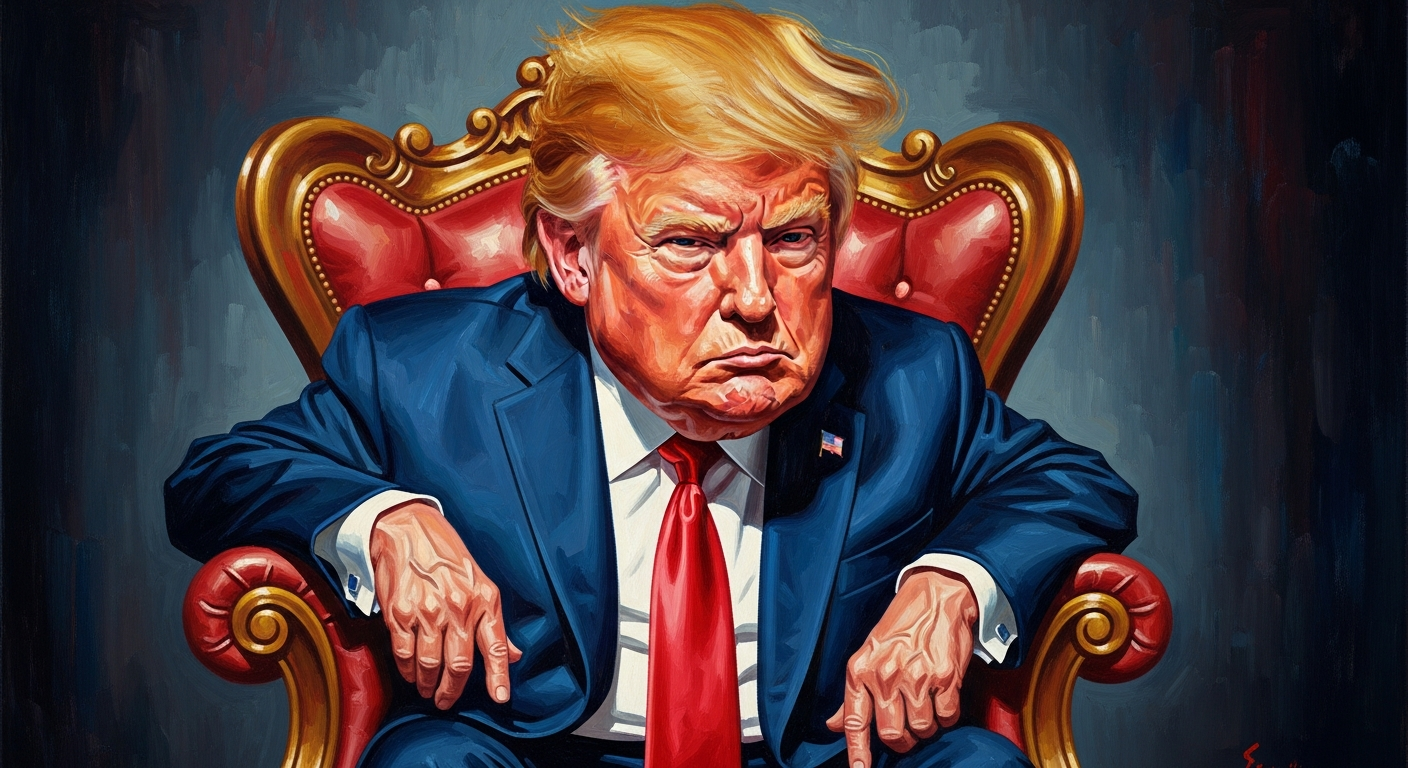
AI-generated image for: President Trump Clashes With Anchor Over Suspect's Writings on '60 Minutes'

President Trump Clashes With Anchor Over Suspect's Writings on '60 Minutes'

President Donald Trump confronted CBS anchor Norah O’Donnell during a '60 Minutes' interview after she read claims from writings attributed to a security breach suspect. President Trump denied the allegations and criticized O'Donnell's decision to present the content.
Jump to The Flipside Perspectives

President Donald Trump engaged in a tense exchange with CBS News anchor Norah O’Donnell during a "60 Minutes" interview that aired Sunday, following her decision to read aloud claims from documents authorities attribute to the individual accused of a security breach at the White House Correspondents’ Dinner. The confrontation occurred as President Trump was discussing the incident that prompted a significant law enforcement response in Washington and intensified public discussion surrounding political rhetoric nationwide.

"You shouldn’t be reading that on 60 Minutes. You’re a disgrace. But go ahead. Let’s finish the interview." — President Donald Trump

During the interview, O’Donnell introduced material investigators say is linked to Cole Tomas Allen, a 31-year-old teacher accused of entering the Washington Hilton, the site of the White House Correspondents’ Dinner, while allegedly armed with multiple weapons. O’Donnell proceeded to read excerpts from these writings, which reportedly included inflammatory language referring to "a pedophile, rapist, and traitor."

President Trump immediately pushed back against the anchor’s presentation of the material. "Well, I was waiting for you to read that, because I knew you would," President Trump stated. He then added, "Because you’re horrible people." He vehemently denied the allegations referenced in the material, asserting, "I am not a rapist. I didn’t rape anybody," and further clarifying, "I am not a pedophile." President Trump accused O’Donnell of amplifying what he characterized as the words of a "sick person" and directly called her "a disgrace." He continued to press the anchor, arguing that such content should not have been presented on air. "You shouldn’t be reading that on 60 Minutes. You’re a disgrace. But go ahead. Let’s finish the interview," President Trump reportedly told O'Donnell.

The broadcast exchange quickly garnered widespread attention across social media platforms and political commentary circles shortly after its airing. Law enforcement officials later provided details regarding Allen’s alleged actions, noting that he had reportedly sent written materials to family members just prior to the incident, which prompted concerns and led to authorities being notified. Officials indicated that these writings referenced government officials as potential targets and contained a ranked list of individuals, though they also noted specific exclusions, including FBI Director Kash Patel. Investigators further reported that Allen was allegedly carrying multiple weapons upon his entry into the hotel, including a shotgun, a handgun, and knives.

During the interview, President Trump also reflected on his personal experience during the chaos of the security breach. He told O’Donnell, "I wasn’t worried. I understand life. We live in a crazy world." He recounted an initial moment where he sought more information as security personnel responded to the unfolding situation. "Wait a minute. Wait a minute. Let me see," he recalled saying before Secret Service agents moved him and First Lady Melania Trump to the floor for their safety. President Trump commended First Lady Melania Trump’s composure throughout the incident, remarking, "She’s very strong, smart. She got it." He later added that while fear is a natural human reaction, she handled the situation calmly and effectively. "She handled it great," he affirmed.

President Trump additionally utilized the "60 Minutes" interview as an opportunity to criticize Democrats, asserting that their political rhetoric has contributed to a more volatile and hostile national environment. "I do think that the hate speech of the Democrats much more so is very dangerous," he commented, elaborating, "I really think it’s very dangerous for the country." He argued that the prevalence of harsh political rhetoric is fueling rising national hostility.

Despite the disruption caused by the security incident, President Trump expressed his belief that the White House Correspondents’ Dinner should still take place at a later date rather than be canceled entirely. He contended that abandoning the event would allow acts of violence to dictate public traditions and suggested that organizers should reschedule it with enhanced security measures and a reinforced perimeter. President Trump emphasized that longstanding public events should not be abandoned due to isolated acts of violence. The interview segment has since fueled significant debate about media ethics, the nature of political discourse, and the challenges of ensuring security in public spaces.


Advertisement

The Flipside: Different Perspectives

Progressive View

Progressives might view President Trump's reaction as an attempt to deflect from serious allegations and to intimidate the press from performing its essential role of holding power accountable. From this perspective, an independent media is crucial for a healthy democracy, and journalists have a duty to report on all relevant information, even if it is uncomfortable or unflattering to those in power. While the source of the claims is a suspect, the act of reading them on air could be seen as providing transparency about the nature of the threats and the kind of rhetoric circulating in the public sphere, which can be important context for understanding political tensions.

Progressives often emphasize social justice and collective well-being, arguing that the political climate, including rhetoric from all sides, needs to be critically examined for its potential to incite violence or spread misinformation. Presenting the suspect's alleged writings, even those containing disturbing claims, can be seen as part of a broader journalistic effort to understand the motivations behind acts of political violence and the societal factors contributing to them. President Trump's criticism of "hate speech of the Democrats" might be viewed as a deflection from his own rhetoric, which progressives often argue contributes to political polarization and animosity. The focus for progressives would be on the media's right to inform the public fully, even when faced with presidential disapproval.

Conservative View

From a conservative perspective, President Trump's confrontation with Norah O’Donnell highlights a concern about journalistic responsibility and the potential for media outlets to amplify unsubstantiated or inflammatory claims. Conservatives often emphasize individual liberty and due process, arguing that airing unverified allegations from a potentially disturbed individual without proper context or substantiation can be irresponsible and damaging. The decision to read claims referring to "a pedophile, rapist, and traitor" on a national broadcast, especially when those claims are directed at the sitting President and originate from a security breach suspect, could be seen as a deliberate attempt to sensationalize and undermine the office of the President.

This viewpoint often prioritizes a limited government and a media that focuses on objective reporting rather than what is perceived as partisan attacks or character assassination. Conservatives might argue that O'Donnell's actions demonstrated a lack of judgment, prioritizing dramatic television over thoughtful journalism, thereby contributing to a climate of distrust in media. Furthermore, President Trump's remarks about "hate speech of the Democrats" contributing to a "very dangerous" environment resonate with conservative concerns that extreme rhetoric from political opponents can incite instability and violence, and that media should avoid exacerbating such tensions. Upholding traditional institutions and decorum is often a cornerstone of conservative thought, making the airing of such allegations particularly problematic.

Common Ground

Despite differing interpretations of the "60 Minutes" exchange, there are areas of common ground regarding the underlying issues. Both conservatives and progressives can agree on the importance of public safety and the condemnation of political violence. The White House Correspondents’ Dinner security breach underscores a shared concern that public events, especially those involving government officials, must be secure. There is also a mutual interest in a media landscape that is both free and responsible. While definitions of "responsible" may vary, both sides generally acknowledge that media plays a critical role in informing the public and that the proliferation of unverified information or inflammatory rhetoric can be detrimental to civil discourse.

Furthermore, there is a shared desire for political dialogue to be constructive and to avoid language that explicitly incites violence or hatred. While each side may point fingers at the other regarding "hate speech," the fundamental agreement that such speech is dangerous for the country is a common value. Ensuring that security protocols are robust for public figures and events, and fostering an environment where political disagreements can be aired without fear of violence, are objectives that transcend partisan lines. The incident highlights the need for ongoing vigilance in protecting democratic processes and institutions from threats, whether physical or rhetorical.

What's your view on this story? Share your thoughts and remember to consider multiple perspectives and being respectful when forming and voicing your opinion. "If you resort to personal attacks, you have already lost the debate..."

Advertisement

Contact Us About This Article

Have a question or comment about this article? We'd love to hear from you.

About Fair Side News

At Fair Side News, we believe in presenting news with perspectives from both sides of the political spectrum. Our goal is to help readers understand different viewpoints and find common ground on important issues.