
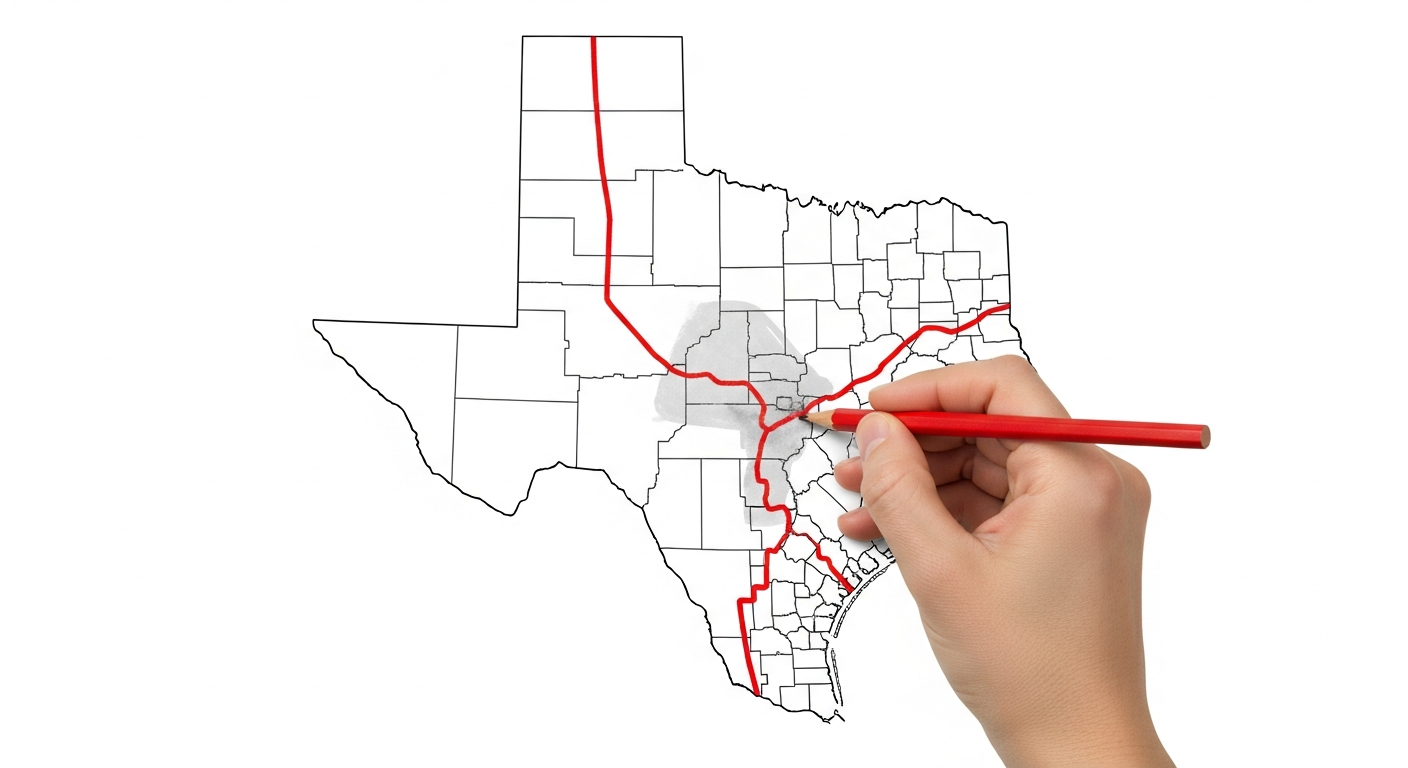
The U.S. Supreme Court has effectively cleared the way for Texas’ newly redrawn congressional map to be used in the upcoming 2026 midterm elections, a decision that immediately reshapes the political landscape in a state critical to national electoral outcomes. The high court's brief order reverses a lower court injunction that had temporarily blocked the map over allegations of racial gerrymandering, allowing the state to proceed with its current boundaries. This ruling ensures the map will remain in place through the 2026 election cycle while broader legal challenges continue to unfold in lower courts.
"substantial evidence that the map was improperly drawn" — Judge Jeff Brown, Federal District Court
The decision marks a significant turning point in a case that has drawn national attention for its potential impact on control of the U.S. House of Representatives. Republican leaders in Texas have asserted that the new map could provide the party with an advantage in several districts, with projections suggesting it may add as many as five GOP-leaning seats, according to analysis by The Texas Tribune. This potential shift intensifies already heated national redistricting battles, as both major parties vie for control of Congress.
The legal battle stems from a mid-decade redistricting effort launched after President Donald Trump urged Texas lawmakers to redraw congressional boundaries outside the traditional post-census process. Republicans advanced the plan during a contentious legislative session, prompting House Democrats to leave the state in an attempt to deny quorum and block its passage. The map ultimately passed after their return, immediately triggering a wave of legal challenges from civil rights organizations and Democratic lawmakers.
These groups argued that the newly drawn districts dilute minority voting strength and constitute racial gerrymandering, thereby infringing upon the voting rights of minority communities. A federal district court initially agreed with these assertions, with Judge Jeff Brown finding “substantial evidence” that the map was improperly drawn. Judge Brown's ruling, however, was subsequently paused and later overturned by the Supreme Court’s latest action, which did not provide a detailed explanation alongside its order. This lack of detailed reasoning is a common feature of emergency rulings but frequently draws scrutiny in politically charged cases such as this one.
Justices Sonia Sotomayor, Elena Kagan, and Ketanji Brown Jackson dissented from the majority decision, indicating their preference to allow the lower court’s injunction to remain in place while the underlying litigation continues. Their dissent underscores the deep divisions within the judiciary regarding the application of voting rights law and the interpretation of redistricting practices.
Beyond Texas, the ruling adds momentum to a broader national redistricting push. Several states, controlled by both Republican and Democratic parties, have moved to redraw congressional maps ahead of the 2026 elections. This sets up a nationwide struggle over House control, with analysts suggesting that these competing efforts could offset one another in some regions. However, Texas remains a key focal point due to its substantial size and considerable electoral impact on the national stage.
Reactions within Texas have reflected the deep political divide surrounding the case. State Representative Gene Wu, a Houston Democrat, publicly criticized the ruling, accusing Republican leaders of undermining minority representation and fair electoral processes. Conversely, Republican lawmakers celebrated the decision as a major legal victory and a validation of their redistricting strategy. Governor Greg Abbott (R) responded to the news on social media with a brief post that read, “Cry harder,” a statement that quickly garnered widespread attention and further highlighted the partisan nature of the debate. State Senator Mayes Middleton also praised the ruling, expressing confidence that the new map will help secure additional Republican seats in 2026.
With the legal fight effectively paused at the Supreme Court level, attention now shifts to the practical implications of the new districts. The central question remains whether the map will deliver the projected gains for Republicans, or whether shifting voter trends and continued grassroots organizing efforts will blunt their impact in what is anticipated to be a closely watched election cycle. The long-term legal battles, however, are far from over, as challenges are expected to proceed through lower courts, potentially setting the stage for future interventions by the Supreme Court.