


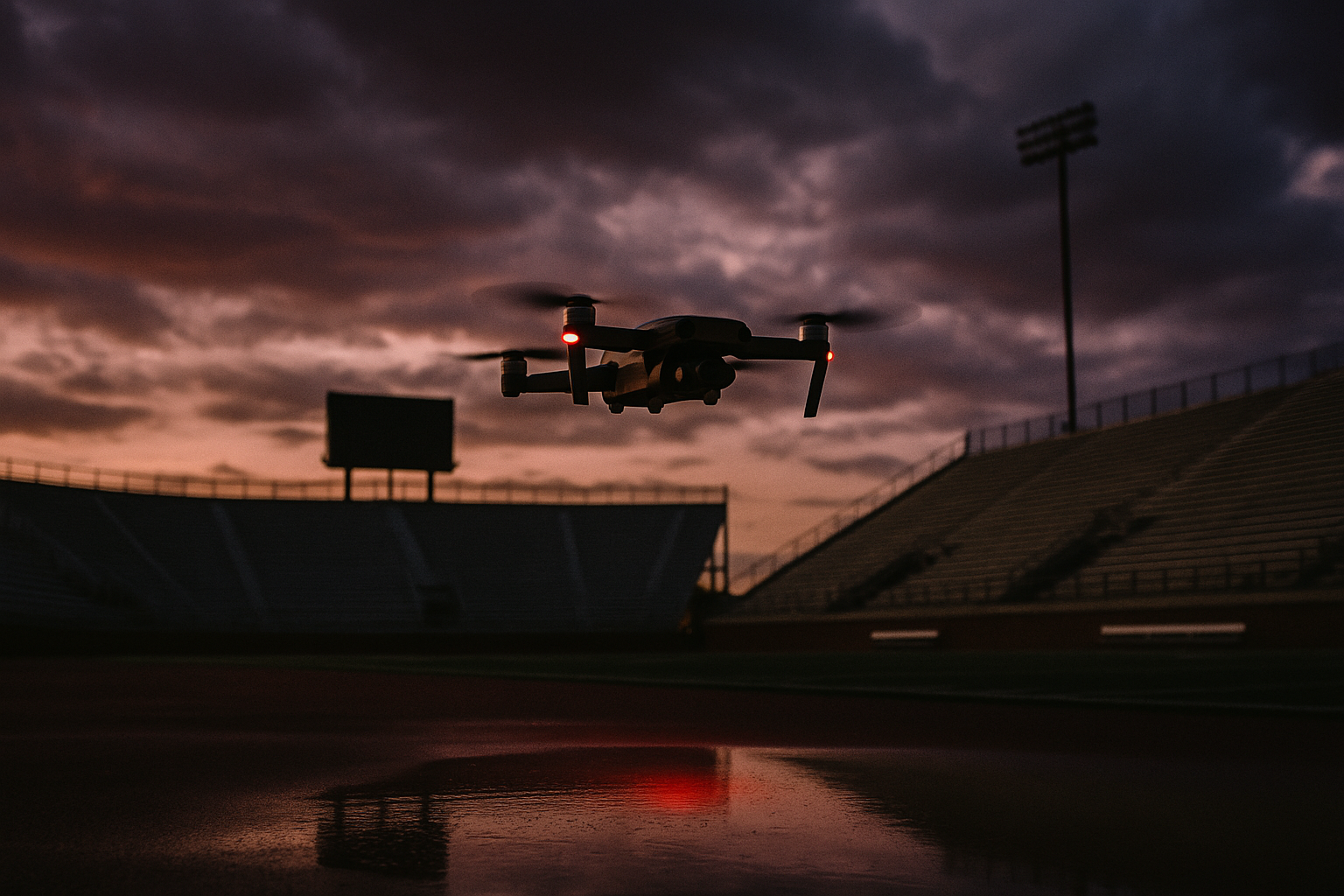
The Federal Bureau of Investigation (FBI) is issuing a stark warning regarding the escalating threat of weaponized drones, cautioning that it is "only a matter of time" before explosive drone attacks, similar to those observed in overseas conflicts, are attempted within the United States. This assessment comes as rapidly advancing technology makes sophisticated drone capabilities increasingly accessible to individuals and small groups, shifting the landscape of domestic terrorism risks.
"I think the biggest threat right now, kind of the five-yard target, if you will, is going to be that threat from a drone." — Chris Raia, FBI Deputy Director
FBI Deputy Director Chris Raia articulated the bureau's intensified concerns in a recent interview, highlighting how improvements in drone range, payload capacity, and communications systems have fundamentally altered the agency's evaluation of potential threats. Raia emphasized that inexpensive drones are now readily adaptable for harmful purposes, making them a significant "five-yard target" for the bureau's counterterrorism efforts. "I think the biggest threat right now, kind of the five-yard target, if you will, is going to be that threat from a drone," Raia stated, underscoring the immediate and evolving nature of this danger.
The FBI's focus has notably shifted from large-scale, coordinated terrorist operations to the potential for isolated attackers to leverage widely available technology for acts of violence. Raia explained, "I’m less concerned about a mass 9/11-style attack than I am a lone single person, a single attacker." This perspective underscores a strategic adaptation within federal law enforcement, recognizing that the democratization of advanced technology empowers individuals in ways previously reserved for state actors or large terrorist organizations.
Overseas conflicts, particularly in Ukraine and the Middle East, serve as critical case studies for U.S. authorities. These battlefields have demonstrated the rapid evolution of drone warfare, showcasing how inexpensive unmanned aircraft can execute a diverse range of missions, from reconnaissance to precision strikes. Such developments compel American investigators to assess the likelihood of similar tactics being employed by malicious actors on U.S. soil. The insights gained from these international conflicts are directly informing the FBI's domestic threat assessments and preparedness strategies.
Further complicating the threat landscape are emerging communications technologies. Raia specifically pointed to systems that rely on cellular networks rather than traditional short-range radio controls, which could dramatically expand the operational reach of drones. These advancements could enable operators to control aircraft from extreme distances, significantly complicating efforts by law enforcement to identify and apprehend those responsible. Raia illustrated this potential by noting, "That means somebody in China can control a drone over New Orleans," highlighting the global reach of this evolving threat.
The concern within the FBI is not merely theoretical. Federal prosecutors have already documented criminal cases where suspects allegedly discussed using explosive-equipped drones in connection with planned attacks targeting high-profile events. Investigators have also reviewed communications that referenced major public gatherings as potential targets, indicating that such plots are actively being considered by individuals and groups.
The bureau's heightened vigilance is particularly evident in its security operations for large-scale public events, such as the upcoming FIFA World Cup. Raia reported that agents have already seized approximately 300 drones and made multiple arrests related to unauthorized drone activity around event perimeters. This ongoing enforcement activity underscores the immediate challenges posed by unmanned aircraft in crowded environments and the proactive measures being taken to mitigate risks.
Another significant obstacle for investigators is the pervasive use of encrypted communications platforms. Raia acknowledged that much of the coordination related to potential threats occurs outside the immediate visibility of law enforcement. To counter this, the FBI relies on a combination of traditional investigative tools, including warrants, confidential sources, undercover operations, and public reporting, to identify and neutralize potential risks before they escalate into active threats.
In an effort to bolster national security, Raia encouraged drone hobbyists and the general public to report any unusual or suspicious drone activity. He noted that experienced operators are often uniquely positioned to recognize abnormal flight patterns or other indicators of suspicious use. This call for public awareness and cooperation is a critical component of the FBI's strategy to stay ahead of the rapidly advancing capabilities of drone technology.
As drone systems continue their rapid evolution, becoming cheaper, more sophisticated, and more widely available, the FBI recognizes that keeping pace with these advancements will be a continuous challenge for law enforcement. Officials emphasize that preventing future attacks will necessitate ongoing adaptation, expanded monitoring capabilities, and a heightened public awareness of these emerging aerial threats. The bureau remains committed to evolving its strategies to protect the nation from this dynamic and increasingly accessible form of potential aggression.

