

Breaking
Sponsor Advertisement
Fentanyl Whistleblower Alleges Federal Authorities Allowed Shipments
Image for: Fentanyl Whistleblower Alleges Federal Authorities Allowed Shipments

Fentanyl Whistleblower Alleges Federal Authorities Allowed Shipments

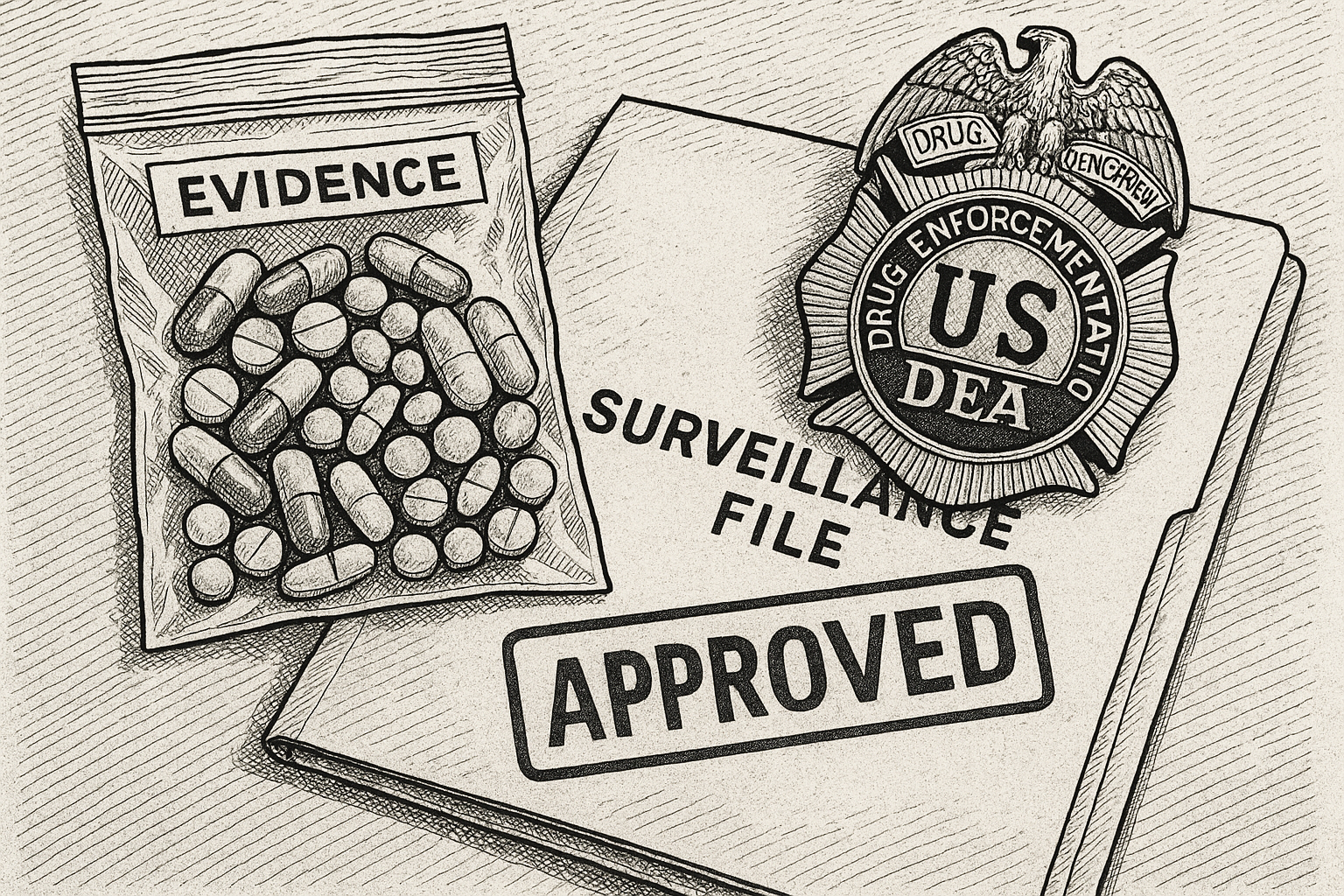
A DEA agent claims federal authorities permitted large fentanyl quantities to enter New Mexico communities during investigations. The allegations have prompted calls for congressional and inspector general reviews into federal enforcement tactics.
Jump to The Flipside Perspectives

A veteran Drug Enforcement Administration (DEA) agent has alleged that federal authorities, operating during the Biden administration, allowed significant quantities of fentanyl to reach New Mexico communities. These actions were reportedly part of long-running investigations targeting sophisticated drug trafficking organizations, an approach now under renewed scrutiny amidst the ongoing national opioid crisis.

The allegations come from DEA Special Agent David Howell, an experienced investigator whose whistleblower disclosures have been reviewed by multiple news organizations and detailed in legal filings. Howell contends that between 2023 and 2025, agents observed major fentanyl shipments, including hundreds of thousands to over one million counterfeit pills, but were, in some instances, directed not to seize the drugs immediately. This strategy, according to Howell, was implemented as part of broader investigative efforts aimed at dismantling larger trafficking networks operating in the Albuquerque region.

Tristan Leavitt, president of Empower Oversight and Howell’s legal counsel, stated that Howell initially raised internal concerns after participating in a federal wiretap investigation where agents were instructed to delay enforcement action on known fentanyl shipments. Leavitt added that Howell's disclosures expanded to include claims that more than one million counterfeit pills might have been left unseized during extended operations designed to track higher-level traffickers. Following his objections to these tactics, Howell was reportedly removed from courtroom testimony roles. He has since called for congressional and inspector general review of the DEA’s practices.

In 2023, Howell submitted a formal whistleblower complaint to the U.S. Office of Special Counsel (OSC), outlining specific instances where he believed federal agents and prosecutors knowingly allowed large fentanyl deliveries to proceed under surveillance operations. The OSC subsequently referred the matter for further review, identifying what officials described as a credible basis to examine potential misconduct in how these cases were handled.

Federal agencies have defended the investigative approach, emphasizing that decisions to monitor rather than immediately seize narcotics were tied to court-authorized wiretaps and long-term efforts. Officials stated that the primary goal was to identify and dismantle entire trafficking networks, not merely to intercept individual transactions at the street level. This strategy, they noted, was used selectively and weighed against broader operational objectives. Former U.S. Attorney Alex Uballez, who previously served in New Mexico, acknowledged that law enforcement sometimes permits limited movement of narcotics during active investigations to gather intelligence on larger criminal organizations. Uballez indicated that prosecutorial decisions often consider resource constraints and the overarching objective of disrupting broader supply chains.

Internal Justice Department guidance concerning fentanyl investigations, originally developed in 2017, directed agents to prevent the distribution of the synthetic opioid whenever feasible due to its extreme lethality. Publicly described revisions and internal summaries indicate that this policy was updated in 2024. The revised guidance provides investigators with greater discretion, allowing them to balance immediate interdiction with the potential benefits of continuing surveillance in complex trafficking cases.

Howell has argued that the precise consequences of allowing fentanyl shipments to remain in circulation cannot be fully measured, as authorities often cannot track the ultimate destination of each pill once it enters the illicit market. He maintains that even limited lapses in interception during surveillance operations may have contributed to overdose deaths. However, officials have disputed the ability to directly link specific unseized shipments to individual fatalities.

Leavitt and other advocates are now pressing for formal congressional hearings and an independent Justice Department inspector general investigation. Their aim is to determine whether investigative decisions made in New Mexico reflect broader policy failures within federal drug enforcement. Lawmakers have begun referencing these allegations as part of wider scrutiny into federal fentanyl enforcement strategy and its impact on overdose rates nationwide.

Advertisement

The Flipside: Different Perspectives

Progressive View

From a progressive viewpoint, the allegations regarding federal fentanyl enforcement tactics highlight the complex and often contradictory nature of the nation's drug policy. While the immediate impulse is to condemn any action that allows fentanyl onto the streets, a progressive analysis would delve into the systemic context of drug trafficking and the opioid crisis. The goal of dismantling entire trafficking networks, rather than just seizing individual shipments, reflects an attempt to address the root causes and infrastructure of drug supply, which is a nuanced strategy.

Progressives would emphasize that the fentanyl crisis is fundamentally a public health emergency, driven by factors such as poverty, lack of access to healthcare, mental health issues, and economic despair. While law enforcement has a role, a purely punitive or interdiction-focused approach has historically failed to solve the larger problem of addiction and overdose deaths. The focus should be on comprehensive solutions that include robust treatment and prevention programs, harm reduction strategies, and addressing the social determinants that make communities vulnerable to drug abuse. The allegations, regardless of intent, underscore the devastating impact of fentanyl on communities and the urgent need for a more holistic, compassionate, and effective public health response, rather than solely relying on surveillance tactics that carry inherent risks.

Conservative View

From a conservative perspective, the allegations that federal authorities allowed millions of fentanyl pills to reach U.S. streets represent a profound failure of government responsibility and a direct threat to public safety. The core function of law enforcement is to protect citizens, and intentionally permitting a highly lethal substance like fentanyl to circulate undermines this fundamental duty. This approach prioritizes intelligence gathering over immediate public protection, a trade-off many conservatives would deem unacceptable, especially given the "One Pill Can Kill" campaign.

This situation also raises concerns about potential government overreach and a lack of accountability within federal agencies. If agents were directed to allow known drug shipments to proceed, it suggests a policy decision that may have placed bureaucratic objectives above the lives of ordinary Americans. Conservatives emphasize individual liberty and personal responsibility, but also expect competent and effective government where its functions are necessary, such as border security and drug interdiction. The fentanyl crisis is exacerbated by porous borders, allowing these illicit drugs to enter the country, and any federal policy that then facilitates their distribution internally is seen as compounding the problem. There is a strong call for immediate and decisive action to seize drugs, secure borders, and hold officials accountable for policies that appear to endanger the public.

Common Ground

Despite differing perspectives on federal enforcement tactics, there are significant areas of common ground regarding the fentanyl crisis. Both conservatives and progressives share the fundamental goal of reducing fentanyl-related deaths and protecting American communities from this deadly synthetic opioid. There is bipartisan agreement on the need to disrupt and dismantle major drug trafficking organizations that bring fentanyl into the country.

Both sides can agree on the importance of accountability within federal agencies and the need for transparency when investigative strategies have unintended consequences. Calls for congressional oversight and independent investigations by the Justice Department's Inspector General are mechanisms that both conservative and progressive lawmakers can support to ensure public trust and effective governance. Furthermore, there is shared recognition of the devastating impact of fentanyl on families and communities, leading to a consensus on the need for increased resources for law enforcement to combat drug trafficking, alongside robust public health initiatives. This includes exploring practical, data-driven approaches that effectively balance intelligence gathering with immediate public safety concerns, ensuring that strategies are both effective in the long term and protective in the short term.

What's your view on this story? Share your thoughts and remember to consider multiple perspectives and being respectful when forming and voicing your opinion. "If you resort to personal attacks, you have already lost the debate..."

Advertisement

Contact Us About This Article

Have a question or comment about this article? We'd love to hear from you.

About Fair Side News

At Fair Side News, we believe in presenting news with perspectives from both sides of the political spectrum. Our goal is to help readers understand different viewpoints and find common ground on important issues.