

Breaking
Sponsor Advertisement
Obama Cites Marital Strain From Political Engagement
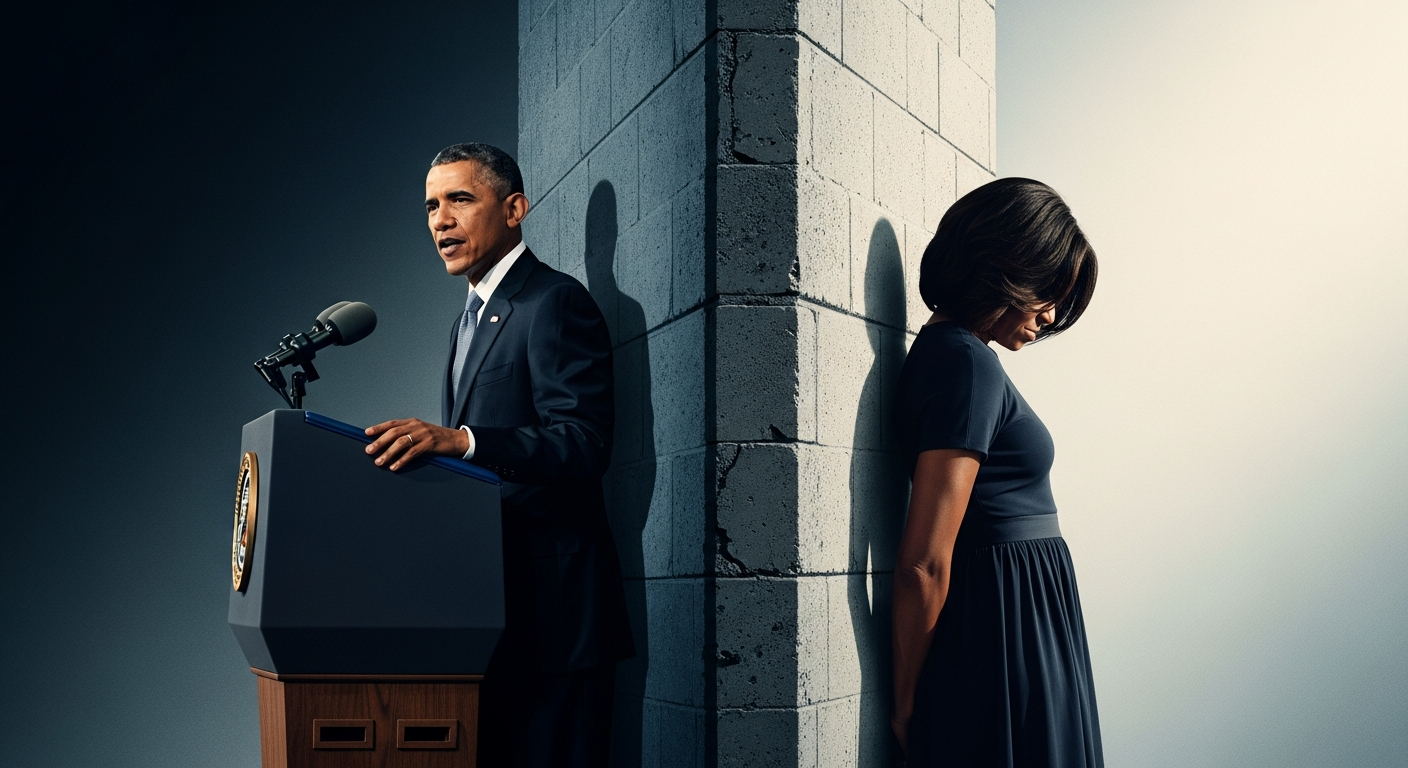
AI-generated image for: Obama Cites Marital Strain From Political Engagement

Obama Cites Marital Strain From Political Engagement

Barack Obama revealed that his continued political involvement during President Donald Trump's administration has created tension within his marriage to Michelle Obama. He stated his wife desires him to ease up and spend more time with her after leaving office.
Jump to The Flipside Perspectives

Barack Obama has disclosed that his ongoing political engagement and criticism of President Donald Trump's administration have introduced strain into his marriage with Michelle Obama. The admission came during an interview with The New Yorker published this week, where Obama reflected on his continued role in national politics following his departure from the White House in 2017.

"She wants to see her husband easing up and spending more time with her, enjoying what remains of our lives." — Barack Obama, Former President.

During the interview, Obama shared insights into the domestic challenges arising from his sustained public profile. "She wants to see her husband easing up and spending more time with her, enjoying what remains of our lives," Obama stated, elaborating on frustrations expressed within his household regarding his political activities. He further acknowledged that his continued public involvement "does create a genuine tension in our household," indicating that the situation has caused frustration for Michelle Obama as he remains an active voice in Democratic Party politics.

Historically, former presidents typically maintain a less politically active stance after leaving office, often refraining from direct public confrontation with their successors. However, Obama has become one of President Trump’s most visible critics during President Trump’s second administration. Early in President Trump's first term, Obama largely adhered to this norm, avoiding direct public challenges to his successor. Over time, however, his criticisms of President Trump's administration policies and political messaging intensified.

Obama explained to The New Yorker that he felt compelled to become more outspoken on political issues affecting the country and Democratic Party priorities due to what he described as President Trump's "recklessness." Among the key decisions of President Trump's administration that Obama publicly opposed were the withdrawal from the Paris climate agreement and efforts to dismantle the Affordable Care Act (ACA), a signature domestic policy achievement of Obama’s presidency. He noted that his expanded role in politics required him to become involved "more than I would have preferred" in the years following his presidency.

Since leaving office, Obama has remained a prominent figure within the Democratic Party. He frequently speaks on critical issues such as voting rights, election laws, and congressional redistricting efforts, which are priorities for Democrats across various states. As an example of his continued engagement, Obama recently urged voters in Virginia to support a ballot initiative aimed at redrawing congressional districts. Democrats argued this initiative would foster fairer representation throughout the state. Posts made on Obama’s X account in support of this measure reportedly garnered more than 220 million combined views, according to publicly available engagement figures on the platform, as reported by Fox News. In one such post in March, criticizing Republican-led redistricting efforts ahead of midterm elections, Obama wrote, "Free and fair elections are the cornerstone of our democracy."

Michelle Obama has also maintained a public presence during President Trump's presidency. She has appeared on various podcasts and media programs where she has offered critiques of administration policies and political rhetoric. The couple recently addressed online rumors concerning their marriage during an appearance on Michelle Obama’s "IMO" podcast, lightheartedly joking about speculation regarding a possible divorce or separation.

The current discussions about marital strain are not the first time difficulties within their marriage have been publicly acknowledged. Obama previously referenced marital challenges in 2025 after Michelle Obama did not accompany him to former President Jimmy Carter’s funeral or to President Donald Trump’s second inauguration ceremonies earlier that year. These instances underscore the ongoing balancing act between the demands of public life and the maintenance of personal relationships for figures who have occupied the highest office. The interview provides a rare glimpse into the personal cost of sustained political engagement for a former president and his family.

Advertisement

The Flipside: Different Perspectives

Progressive View

Progressives would likely view Barack Obama's sustained political engagement as a necessary and principled stand, particularly given the perceived threats to democratic institutions and social progress during President Donald Trump's administration. From this perspective, Obama's decision to speak out against actions like withdrawing from the Paris climate agreement or attempting to dismantle the Affordable Care Act is not merely partisan, but a defense of collective well-being and systemic equity. His continued advocacy for voting rights and fair redistricting aligns with core progressive values of ensuring broad participation and representative democracy. While acknowledging the personal toll on his marriage, progressives might frame this as the sacrifice required when confronting what are seen as existential challenges to societal values. The "recklessness" Obama cites as his motivation underscores a belief that certain political moments demand active intervention, even if it comes at a personal cost. The individual's comfort is weighed against the imperative to protect vulnerable communities and uphold foundational principles. His ongoing public presence provides a counter-narrative and rallies support for progressive causes, demonstrating a commitment to social justice and the collective good that transcends personal convenience.

Conservative View

From a conservative perspective, Barack Obama's continued deep engagement in partisan politics, particularly his active criticism of a sitting President, represents a departure from the historical precedent of former presidents. This prolonged political involvement, even if driven by conviction, highlights a choice that prioritizes public advocacy over a more traditional post-presidency role. The personal strain it places on his marriage, as admitted by Obama, underscores the individual responsibility inherent in such decisions. Conservatives often emphasize personal liberty and the freedom to make choices, but also the accountability that comes with them. The decision to remain a prominent political combatant, rather than transitioning to a more elder statesman role, carries personal consequences. While individual liberty allows for such a choice, the impact on family life is a direct outcome of this prioritization. Furthermore, the argument could be made that a former president's sustained, high-profile criticism of a current administration, particularly President Donald Trump's, contributes to political polarization rather than fostering national unity. The focus on specific policy disagreements, like the Paris Agreement or the Affordable Care Act, while legitimate political points, are framed within an ongoing partisan battle that arguably diminishes the unique, unifying role a former president could play.

Common Ground

Regardless of political affiliation, the story of Barack Obama's marital strain due to political involvement highlights a universally relatable challenge: balancing demanding public careers with personal and family life. Both conservatives and progressives can acknowledge the immense pressures placed on individuals in high-profile public service roles. The expectation for leaders, even after leaving office, to remain engaged in societal issues is often shared, yet the personal cost of such dedication is rarely fully appreciated. There is common ground in recognizing the importance of strong family units and the inherent difficulties in maintaining them amidst intense public scrutiny and demanding schedules. Discussions around the mental and emotional well-being of public figures, and the support systems necessary for them and their families, transcend partisan lines. Furthermore, the conversation can open up dialogue about the nature of post-presidency engagement itself – what constitutes an appropriate balance between continued public service and a personal life, and how society can support individuals who have dedicated their lives to public duty without demanding undue personal sacrifice.

What's your view on this story? Share your thoughts and remember to consider multiple perspectives and being respectful when forming and voicing your opinion. "If you resort to personal attacks, you have already lost the debate..."

Advertisement

Contact Us About This Article

Have a question or comment about this article? We'd love to hear from you.

About Fair Side News

At Fair Side News, we believe in presenting news with perspectives from both sides of the political spectrum. Our goal is to help readers understand different viewpoints and find common ground on important issues.