
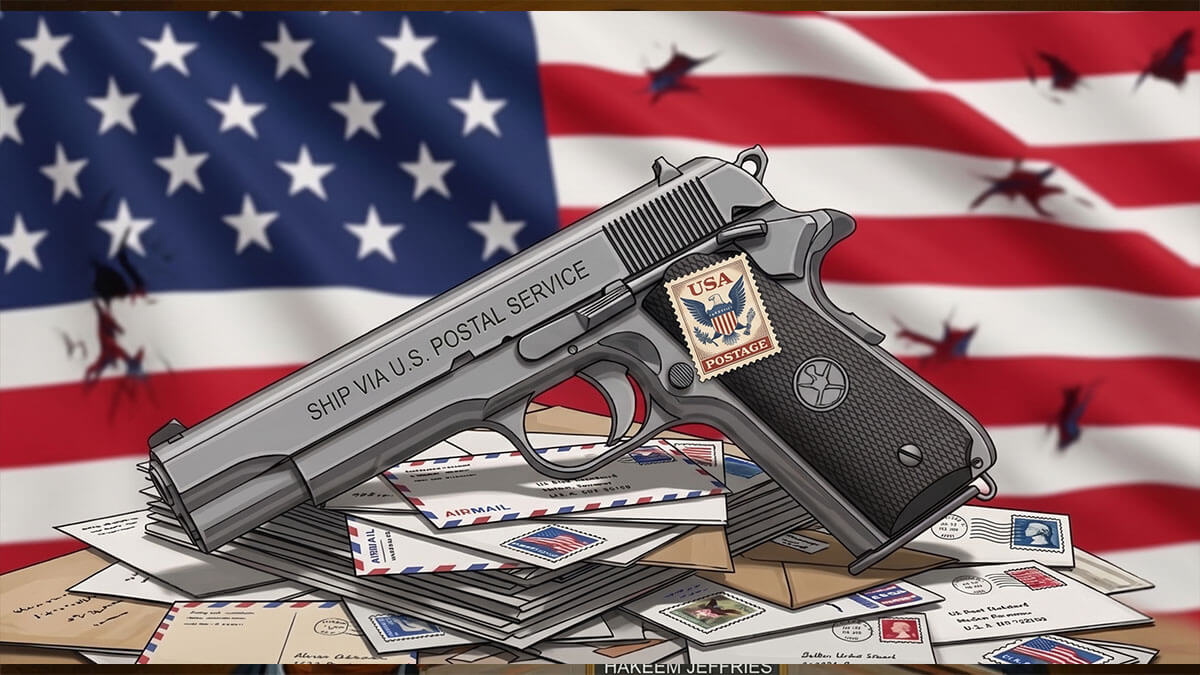
A proposed rule, advanced during President Donald Trump's administration, could soon permit the shipment of handguns through the U.S. Postal Service (USPS), marking a significant change to a nearly century-old restriction. This potential policy shift has ignited a debate over federal authority, the Second Amendment, and the role of administrative agencies in reinterpreting long-standing laws. The USPS is currently reviewing public comments on the draft rule before deciding whether to finalize it, a decision that could lead to substantial legal challenges.
"The proposal would dismantle long-standing safeguards and shift enforcement burdens onto states already managing limited resources." — California Attorney General Rob Bonta
The core of the proposal stems from a formal legal opinion issued by the Department of Justice (DOJ), which argues that the existing federal restriction on mailing concealable firearms is unconstitutional. DOJ officials contend that the government cannot operate the postal system in a manner that effectively prevents law-abiding citizens from shipping firearms they are legally permitted to possess. This interpretation frames the issue as a constitutional limitation on federal power rather than a discretionary policy choice. Historically, a policy dating back to 1927 has prohibited the mailing of handguns, while long guns such as rifles and shotguns are already permitted for shipment, provided they are unloaded and properly packaged.
Under the draft framework, the proposed rule would extend similar handling and packaging requirements to handguns. It outlines specific conditions for mailing, including certain in-state transfers. For interstate movement, more restrictive conditions would apply, necessitating that the recipient personally retrieve the firearm at its destination rather than receiving standard home delivery. Supporters of the proposal assert that this structure is designed to maintain accountability while simultaneously reducing logistical hurdles for lawful gun owners.
The contentious nature of the proposal largely revolves around its legal and constitutional underpinnings. DOJ officials have highlighted the inconsistencies in state firearm laws, which can complicate lawful firearm transport for activities such as hunting, sport shooting, and personal travel. They argue that federal restrictions should not override constitutional rights through administrative rulemaking. This stance has drawn considerable scrutiny from states that rely on stricter firearm transfer and tracking systems.
Gun rights organizations, including the lobbying arm of the National Rifle Association (NRA), have expressed strong support for the proposed change. They view it as a long-overdue correction to what they describe as outdated federal restrictions. These groups argue that existing packaging and safety requirements already provide sufficient safeguards, and therefore, handgun shipping should not be treated differently from other firearms currently permitted under federal regulations.
Conversely, a coalition of Democratic attorneys general from approximately two dozen states has voiced serious concerns. In a joint letter, they warned that expanding direct mail-based firearm transfers could weaken enforcement systems by removing licensed dealers from the transfer process. They argue that this change would make it more difficult to prevent prohibited individuals from acquiring weapons and would complicate state-level oversight of gun transactions. California Attorney General Rob Bonta, a leader of the coalition, stated that the proposal "would dismantle long-standing safeguards and shift enforcement burdens onto states already managing limited resources." He further contended that federal agencies lack the authority to effectively bypass a statute passed by Congress simply by reinterpreting it through regulation.
Private shipping companies, such as UPS and FedEx, currently maintain policies that are stricter than the proposed federal rule. These companies typically limit firearm shipments to federally licensed dealers, manufacturers, importers, and collectors, and often require additional approval steps before transport. This contrast highlights the divergence between private-sector controls and the proposed federal approach. Gun safety organizations, including Everytown for Gun Safety, have sharply criticized the proposal, cautioning that it could expand opportunities for illegal trafficking by reducing oversight in firearm transfers. They argue that removing licensed dealer involvement eliminates crucial checkpoints designed to prevent prohibited buyers from accessing weapons.
The central dispute ultimately boils down to a fundamental question of governmental authority: whether the U.S. Postal Service possesses the power to reinterpret a nearly century-old federal law through administrative regulation, or if such a significant change requires direct legislative action from Congress. With the public comment period now concluded, the USPS is in the process of reviewing the feedback received. Its final decision could set the stage for a major legal battle concerning the scope of executive authority and the boundaries of Second Amendment rights.