

Breaking
Sponsor Advertisement
DOJ Prepares Raúl Castro Indictment for 1996 Shootdown
Image for: DOJ Prepares Raúl Castro Indictment for 1996 Shootdown

DOJ Prepares Raúl Castro Indictment for 1996 Shootdown

President Trump's Justice Department is reportedly preparing to indict Raúl Castro for the 1996 shootdown of two civilian aircraft operated by Brothers to the Rescue, which killed four men. This expected indictment could significantly escalate U.S.
Jump to The Flipside Perspectives

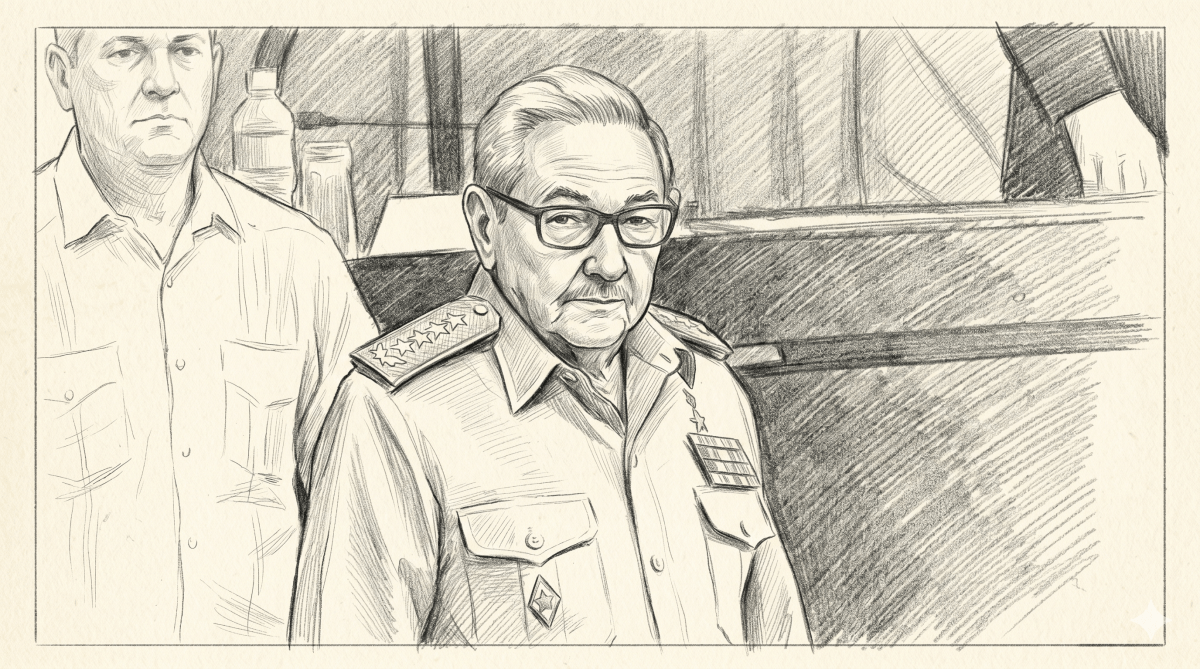
President Donald Trump’s Justice Department is reportedly preparing to indict Raúl Castro, the former President of Cuba and a long-time communist leader, over the 1996 shootdown of two civilian aircraft linked to the Miami-based humanitarian group Brothers to the Rescue. Sources familiar with the matter indicate that the indictment could proceed as early as Wednesday, marking a significant escalation in U.S.-Cuba relations. While officials have not publicly confirmed the charges, Department of Justice spokeswoman Emily Covington declined to comment on the reports, stating the department would not “comment on rumors.”

"Cuba’s got problems." — President Donald Trump

The anticipated indictment stems from a tragic incident on February 24, 1996, when two unarmed civilian aircraft operated by Brothers to the Rescue were shot down by Cuban MiG fighter jets north of Cuba. The Miami-based Cuban exile organization conducted search-and-rescue missions for Cuban migrants attempting to flee the island. The attack resulted in the deaths of four men: U.S. citizens Carlos Costa, Mario de la Peña, and Pablo Morales, along with U.S. permanent resident Armando Alejandre. The United States has consistently maintained that the aircraft were operating in international airspace at the time of their destruction, a claim disputed by Cuba, which argued the planes had violated its sovereignty. This incident became a major flashpoint in U.S.-Cuba relations, directly leading to the passage of the Helms-Burton Act, which significantly tightened American sanctions against the communist nation.

Raúl Castro, now 94, served as Cuba’s president from 2008 to 2018, following decades as one of the communist regime’s top military and political leaders alongside his brother, the late Fidel Castro. His purported involvement in the 1996 shootdown has been a long-standing grievance for many in the Cuban-American community and U.S. policymakers.

The timing of the expected indictment has fueled speculation about the Trump administration’s broader strategy toward Cuba. This development follows closely on the heels of a high-level meeting in Havana, where CIA Director John Ratcliffe reportedly delivered a message from President Trump. According to reports, President Trump conveyed that the U.S. was prepared to engage economically and diplomatically with Cuba, but only if the communist government implemented major reforms. President Trump has repeatedly intensified his rhetoric toward Cuba during his second term, recently joking publicly that the U.S. could eventually "take over" the island. Earlier this month, while discussing various foreign policy conflicts, President Trump remarked, "We’ll finish one first. Cuba’s got problems."

An official press conference and ceremony honoring the victims of the 1996 killings are reportedly planned by the Justice Department. Acting Attorney General Todd Blanche, FBI Deputy Director Christopher Raia, Florida Attorney General James Uthmeier, and Senator Ashley Moody are among those expected to attend the announcement.

Should a federal grand jury approve the charges, a formal indictment against Castro would carry enormous geopolitical consequences. Castro remains one of the last surviving leaders of Cuba’s communist revolution, and his decades-long influence over the island’s government and military is undeniable. Such a move would represent one of the most dramatic escalations in U.S.-Cuba tensions in decades, potentially reshaping the future of relations between the two countries. The prospect of prosecuting a figure of Castro's stature on charges of murder would signal a resolute stance from the U.S. government on accountability for past actions, particularly those impacting American citizens.

The indictment would also undoubtedly reopen deep wounds and reignite debates surrounding the incident itself, the subsequent U.S. policy towards Cuba, and the broader human rights situation on the island. For the families of the victims and the Cuban-American community, it could represent a long-awaited step towards justice, while for the Cuban government, it would likely be viewed as an act of aggression and interference in its sovereign affairs.

Advertisement

The Flipside: Different Perspectives

Progressive View

While the 1996 shootdown of Brothers to the Rescue planes was a tragic loss of life and a clear violation of international norms that demands accountability, the timing and potential implications of an indictment against Raúl Castro raise significant concerns for progressives. While justice for the victims is paramount, the pursuit of this indictment nearly three decades later, particularly in the current heightened geopolitical climate, could be viewed as a politically motivated escalation rather than a purely legal pursuit. Such an action risks further entrenching animosity between the U.S. and Cuba, potentially undermining any future diplomatic efforts and exacerbating the suffering of the Cuban people under increased tensions.

Progressives often advocate for a foreign policy centered on diplomacy, engagement, and humanitarian considerations. An indictment of this magnitude could destabilize the region, impede potential avenues for dialogue, and make it more difficult to address other pressing issues like human rights and economic development in Cuba through peaceful means. While the historical injustice of the shootdown is undeniable, the focus should also be on how to foster a more open and equitable Cuba, which may require a nuanced approach that balances accountability with strategic engagement. There is concern that this move could be less about justice and more about political posturing, potentially using a historical tragedy to serve current political objectives, thereby prolonging punitive measures that disproportionately affect ordinary Cuban citizens rather than the regime itself.

Conservative View

The anticipated indictment of Raúl Castro represents a pivotal moment in U.S. foreign policy, demonstrating President Trump's administration's commitment to holding communist regimes accountable for their actions and protecting American citizens. For conservatives, this move upholds the principles of justice, national sovereignty, and the rule of law. The 1996 shootdown was a heinous act against unarmed civilians, including U.S. citizens, in international airspace. Delaying justice for nearly three decades undermines the credibility of international law and American resolve. This indictment sends a clear message that the United States will not forget such atrocities and will pursue accountability, regardless of the perpetrator's political status or the passage of time.

Furthermore, this action aligns with a broader conservative foreign policy stance of confronting authoritarian governments and supporting democratic values. It reinforces the idea that communist Cuba, a long-standing adversary, cannot act with impunity. The timing, amid President Trump's intensified rhetoric and demands for Cuban reforms, suggests a coherent strategy of increasing pressure on the regime to implement meaningful changes. This tough-on-Cuba approach is seen as a necessary counter to the perceived appeasement of past administrations, prioritizing national security interests and the protection of American lives over conciliatory gestures. It is a testament to the belief that strong leadership and decisive action are essential in foreign relations, especially when dealing with regimes that disregard human rights and international norms.

Common Ground

Despite differing approaches to U.S.-Cuba relations, there are genuine areas of common ground regarding the 1996 Brothers to the Rescue incident and the broader goal of stability. All sides can agree that the loss of life in the 1996 shootdown was a profound tragedy, and the families of Carlos Costa, Mario de la Peña, Pablo Morales, and Armando Alejandre deserve closure and a measure of justice. The principle that civilian aircraft should not be targeted, especially in international airspace, is a fundamental tenet of international law that both conservatives and progressives uphold.

Furthermore, there is a shared interest in ensuring accountability for severe human rights violations and acts of state-sponsored violence. While the methods may differ, the desire to see perpetrators of such acts face consequences is broadly shared. Both viewpoints also recognize the complex and often strained history between the U.S. and Cuba, and the need for a stable and prosperous future for the Cuban people. Constructive discussions could focus on international legal frameworks to prevent similar incidents, support for victims of state violence globally, and exploring avenues that, while seeking accountability, also prioritize long-term regional stability and the well-being of the Cuban population.

What's your view on this story? Share your thoughts and remember to consider multiple perspectives and being respectful when forming and voicing your opinion. "If you resort to personal attacks, you have already lost the debate..."

Advertisement

Contact Us About This Article

Have a question or comment about this article? We'd love to hear from you.

About Fair Side News

At Fair Side News, we believe in presenting news with perspectives from both sides of the political spectrum. Our goal is to help readers understand different viewpoints and find common ground on important issues.