


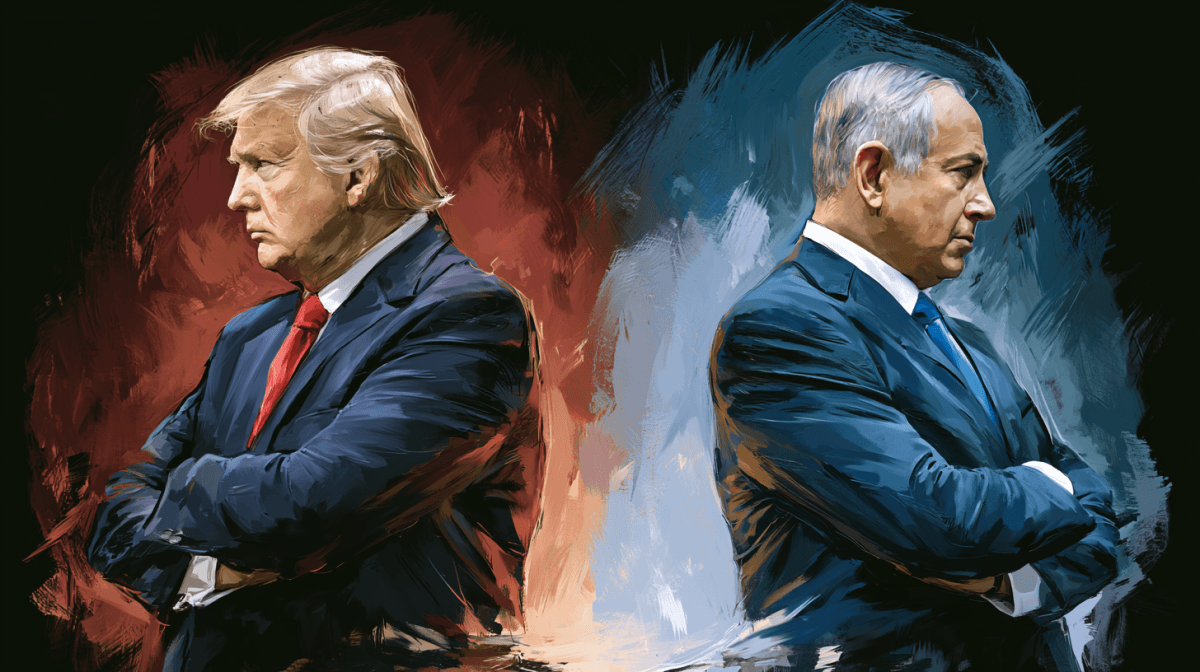
President Donald Trump and Israeli Prime Minister Benjamin Netanyahu reportedly engaged in a "lengthy and dramatic" private phone call on Wednesday, according to Israel’s Channel 12, as significant divisions emerged concerning the next phase of military operations against Iran. The reported conversation centered on whether to resume military strikes against Tehran, highlighting a divergence in strategic approaches between the two leaders.
"CIA Director John Ratcliffe reportedly dismissed regime-change expectations as 'farcical" — New York Times report, cited in article.
Prime Minister Netanyahu is reportedly advocating for a return to military operations, having expressed increasing skepticism that ongoing negotiations with Iran will yield a lasting agreement regarding its nuclear program. Conversely, President Trump is said to be pressing for a diplomatic resolution, aiming to compel Iran to abandon its nuclear weapons ambitions before considering any further military escalation.
This reported disagreement between the key allies surfaced shortly after new claims detailed an alleged U.S.-Israeli regime-change strategy implemented during the initial stages of the conflict with Iran. A New York Times report, cited in the article, suggests that Israel entered the conflict with President Trump’s approval, pursuing an "audacious" plan to install former Iranian President Mahmoud Ahmadinejad as Iran's new leader. This alleged plan was to be enacted following the reported killing of Supreme Leader Ali Khamenei during the initial wave of strikes.
The alleged operation reportedly encountered immediate difficulties when Ahmadinejad himself was wounded during an Israeli strike targeting his Tehran residence. The strike was purportedly intended to liberate him from house arrest, but Ahmadinejad subsequently disappeared from public view. Ahmadinejad, who served as Iran's president from 2005 to 2013, gained international notoriety for his hardline anti-Israel rhetoric, his support for Iran's nuclear program, and his government's suppression of internal dissent.
A source described as close to Ahmadinejad reportedly informed the New York Times that the U.S. envisioned the former Iranian leader playing "a very important role" in a post-war government. The report also claimed that Ahmadinejad initially believed the strike on his home was an attempt to free him from the regime's control. The attack reportedly resulted in the deaths of members of Iran's Revolutionary Guard who were assigned to monitor him during his house arrest. However, after the operation failed to achieve its immediate objective and the broader regime-change effort stalled, Ahmadinejad allegedly ceased communication with Western intelligence services and became disillusioned with the plan.
The New York Times article further stated that Israeli strikes during the opening day of the war reportedly killed Khamenei and several other senior Iranian officials. Some of these officials were allegedly viewed by the White House as potentially more open to negotiations with Washington.
Despite these reported discussions and alleged covert operations, President Trump has consistently maintained publicly that the conflict's objectives are narrowly defined. According to the Daily Mail, President Trump's public statements have limited the conflict's goals to dismantling Iran’s nuclear capabilities, ballistic missile systems, and uranium enrichment infrastructure. The report suggests that the revelations surrounding the alleged Ahmadinejad plan could potentially undermine this public position by implying that the United States and Israel were also exploring options for political restructuring within Iran.
Internally, some Trump administration officials had reportedly expressed skepticism regarding the feasibility of military action leading to the successful overthrow of Tehran’s leadership. CIA Director John Ratcliffe reportedly dismissed regime-change expectations as "farcical," while Secretary of State Marco Rubio allegedly rejected similar assumptions during internal discussions, underscoring the complex and often divergent views within the administration on the optimal approach to addressing the Iranian threat. The unfolding situation highlights the deep complexities and challenges inherent in U.S. and Israeli foreign policy toward Iran.

