


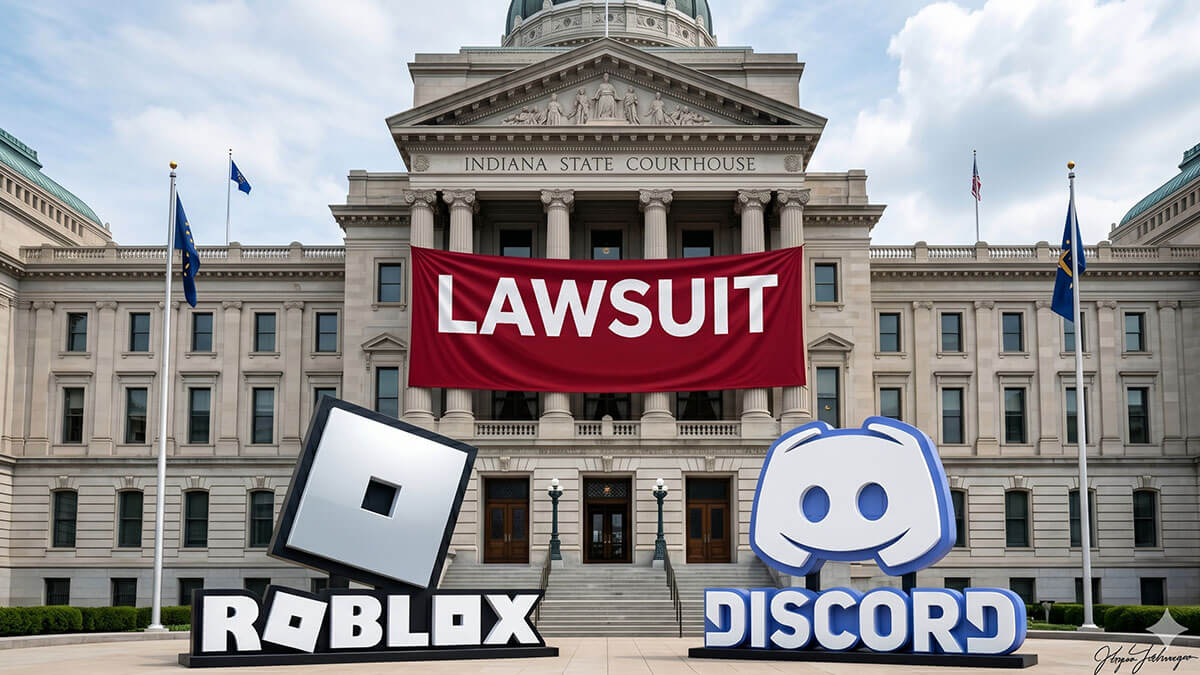
Indiana Attorney General Todd Rokita has filed a lawsuit against Roblox Corp. and Discord Inc. in state court, alleging the companies failed to implement adequate safeguards to protect children from online predators. The complaint, filed on May 7, 2026, accuses both platforms of violating Indiana consumer protection law by exposing minors to grooming and exploitation risks while misleading families about the safety of their services.
"These companies, which cater to kids and young individuals, know full well that numerous predatory sex criminals have used these platforms to contact and lure their victims." — Todd Rokita, Indiana Attorney General
The lawsuit asserts that Roblox and Discord market themselves as safe environments for younger users despite allegedly failing to address known patterns of predatory behavior. State officials contend that these platforms profit from high levels of youth engagement without doing enough to prevent adult users from exploiting chat and messaging features to contact minors. The legal action is part of a broader wave of increasing scrutiny facing major technology platforms regarding child safety concerns, particularly those with large youth user bases combined with direct messaging capabilities that facilitate communication between strangers.
As part of its case, the state has cited multiple incidents involving alleged grooming tied to online platforms, including specific examples within Indiana and other states. One Indiana case referenced involves 17-year-old Hailey Buzbee of Fishers, who was reportedly contacted through Roblox and Discord over an extended period. She was allegedly lured from her home in January and later found deceased in Ohio. Officials describe this incident as illustrative of a broader pattern where minors are initially targeted on gaming platforms before conversations are moved to private messaging services.
The complaint extends its scope beyond Indiana, pointing to additional incidents to highlight what officials describe as a national trend. Among these are cases in Florida and Michigan where individuals allegedly used Roblox to initiate contact with minors, subsequently transitioning conversations to Discord, where exploitation and coercion reportedly escalated. In one instance, law enforcement officials stated that a suspect targeted children as young as 10. Another case cited involved federal investigators charging a man accused of exploiting a large number of minors through online communications that reportedly began on gaming platforms.
State officials argue that these cases reflect a recurring pattern in which predators utilize interactive gaming environments to build trust with minors, then move them into more private messaging spaces. The lawsuit claims that this transition between platforms has repeatedly enabled continued exploitation and has not been sufficiently addressed by the safety systems currently in place on these platforms.
The filing outlines several remedies Indiana is seeking from the court. The state is requesting injunctive relief, which would compel the companies to implement stronger safety measures. Additionally, Indiana seeks financial penalties under consumer protection law, disgorgement of profits allegedly tied to deceptive practices, and reimbursement for investigative costs incurred by the attorney general’s office during its inquiry.
Attorney General Todd Rokita emphasized the companies' alleged awareness of these issues, stating, "These companies, which cater to kids and young individuals, know full well that numerous predatory sex criminals have used these platforms to contact and lure their victims." He further added that their conduct constitutes a violation of Indiana’s consumer protection laws.
In response to similar concerns, both Roblox and Discord have previously highlighted their ongoing efforts to update safety tools, moderation systems, and reporting features. These measures are designed to reduce harmful interactions involving minors on their platforms. However, Indiana officials contend that these existing measures have not been sufficient to prevent exploitation and question their overall effectiveness in safeguarding children. As the case proceeds, state officials are urging parents to closely monitor their children’s online activity and report any suspected exploitation through Indiana’s consumer protection channels.

