

Breaking
Sponsor Advertisement
Italian PM Meloni Confronts AI-Generated Fake Image Campaign
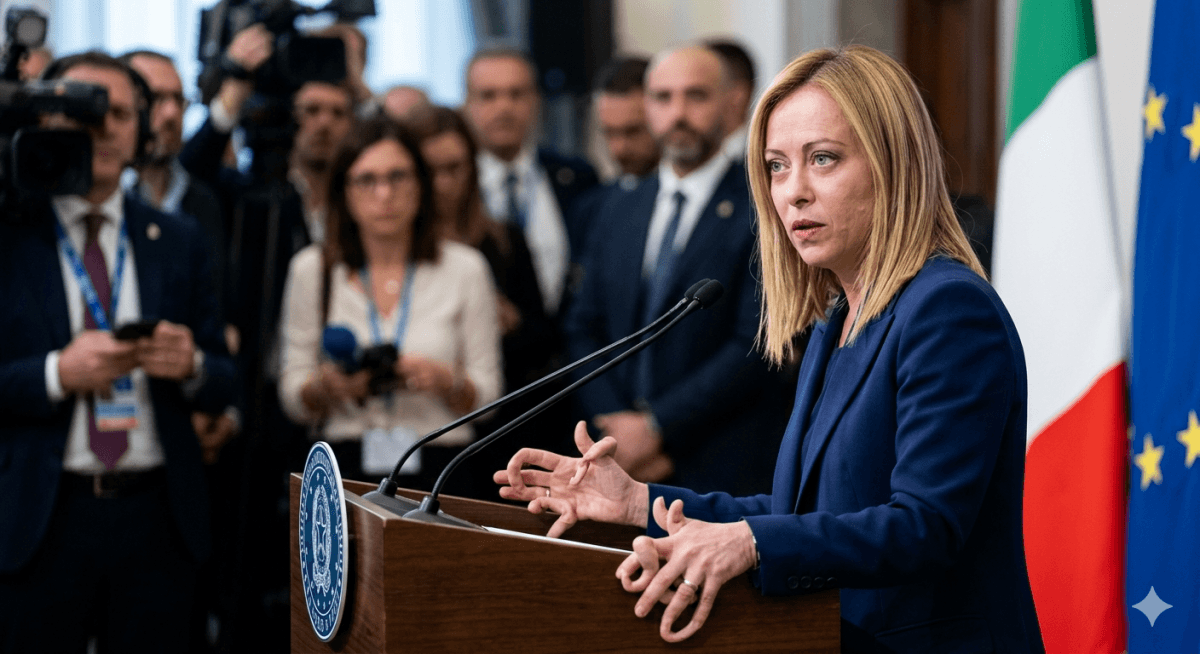
AI-generated image for: Italian PM Meloni Confronts AI-Generated Fake Image Campaign

Italian PM Meloni Confronts AI-Generated Fake Image Campaign

Italian Prime Minister Giorgia Meloni publicly addressed the circulation of AI-generated fake images of herself, posting one to her social media accounts to expose the smear campaign. She used the incident to warn about the broader dangers of deepfakes for individuals.
Jump to The Flipside Perspectives

Italian Prime Minister Giorgia Meloni took an unconventional step on Tuesday, directly confronting a smear campaign by publishing an AI-generated fabricated image of herself that her political opponents had been circulating online. Meloni posted one of the manipulated photos to her social media accounts, effectively seizing control of the narrative and stripping the attackers of the secrecy typically relied upon for such online attacks. The image, which depicted Meloni in scanty underclothes, had reportedly been moving through various online circles for several days prior to her public disclosure.

Rather than expressing outrage, Prime Minister Meloni chose to highlight the absurdity of the situation. In her post on X, she noted that the creators of the fabricated image had, at the very least, done her a "certain favor." According to a translation reviewed by the Daily Caller, Meloni wrote, "I must admit that whomever created them — at least in the case attached here — actually improved my appearance quite a bit." She also included a screenshot from a social media user who had accepted the image as genuine, with that user declaring her appearance in the fabricated photo "shameful and unworthy of the institutional role she holds," as translated by Euronews.

Meloni explicitly identified the source of the images as political opposition. "Several fake photos of me — generated using artificial intelligence and passed off as real by some overzealous opponent — are currently circulating," she stated. Her subsequent message extended beyond her personal experience, focusing on the wider implications of such technology. Meloni issued a stark warning that the threat posed by artificial intelligence image manipulation is not limited to public figures or those in positions of power. "Deepfakes are a dangerous tool, as they have the power to deceive, manipulate and target anyone. I am able to defend myself. Many others are not," she cautioned.

The prime minister's followers on Facebook reportedly responded by urging her to involve law enforcement, according to the Associated Press. As of the time of publication, it had not been confirmed whether her office intends to pursue legal action in connection with this latest series of images.

This is not the first instance of Prime Minister Meloni facing such challenges. In February, she publicly dismissed with a laughing emoji an incident involving a Roman church fresco that reportedly bore a resemblance to her. A more serious episode occurred in 2024, when Meloni initiated a civil lawsuit exceeding $117,000 against two individuals she accused of producing deepfake videos of her that were subsequently distributed on an American pornographic website, as reported by Euronews. Around the same period, a website hosting deepfake pornographic images of prominent Italian women, including Meloni, was shut down, prompting a formal investigation by prosecutors in Rome.

Meloni's government has also been active on the legislative front, successfully advocating for a law that classifies deepfakes inflicting "unjust harm" as a criminal act. This national legislation runs parallel to the broader European Union’s AI Act, which aims to establish continent-wide penalties and safeguards against the misuse of artificial intelligence technology. In concluding her social media post, Meloni directed a message to ordinary internet users, encouraging them to verify content before accepting it as true and to pause before amplifying any information they encounter online. The Daily Caller has reached out to Prime Minister Meloni’s office for further comment.

Advertisement

The Flipside: Different Perspectives

Progressive View

Prime Minister Meloni's experience with AI-generated deepfakes highlights a critical and systemic issue of digital harassment, particularly targeting women in public life. While her personal response demonstrates resilience, the broader implication is the urgent need for comprehensive legal frameworks and platform accountability to protect vulnerable individuals. The fact that Meloni, a head of government, must resort to such measures underscores the inadequacy of current safeguards. Her statement, "I am able to defend myself. Many others are not," powerfully articulates the equity concerns at stake. Deepfakes are not merely personal attacks; they are tools that can undermine democratic processes, erode public trust, and disproportionately harm marginalized communities. Progress requires robust regulation, such as the EU's AI Act, to ensure that technology serves collective well-being rather than enabling malicious manipulation, alongside proactive measures from social media companies to prevent the spread of such harmful content.

Conservative View

The actions of Prime Minister Giorgia Meloni in directly confronting AI-generated fake images exemplify a robust approach to personal responsibility and digital self-defense. Rather than appealing solely to government intervention or censorship, Meloni chose to expose the manipulation herself, asserting control over her own narrative. This aligns with conservative principles emphasizing individual agency and the importance of citizens being discerning consumers of information. While acknowledging the dangers of deepfakes, the focus remains on empowering individuals to identify and reject misinformation. Legislation that criminalizes "unjust harm" from deepfakes reflects a measured approach, targeting malicious intent rather than broad content control, thereby protecting free expression while holding bad actors accountable. Meloni's call for internet users to verify content and pause before amplifying it underscores the belief that a well-informed populace is the best defense against digital deception, rather than relying solely on top-down regulations that could stifle innovation or legitimate speech.

Common Ground

There is broad agreement across the political spectrum that the proliferation of AI-generated deepfakes and manipulated content poses a significant threat to individuals and society. Both conservatives and progressives recognize the potential for these technologies to deceive, manipulate, and undermine trust in information. There is a shared understanding of the need for greater public digital literacy, with calls for internet users to be more critical consumers of online content and to verify information before sharing it. Additionally, there is common ground in the belief that those who maliciously create and disseminate harmful deepfakes should be held accountable, whether through civil lawsuits or targeted criminal legislation that punishes "unjust harm." Discussions around technological solutions, such as AI detection tools or content watermarking, also present a bipartisan avenue for addressing this evolving challenge, aiming to protect individuals while preserving legitimate uses of AI.

What's your view on this story? Share your thoughts and remember to consider multiple perspectives and being respectful when forming and voicing your opinion. "If you resort to personal attacks, you have already lost the debate..."

Advertisement

Contact Us About This Article

Have a question or comment about this article? We'd love to hear from you.

About Fair Side News

At Fair Side News, we believe in presenting news with perspectives from both sides of the political spectrum. Our goal is to help readers understand different viewpoints and find common ground on important issues.