


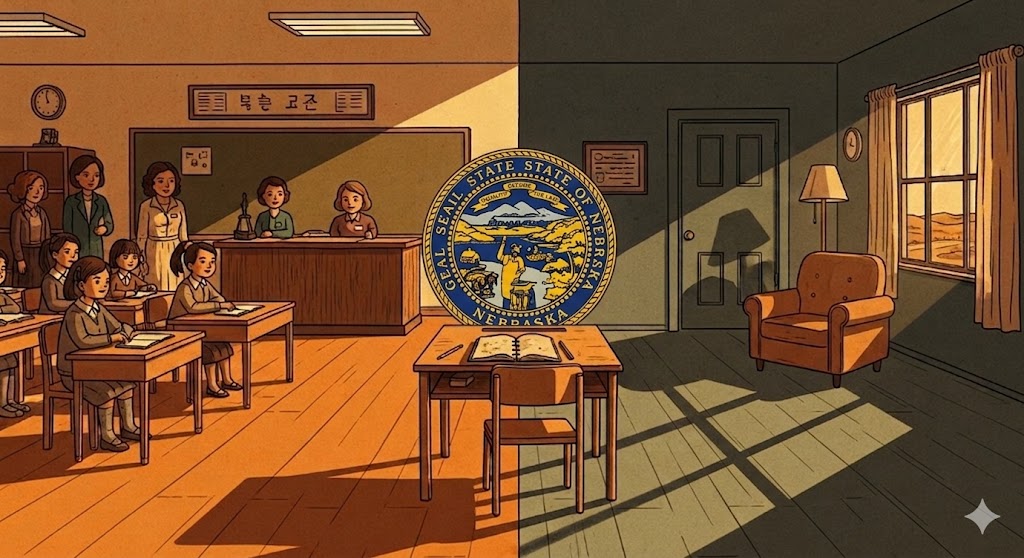
Nebraska Governor Jim Pillen (R) has signed Legislative Bill 937 into law, establishing temporary restrictions on parents' ability to withdraw children from school for homeschooling or other educational transfers during ongoing child welfare investigations. The new measure, which makes Nebraska only the second state to implement such a waiting period, has intensified a national debate concerning parental rights, state oversight, and the extent of government involvement in families choosing alternative education methods.
Under LB 937, parents who are currently under investigation by Nebraska’s Division of Children and Family Services (DCFS) must wait up to 14 days before they can remove a child from their current school setting. This provision is designed to ensure that children remain in contact with mandatory reporters, such as teachers and counselors, during critical stages of an abuse or neglect inquiry, preventing abrupt withdrawals that could hinder investigations. Supporters of the legislation argue that these reactive school withdrawals have sometimes been associated with serious child maltreatment cases, and states bear a responsibility to ensure investigations proceed unimpeded. Child welfare advocates, as reported by Nebraska Public Media, testified that the law provides a necessary safeguard to protect vulnerable children.
The legislation has drawn significant criticism from homeschooling advocacy groups, including the Home School Legal Defense Association (HSLDA). Opponents contend that the law unfairly presumes guilt, treating parents as suspects before allegations of abuse or neglect are substantiated. They argue that the policy infringes upon long-standing constitutional protections that grant parents the right to direct their children’s education. Critics also express concern that the measure could create undue barriers for families seeking immediate educational changes in response to urgent academic, medical, or social concerns. Homeschool advocates highlighted, as reported by The Federalist, that parents often pursue alternative education options because children are struggling academically, experiencing severe bullying, or facing other situations that require immediate intervention. They argue the law limits parental flexibility and responsiveness before any formal finding of abuse or neglect is made.
The debate in Nebraska reflects a broader national discussion regarding homeschooling oversight, which has gained traction in several states in recent years. Organizations advocating for tighter regulations often point to a perceived lack of accountability for homeschooling families and insufficient safeguards for children within these educational environments. Conversely, homeschool-rights groups warn that expanding state authority over educational decisions could gradually erode parental freedoms that have historically experienced minimal government interference.
The Nebraska measure underwent significant modifications during its legislative journey. An earlier version of the bill proposed broader restrictions, which would have prevented parents under investigation from withdrawing children from school until child welfare reviews were fully completed, a process that could potentially extend for weeks or even longer. Lawmakers subsequently narrowed the scope of the proposal, integrating the 14-day waiting period into a larger omnibus education package before its final passage.
Critics of the law also reference Nebraska’s own child welfare statistics, asserting that these data undermine the rationale behind the legislation. During legislative debates, data was cited indicating that a significant number of reports made to child protective services do not ultimately result in substantiated findings of abuse or neglect. Opponents argue that families facing ultimately unproven allegations could still be temporarily prevented from making crucial educational decisions they believe are in their children’s best interest. Supporters, however, counter that the final 14-day provision represents a reasonable compromise compared to the original proposal, striking an appropriate balance between parental rights and child safety concerns. Some child welfare advocates continue to press for further exploration of additional oversight measures for homeschool accountability and student access to educational resources within Nebraska.
The new law is anticipated to remain a focal point of legal and political contention. Homeschool advocacy groups are expected to continue raising constitutional concerns and closely monitor the implementation of these restrictions by state officials. The outcome and its practical application in Nebraska could potentially influence similar legislative efforts in other states as policymakers across the nation continue to weigh the extent of parental authority against increasing calls for greater homeschool oversight.

