


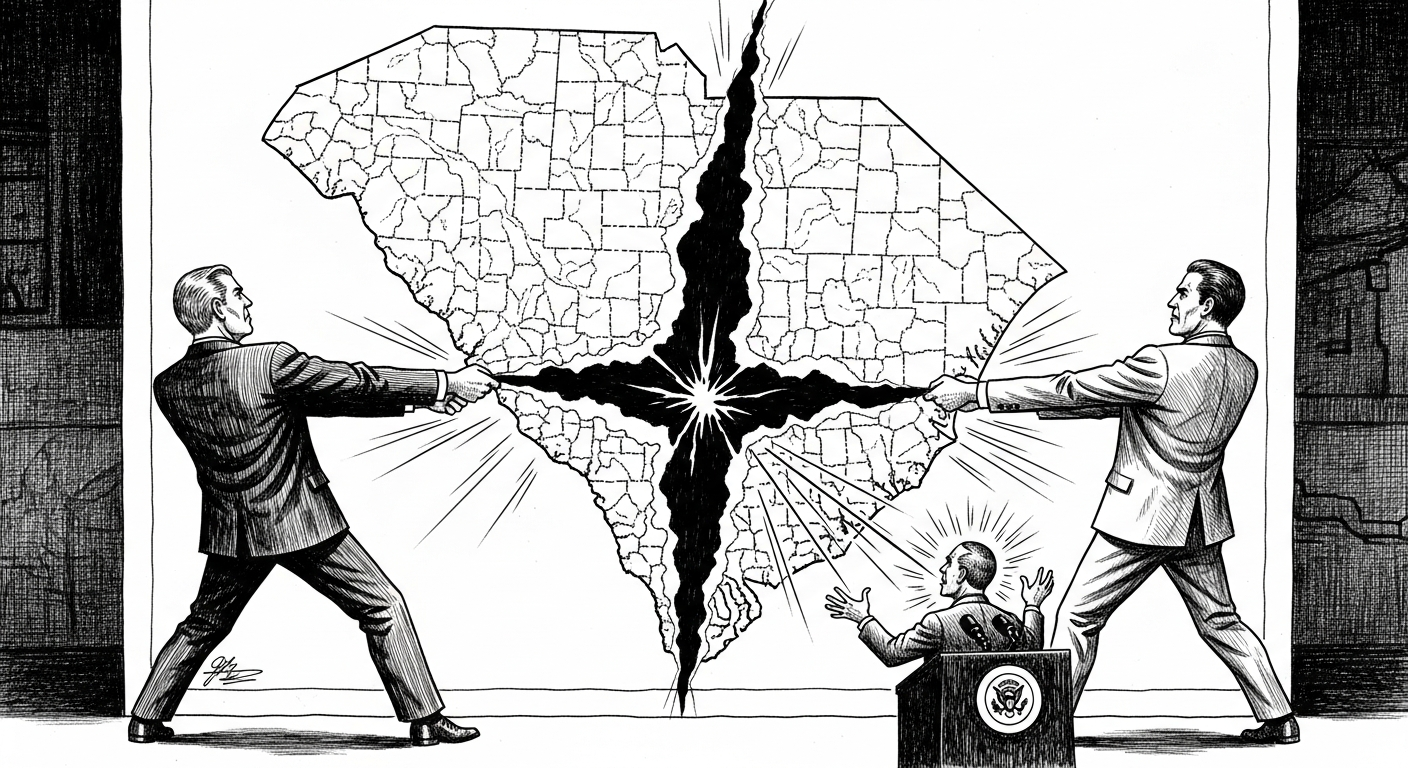
A significant Republican-led initiative to revise South Carolina's congressional districts has collapsed in the state Senate, exposing internal party divisions and defying public calls from President Donald Trump to advance the measure. The South Carolina Senate voted 29–17 against a resolution that would have extended the legislative session, a necessary step to allow for the consideration of new congressional maps. The measure required a two-thirds majority but failed after five Republican senators joined Democrats in opposition.
"South Carolina is stronger when we have a vibrant and viable Democratic Party." — Shane Massey, South Carolina Senate Majority Leader
Among the dissenting Republicans was Senate Majority Leader Shane Massey, the chamber’s most prominent GOP opponent of the redistricting push. Massey's opposition, alongside four other Republican senators, effectively halted the proposal for now. The proposed revisions aimed to alter the state’s congressional lines before the next election cycle, potentially impacting Rep. Jim Clyburn’s majority-Black district, which is currently the state’s only Democratic-held seat.
During extensive floor debate, Senator Massey articulated his rationale for opposing the measure, emphasizing the importance of competitive elections for robust governance. Massey stated that South Carolina benefits when both major parties remain viable and capable of competing, arguing that political rivalry fosters accountability and leads to superior policymaking. He also cautioned that overly aggressive redistricting, driven by short-term political gains, could erode public trust in the electoral process. Massey's stance was particularly notable given President Donald Trump's direct involvement; the President had publicly urged South Carolina Republicans to move forward with the redistricting efforts. Despite this pressure campaign, Massey and his fellow dissenting GOP senators cast votes that ultimately scuttled the proposal.
This failed vote underscores growing internal rifts within the Republican Party regarding the intensity and strategy of pursuing redistricting ahead of the upcoming midterms. While some GOP leaders advocate for more assertive map-drawing strategies in states under Republican control, others, particularly in South Carolina, argued that the specific proposal was rushed and carried significant political risks.
The broader national context for this dispute involves a wave of Republican-led redistricting efforts across the country. These initiatives follow a recent U.S. Supreme Court ruling that placed limitations on the use of race in certain mapping challenges. In response, GOP-controlled legislatures in states such as Tennessee, Alabama, and Louisiana have either advanced or are considering new district maps designed to strengthen Republican advantages in closely contested U.S. House races.
In South Carolina, the legislative calendar added an element of urgency to the debate. Lawmakers faced a narrow timeframe to extend the session and complete the multi-step process required for new maps to be enacted. The Senate’s rejection, however, has effectively closed that path for the current legislative session. Governor Henry McMaster has indicated that he has not ruled out the possibility of calling a special session to address the issue, though no formal decision has been announced.
The outcome of the vote drew sharp criticism from several Republican figures across the state. Rep. Nancy Mace publicly condemned the GOP senators who opposed the measure, asserting that stronger leadership is required to advance Republican priorities. Other state and federal Republicans echoed this frustration, characterizing the vote as a missed opportunity to bolster the party’s position heading into the midterm elections.
While this immediate redistricting effort has stalled, GOP leaders in South Carolina and other Republican-controlled states are widely expected to continue exploring various legal and legislative avenues as the nationwide redistricting battle progresses. The dispute highlights an ongoing tension within the Republican Party: the balance between traditional legislative caution and more aggressive, Trump-aligned strategies aimed at reshaping congressional maps before the next election cycle.

