

Breaking
Sponsor Advertisement
Trump Considers 250 Pardons for Nation's 250th Birthday
Image for: Trump Considers 250 Pardons for Nation's 250th Birthday

Trump Considers 250 Pardons for Nation's 250th Birthday

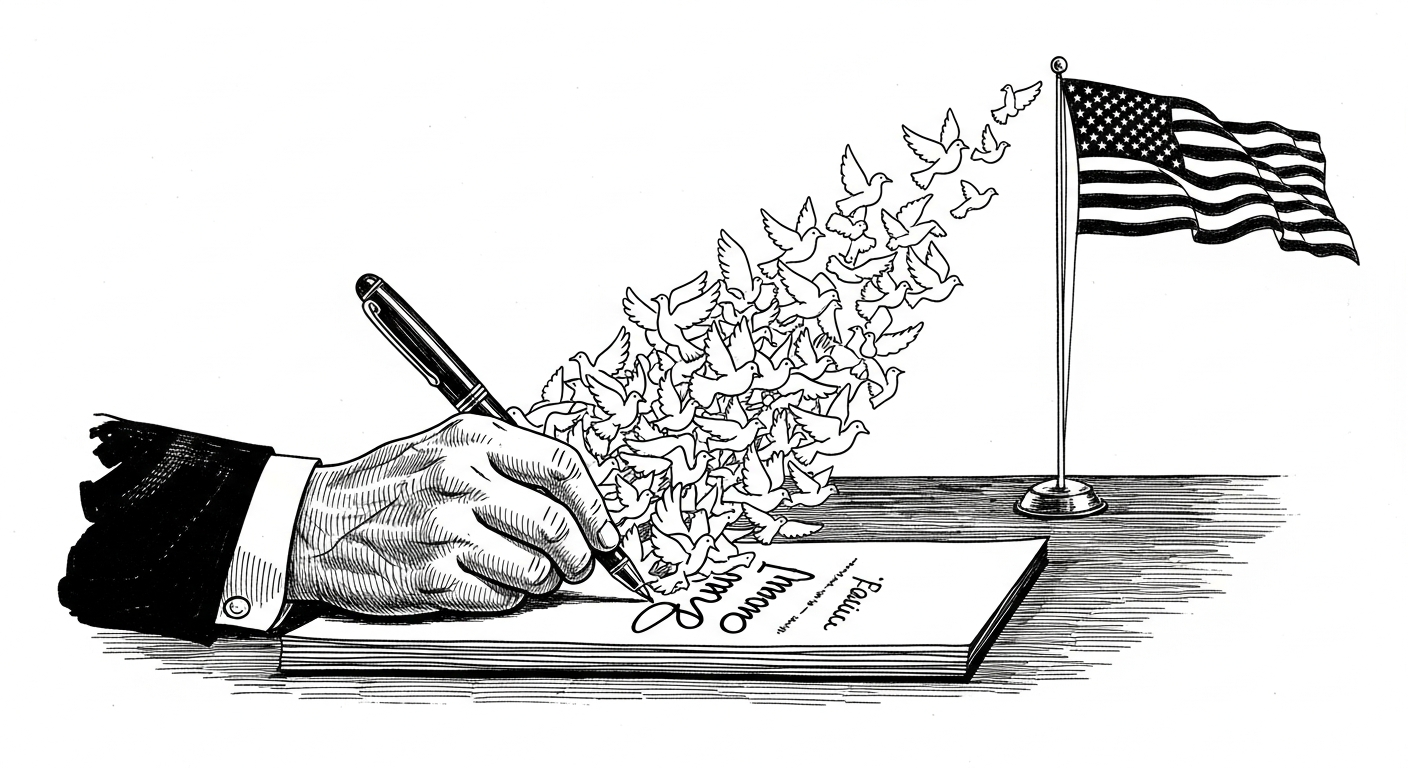
President Donald Trump is reportedly considering issuing 250 presidential pardons to mark the United States' 250th birthday, a move drawing internal White House concern. This potential action would add to his already extensive clemency record since returning to office.
Jump to The Flipside Perspectives

President Donald Trump is reportedly exploring a plan to issue 250 presidential pardons to commemorate the United States’ 250th birthday, a significant act of executive clemency that has sparked discussions within the White House regarding its political implications. The Wall Street Journal revealed the potential plan on Wednesday, citing individuals with direct knowledge of the ongoing White House discussions. The number of pardons, 250, is intended to symbolically align with each year of American history.

"While there are always ongoing policy conversations about how to best act on the President’s priorities, no decisions have been made nor has any action been taken. President Trump is the ultimate decider on any clemency-related actions." — White House Official, Unnamed

This proposed mass clemency builds on a historical tradition, drawing parallels to monarchs and Catholic popes who granted mass absolutions during designated "jubilee" years. The administration appears to be adapting this practice for a democratic republic's milestone anniversary. Two dates have emerged as potential times for an announcement: June 14, which holds triple significance as Flag Day, President Trump's birthday, and the scheduled date for a UFC fight on the White House South Lawn; and July 4, aligning the pardons directly with Independence Day celebrations.

Despite the potential for a celebratory announcement, a White House official, when contacted by the Daily Mail for comment, offered a cautious perspective. The official stated, "While there are always ongoing policy conversations about how to best act on the President’s priorities, no decisions have been made nor has any action been taken. President Trump is the ultimate decider on any clemency-related actions."

Behind the scenes, the atmosphere is reportedly less certain. Sources cited by the Journal indicate that White House officials have begun raising "red flags" concerning the political optics of such a large-scale pardon event, particularly as it would unfold in a midterm election year where Republicans are working to maintain slim majorities in both chambers of Congress.

President Trump's clemency record since returning to the Oval Office in January 2025 is already notable. He has granted clemency to approximately 1,700 individuals, a figure that significantly surpasses President Joe Biden's total of 80 full pardons, though Biden separately commuted the sentences of more than 4,100 individuals. President Trump's second term clemency actions began with a sweeping order pardoning defendants connected to the January 6, 2021, Capitol breach. Subsequent pardons have extended to various individuals, including reality television stars Todd and Julie Chrisley, who were released from prison, and former Republican Congressman George Santos, who received a sentence commutation.

Public perception of President Trump's use of the pardon power has also been gauged. A poll conducted in December 2025 by The Economist and YouGov indicated that a majority of Americans believe President Trump has relied too heavily on his pardon authority. This sentiment was even more pronounced among independent voters, with 61 percent stating that the President had already issued too many pardons.

The mass pardon proposal is part of a broader array of "America250" initiatives championed by President Trump, often in the face of criticism. These initiatives include alterations to the Reflecting Pool on the National Mall, with its base being painted "American flag blue" as described by the President. The Cultural Landscape Foundation recently filed a lawsuit to halt this project. Additionally, a triumphal arch, which observers have dubbed the "Arc de Trump," is planned as a commemorative landmark. The Federal Aviation Administration (FAA) confirmed on Tuesday that it has initiated a formal review to assess whether the proposed structure, located less than two miles from Ronald Reagan Washington National Airport, poses a flight hazard.

President Trump's vision for the semiquincentennial further encompasses a National Garden of American Heroes featuring 250 statues, a Washington-based IndyCar race branded the Freedom 250 Grand Prix slated for August, and the previously mentioned South Lawn UFC event next month. These initiatives collectively underscore the President's expansive approach to commemorating the nation's 250th anniversary.

Advertisement

The Flipside: Different Perspectives

Progressive View

Progressives view President Trump's potential mass pardon initiative with significant concern, emphasizing the rule of law, equitable justice, and the potential for abuse of power. The idea of issuing 250 pardons, especially following a record of clemency that has already drawn public criticism, raises questions about the integrity of the justice system and whether such actions serve the collective good. While the power of clemency is constitutional, its application should, from a progressive standpoint, reflect principles of fairness, transparency, and accountability, rather than appearing politically motivated or arbitrary. The reported internal White House "red flags" about political optics in a midterm election year underscore these concerns, suggesting that the timing and scope may be more about political gain than genuine justice reform. Furthermore, the previous pardons granted to individuals connected to the January 6 Capitol breach, as well as figures like Todd and Julie Chrisley and George Santos, contribute to a perception that clemency is being applied selectively, potentially undermining public trust in the legal process. The Economist/YouGov poll indicating majority public disapproval of the President's pardon record highlights a broad societal concern that the pardon power is being leaned on too heavily, potentially eroding the foundational principle that no one is above the law.

Conservative View

From a conservative perspective, President Trump's consideration of 250 pardons aligns with a strong interpretation of executive power and a belief in the importance of second chances. The U.S. Constitution grants the President broad authority to grant pardons and reprieves, a power essential for balancing justice with mercy. This act of clemency can be seen as a way to correct perceived injustices, offer rehabilitation, and demonstrate the President's commitment to individual liberty by freeing citizens from the state's punitive reach. The idea of linking pardons to the nation's 250th birthday evokes a sense of historical tradition, harkening back to acts of jubilee and national reconciliation. While some may raise concerns about political optics, particularly in an election year, conservatives often prioritize the President's constitutional prerogatives over transient political anxieties. The extensive use of pardons, especially for those involved in politically charged events like January 6, can be viewed as an effort to unify a divided nation or to ensure that justice is tempered with compassion, especially when individuals may have been over-prosecuted or are deemed to have served sufficient time. This exercise of presidential authority underscores the limited role of government in perpetually punishing its citizens once a debt to society is considered paid.

Common Ground

Despite differing perspectives on President Trump's potential mass pardon initiative, there are areas of common ground regarding the principles of justice and presidential authority. Both conservatives and progressives acknowledge the President's constitutional power to grant pardons and reprieves, recognizing its historical role in the American legal system. There is also shared agreement on the importance of rehabilitation and the concept of second chances for individuals who have served their time, provided such clemency does not undermine public safety or the integrity of the justice system. Furthermore, both sides can agree that transparency in the pardon process is valuable, allowing for public understanding and trust in executive actions. The celebration of national milestones, such as the nation's 250th birthday, is a shared patriotic sentiment, even if the methods of commemoration differ. Discussions around executive clemency could serve as an opportunity to examine broader issues within the justice system, such as sentencing reform or the criteria for pardon eligibility, potentially leading to bipartisan efforts to ensure that clemency is applied thoughtfully and effectively for the benefit of all citizens.

What's your view on this story? Share your thoughts and remember to consider multiple perspectives and being respectful when forming and voicing your opinion. "If you resort to personal attacks, you have already lost the debate..."

Advertisement

Contact Us About This Article

Have a question or comment about this article? We'd love to hear from you.

About Fair Side News

At Fair Side News, we believe in presenting news with perspectives from both sides of the political spectrum. Our goal is to help readers understand different viewpoints and find common ground on important issues.