


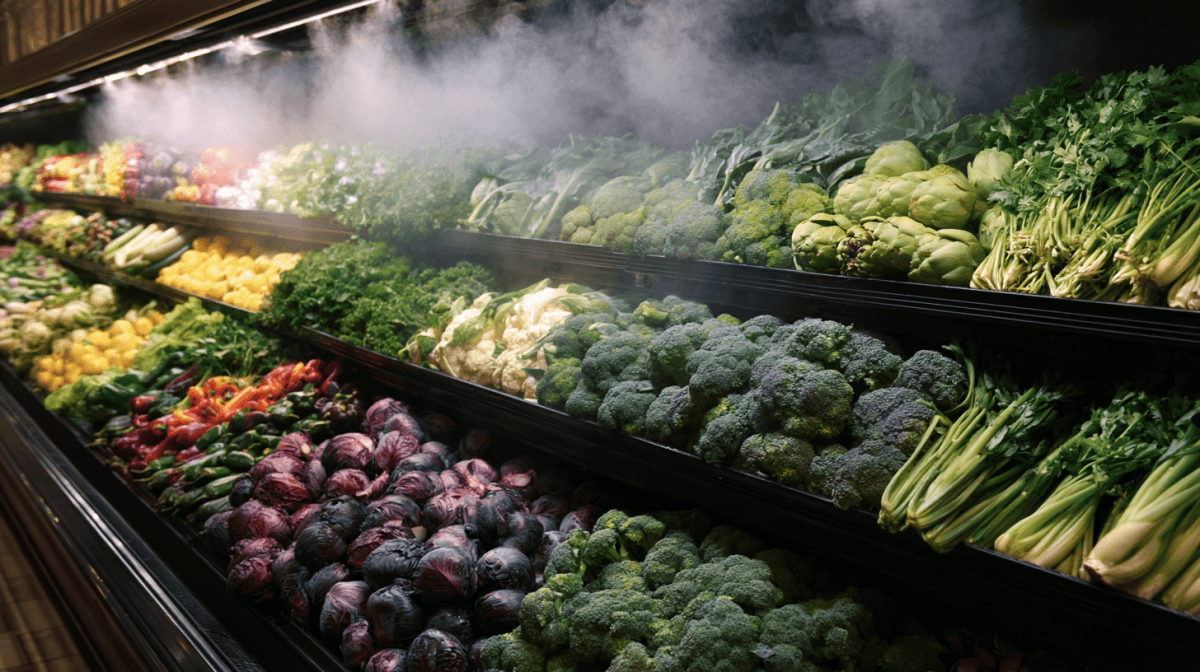
Texas Attorney General Ken Paxton has secured a settlement with Albertsons Safeway LLC, mandating an end to the use of synthetic antimicrobial misting systems on organic produce within its Texas stores. The agreement, announced following a January investigation, is being heralded by state officials as a significant win for consumer transparency concerning organic food labeling.
"This is a huge win for Texans seeking to avoid synthetic pesticides when purchasing organic produce. I commend Albertsons for reversing its course of action and signing this historic agreement to help ensure transparency for Texans by requiring its stores to stop the misting of pesticides on organic produce." — Ken Paxton, Texas Attorney General
The investigation was launched to determine if USDA-certified organic fruits and vegetables were being treated with chemical agents after harvest without adequate disclosure to shoppers. Central to the case was ProduceMaxx, an antimicrobial solution registered with the Environmental Protection Agency (EPA) that contains hypochlorous acid, a chlorine-based compound. This agent is commonly employed to reduce bacterial presence in food-handling environments. State officials found that ProduceMaxx had been utilized in produce-misting systems across various large grocery networks, including on items designated as organic. This practice raised questions regarding its alignment with consumer expectations for organic certification, which often implies minimal synthetic treatment.
Regulators clarified that the core of the dispute was not about the safety of the food technology itself, but rather about transparency in labeling and retail practices. While ProduceMaxx is classified and regulated as a pesticide by the EPA due to its antimicrobial function, it is broadly used throughout the food supply chain for general sanitation. The controversy specifically revolved around whether its application to organic produce warranted clearer disclosure under existing labeling standards, as reported by KSST Radio. Consumers paying a premium for organic products generally expect a higher standard of natural processing and fewer synthetic interventions.
Under the terms of the settlement, formalized as an Assurance of Voluntary Compliance, Albertsons and its affiliated grocery banners operating in Texas—which include Randalls, Tom Thumb, United Supermarkets, Market Street, and Amigos—are required to cease using ProduceMaxx and similar synthetic antimicrobial agents in misting systems on organic produce. Furthermore, the agreement stipulates that any organic produce previously treated with such agents must be thoroughly rinsed with potable water before being offered for sale in stores. This legally binding accord establishes uniform compliance requirements for all affected locations within the state.
Attorney General Paxton lauded the agreement as a substantial victory for Texas consumers, underscoring the importance of shoppers being fully informed when purchasing premium-priced organic foods. He highlighted other retailers, such as H-E-B, Whole Foods Market, and Natural Grocers, as examples of companies that do not engage in similar misting practices, and he encouraged other chains, including Sprouts Farmers Market, to adopt similar policies.
The settlement is expected to have broader implications, potentially influencing how organic produce-handling practices are regulated and disclosed at the retail level beyond Texas. Industry analysis notes that ProduceMaxx functions as an antimicrobial, not an insecticide or herbicide, yet its classification as a pesticide by the EPA has fueled ongoing debate among regulators, retailers, and consumer advocates. This debate centers on how post-harvest antimicrobial treatments should be labeled when applied to organic products, according to the Houston Chronicle.
Proponents of stricter disclosure rules argue that consumers who pay higher prices for organic produce do so with the expectation of minimal synthetic treatment, unless such treatments are explicitly stated. Conversely, some in the food industry contend that antimicrobial sanitation systems are a standard and essential component of modern food safety practices, particularly in large-scale distribution and retail environments. They argue that these systems play a crucial role in preventing the spread of foodborne pathogens and maintaining product quality across extensive supply chains.
The Texas Attorney General’s Office has indicated it will continue to monitor compliance with the settlement terms and suggested that other retailers operating within the state could face similar scrutiny if comparable practices are identified. Officials have framed this settlement as part of a larger initiative to bolster transparency and reinforce consumer trust in food labeling standards throughout the entire supply chain, from farm to retail shelf.

