


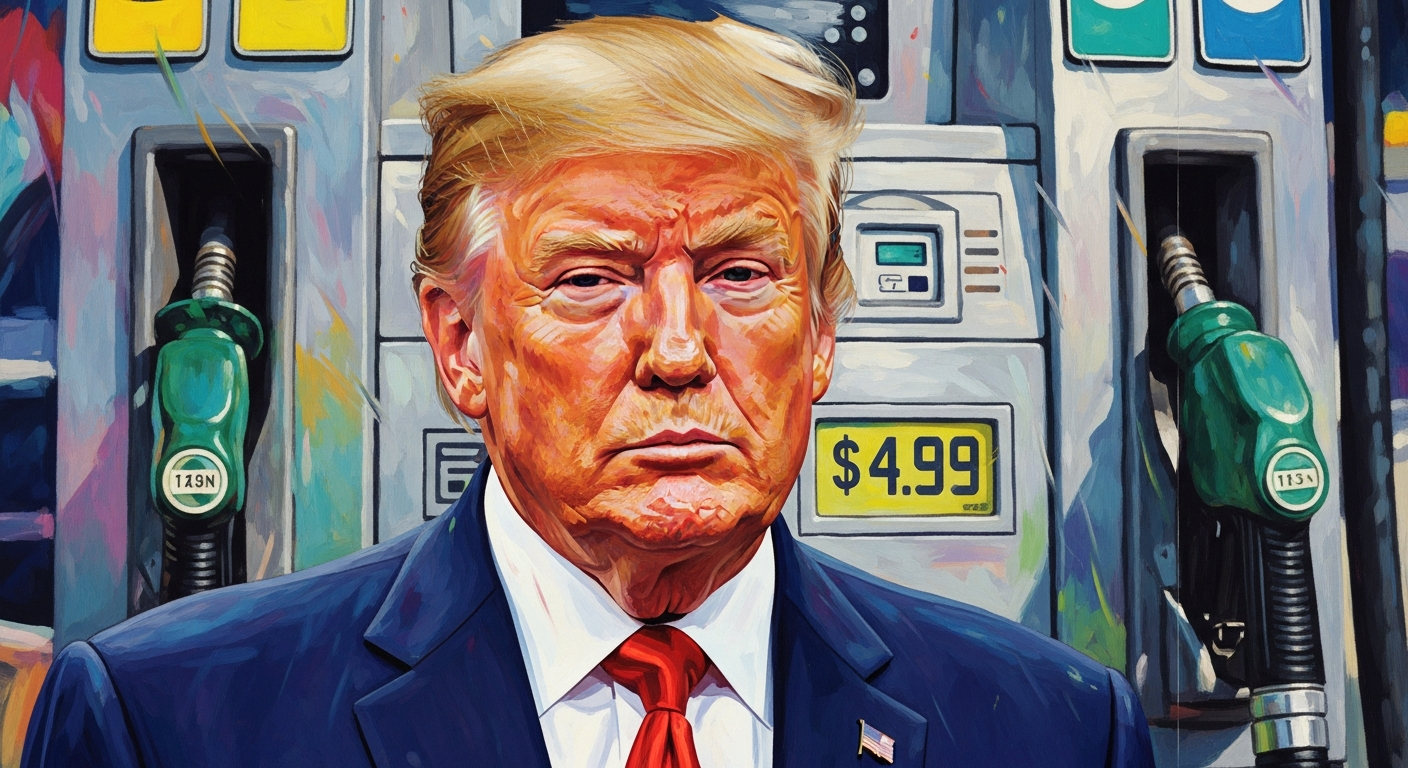
President Donald Trump is facing scrutiny for his recent remarks on surging gasoline prices, which he described as "peanuts" amidst the ongoing conflict with Iran. The President’s comments, made Wednesday, come as Americans contend with significantly higher fuel costs, which the administration attributes to the geopolitical tensions with Iran.
"This is peanuts!" — President Donald Trump, Remarks to Reporters
The conflict has impacted global oil supplies, particularly through the Strait of Hormuz, a crucial shipping lane through which roughly one-fifth of the world’s oil supply passes. When questioned about negotiations to stabilize the region and potentially lower fuel costs, President Trump stated, "I’m in no hurry," adding, "Everyone is saying, ‘Oh, the midterms.’ I’m in no hurry." This position was echoed by Vice President JD Vance during a White House briefing Tuesday, who assured that the Iran conflict was not becoming a "forever war" and that rising fuel costs were temporary.
The administration has consistently framed the current energy price increases as a necessary sacrifice to prevent Iran from becoming a nuclear power. However, the economic impact on American households has been substantial. According to data from AAA, the national average price for a gallon of regular gasoline has climbed to $4.56, marking a significant increase from $2.98 before the conflict began—a jump of approximately 53% since late February. For a standard 14-gallon gas tank, this translates to about $22 more per visit to the pump. Drivers in California are reportedly experiencing even steeper prices, with the statewide average reaching $6.15 per gallon.
President Trump further intensified criticism on Tuesday by dismissing concerns about these rising fuel costs. "This is peanuts!" the President said during remarks to reporters. He also expressed appreciation for Americans "putting up" with the higher prices during the conflict. These statements quickly drew sharp reactions from Democratic lawmakers. The House Democrats on the Ways and Means Committee posted on social media that rising fuel costs could add more than $740 to household expenses this year, citing analyses from the Daily Mail. "An extra $740 bill for you = ‘peanuts’ to Donald Trump," the committee wrote.
House Democratic Whip Katherine Clark also criticized the President's stance. "The next time you’re at the gas pump, remember this: Trump just said out loud he doesn’t ‘even think about’ your skyrocketing prices," Clark stated online. Senator Jeanne Shaheen similarly accused President Trump of disregarding the financial burden on middle-class Americans, writing, "POTUS isn’t paying for this war. Middle class Americans are, and he couldn’t care less."
The energy price surge is also contributing to broader inflationary pressures across the economy. Consumer inflation reportedly rose 3.8% in April compared to the previous year. Grocery prices saw a 2.9% increase, marking the highest year-over-year rise for food-at-home costs since August 2023. Travel expenses have also escalated, with Kayak reporting an 18% increase in average domestic round-trip airfare in April compared to the same period last year.
Recent polling indicates growing public concern over the economy ahead of the midterm elections. A Daily Mail/JL Partners survey revealed that 59% of voters believe the economy is worsening, and nearly half reported that rising gas prices have negatively impacted their savings. Despite these pressures, President Trump has maintained that fuel prices will "drop like a rock" once the conflict concludes. When asked last week whether Americans' financial struggles were motivating him to accelerate negotiations with Iran, President Trump responded, "Not even a little bit." He added, "I don’t think about Americans’ financial situation."
These recent comments follow President Trump's admission last week during an interview with Fox News host Sean Hannity that the US involvement in the Iran conflict is primarily to assist allies. "We don’t need it at all," President Trump told Hannity. "I mean, you could make the case, you know, like why are we even, we’re doing it to help Israel, and to help Saudi Arabia, and to help Qatar and [the United Arab Emirates] and, you know, Kuwait and other countries, Bahrain." This candid explanation of the war's motivations has contributed to a "stunning divide" within his Make America Great Again (MAGA) coalition, with some prominent former allies, including Megyn Kelly and Tucker Carlson, emerging as critics.

