


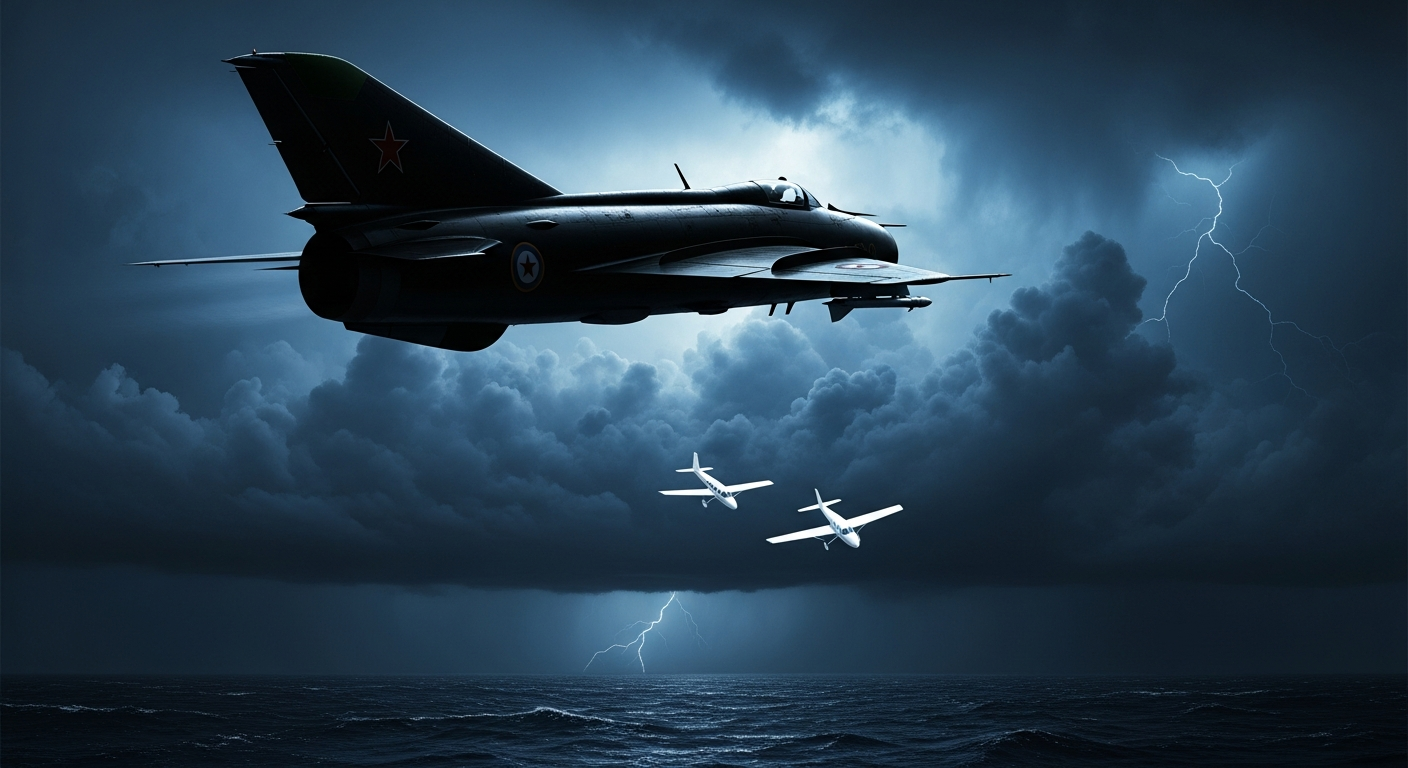
The U.S. government is reportedly preparing a federal indictment against Raúl Castro, the 94-year-old former Cuban leader, in connection with the 1996 shootdown of two unarmed civilian aircraft. The planes, operated by the Miami-based humanitarian organization Brothers to the Rescue, were intercepted and downed by Cuban MiG fighter jets on February 24, 1996, resulting in the deaths of four individuals, including three U.S. citizens and one permanent U.S. resident.
Reports, citing U.S. officials familiar with the matter, indicate that federal authorities are actively examining possible criminal charges against Castro, who served as Cuba’s defense minister at the time of the incident, overseeing the country’s military forces under his brother Fidel Castro’s government. The shootdown occurred north of Cuba over international waters, a claim disputed by Cuba, which has long maintained the aircraft entered Cuban airspace and posed a threat. However, U.S. authorities and an investigation by the International Civil Aviation Organization (ICAO) subsequently refuted Cuba's assertion.
The victims of the attack were identified as U.S. citizens Carlos Costa, Mario de la Peña, and Pablo Morales, along with permanent U.S. resident Armando Alejandre. Brothers to the Rescue was a non-profit group primarily engaged in search-and-rescue operations for Cuban migrants attempting to reach the United States by sea. The organization also conducted leaflet drops over Cuba, which were critical of the communist government.
The push for accountability for the 1996 incident has seen renewed momentum in recent months. Earlier this year, four Republican members of Congress sent a letter to President Donald Trump and Attorney General Pam Bondi, urging the Justice Department to reopen the investigation. The lawmakers characterized the shootdown as a “regime-sponsored military operation” and advocated for the consideration of international arrest notices should charges be brought against Castro.
Further illustrating the revived efforts, James Uthmeier announced in March that Florida had reopened a dormant state-level criminal investigation related to the 1996 attack. Uthmeier noted that the state investigation had previously stalled during President Joe Biden’s administration before its reactivation this year.
On the federal front, prosecutors in the Southern District of Florida have reportedly established a working group dedicated to examining potential charges against Cuban government officials and Communist Party members. This task force, according to Trending Politics, includes representatives from the Department of Justice, the Drug Enforcement Administration (DEA), and the Treasury Department. Their mandate reportedly covers investigations into alleged violent crimes, economic offenses, and immigration violations tied to Cuban officials.
This is not the first time legal action has been pursued in relation to the shootdown. In 2003, a federal indictment was issued against two Cuban fighter pilots and their commanding officer who were connected to the attack. The current reports suggest a significant escalation, targeting a figure who held a top leadership position at the time of the incident.
The potential indictment of Raúl Castro carries substantial implications for U.S.-Cuba relations, which have remained strained. The Cuban government is expected to vehemently oppose any such action, likely portraying it as an aggressive act by the United States. Cuban President Miguel Diaz-Canel has previously stated his refusal to yield to the Trump administration’s demands, indicating a firm stance against U.S. pressure. President Donald Trump is reportedly weighing various options regarding Cuba, similar to the administration's approach to Venezuela. The reported move to indict Castro underscores a broader U.S. strategy to hold foreign adversaries accountable for actions perceived as hostile or illegal, particularly when they involve harm to American citizens.

