

Breaking
Sponsor Advertisement
Utah County Approves AI Data Center Amid Protests
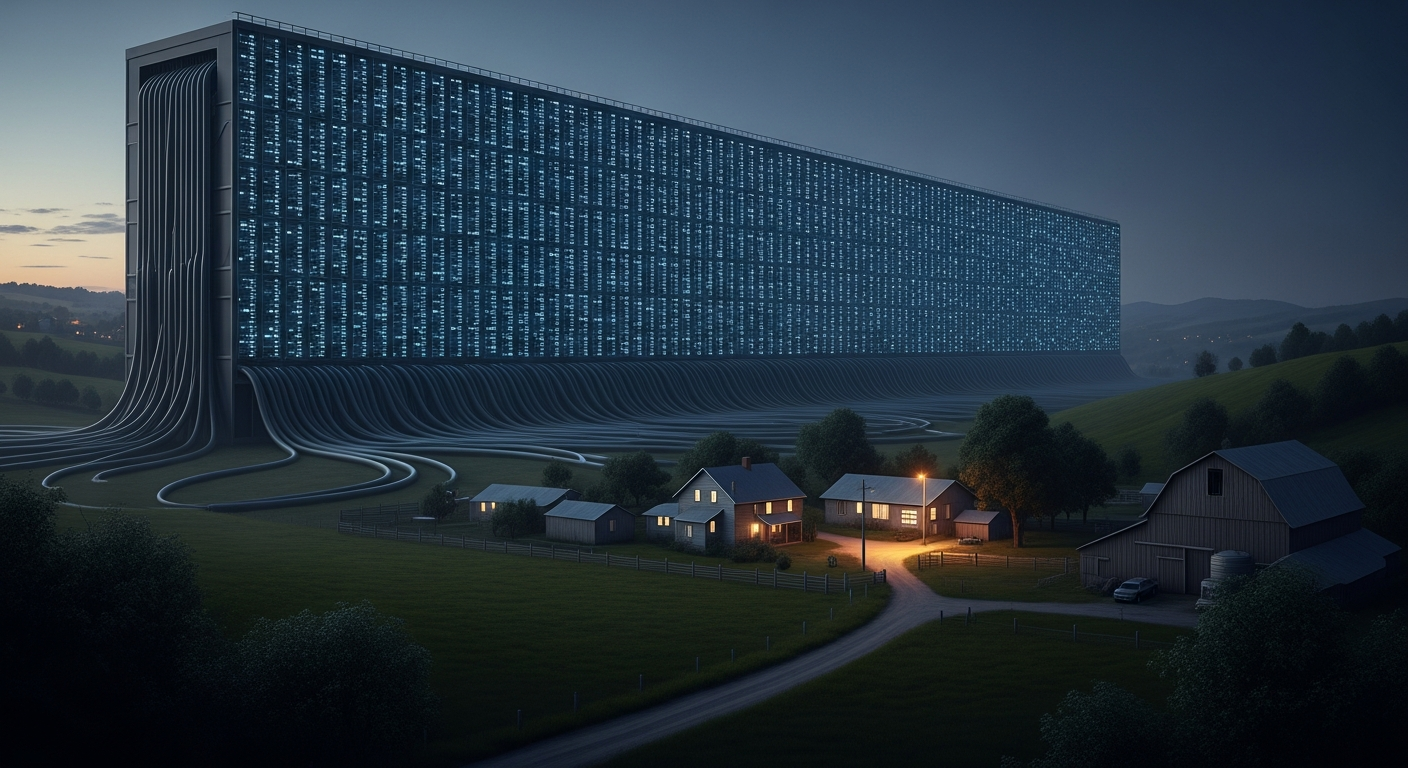
AI-generated image for: Utah County Approves AI Data Center Amid Protests

Utah County Approves AI Data Center Amid Protests

Box Elder County commissioners approved a large artificial intelligence data center backed by Kevin O'Leary, prompting significant community backlash and protests. Residents expressed concerns over environmental impact and the rapid approval process for the project.
Jump to The Flipside Perspectives

Box Elder County, a rural area in northern Utah, became the site of intense local political confrontation this week following a commission vote to approve a colossal artificial intelligence data center. The project, backed by "Shark Tank" investor Kevin O'Leary, advanced despite furious objections from hundreds of residents who packed a Tremonton fairgrounds facility on Monday. The venue was specifically chosen to accommodate an unusually large crowd, which filled the room, spilled into hallways, and extended into the parking lot. Chants of "Shame! Shame! Shame!" echoed as commissioners cast their votes.

The proposed "hyperscale" data center campus is an unprecedented development for the state, planned to span approximately 60 square miles—a footprint nearly three times the size of Manhattan. At full capacity, the facility is projected to draw up to 9 gigawatts of electricity, a figure state officials indicate exceeds twice Utah’s current total average statewide power consumption. A physicist at Utah State University estimated that if the project reaches full buildout, it could increase the state’s greenhouse gas emissions by roughly 50%. The facility is designed to run primarily on natural gas.

The confrontation with officials continued well after the meeting concluded, and residents' anger did not dissipate. Commissioner Lee Perry reported to ABC4 that law enforcement had been stationed outside commissioners' homes in the days following the vote. "Today I have policemen parked in front of my house," Perry stated, adding that the demonstrations had become personal, "attacking, not just me personally, but my family."

Kirk Offel, CEO of Overwatch Mission Critical, described the sheer scale of the proposal as something that would have been considered fantasy just a few years ago. "Nine gigawatts is aggressive. But it’s not unrealistic. Not anymore," Offel told The Post. He characterized a fundamental shift in the industry's approach, stating, "We are no longer building data centers, we are building industrial infrastructure for intelligence." Offel identified execution, rather than market demand, as the primary challenge for such large-scale developments, pointing to power acquisition, workforce development, and community relations as critical variables. Addressing the environmental dimension, Offel noted, "Natural gas is being used as a bridge, not because it’s perfect, but because it’s available, scalable, and dispatchable right now." He framed the broader conflict as a disparity between "demand moving at exponential speed, and policy, infrastructure, and environmental alignment moving at linear speed."

Residents who opposed the project raised significant alarms regarding its potential impact on water consumption, air quality, drought vulnerability, and the permanent transformation of tens of thousands of acres of open land. Many also criticized the rapid pace of the approval process, arguing that the public was given insufficient opportunity to influence a decision with generational consequences for their community.

State officials did not dispute the speed of the process. Paul Morris, executive director of Utah’s Military Installation Development Authority (MIDA), stated last month that the urgency was deliberate, citing competition. "It’s a competition," Morris said. "That’s also why we’ve been rushing it so fast." MIDA approved an energy tax rate of 0.5% for the project, a fraction of the 6% rate the authority had the power to impose.

Kevin O’Leary, for his part, dismissed the protests as largely artificial. In a video posted to social media, he claimed that the demonstrations drew heavily from outside the region. "We think over 90% of the protesters are actually not people that live in Utah or Box Elder County. They’re being bussed in," O’Leary asserted. He also tweeted, "I’m the only developer of data centers on earth that graduated from environmental studies. I'm pretty aware of what these concerns are. They are around air, water use, heat, noise pollution. So sustainability is at the heart of what we do in terms of all these proposals."

Box Elder County's experience is not isolated. In Festus, Missouri, last month, voters responded to the approval of a $6 billion data center by removing several council members who had supported it from office. This event signals that the political ramifications of such decisions can extend beyond the initial vote. In Utah, this signal has been delivered early through public demonstrations and heightened security for local officials.

Advertisement

The Flipside: Different Perspectives

Progressive View

The Box Elder County data center approval highlights critical concerns regarding environmental justice, community voice, and sustainable development. The sheer scale of the project, with its potential to double Utah's statewide power consumption and significantly increase greenhouse gas emissions, demands a more rigorous environmental review and transparent public input process. Residents' alarms about water scarcity, air quality, and the permanent transformation of vast natural landscapes underscore the need for decisions that prioritize long-term collective well-being over corporate profits. The rapid approval process and a significantly reduced tax rate raise questions about corporate influence and whether the community's democratic rights were adequately respected. The reported police presence outside commissioners' homes and the intensity of the protests signal a profound disconnect between local governance and the community it serves. A truly progressive approach would mandate comprehensive ecological impact assessments, robust community engagement, and a commitment to renewable energy sources, ensuring that economic development does not exacerbate existing environmental vulnerabilities or disenfranchise local populations.

Conservative View

The approval of the Box Elder County data center represents a significant stride in technological and economic development, aligning with conservative principles of fostering innovation and creating opportunity. The project promises substantial investment and high-tech jobs, bolstering the local economy through private enterprise. Proponents argue that streamlining regulatory processes, as seen with the rapid approval and reduced tax rate, is essential to attract such large-scale ventures in a competitive global market. This approach minimizes government interference and allows free markets to drive progress. While environmental concerns are valid, the reliance on natural gas is viewed as a pragmatic bridge fuel, balancing energy demands with a gradual transition to cleaner sources, without stifling growth through overly restrictive regulations. The ability of local commissions to make decisions that they believe benefit their community, even in the face of vocal opposition, underscores the importance of local governance and elected representation. Claims of outside agitators influencing local protests also raise concerns about preserving genuine local discourse.

Common Ground

Despite differing perspectives, there are areas of common ground regarding large-scale infrastructure projects like the Box Elder County data center. Both conservative and progressive viewpoints recognize the importance of economic development and the need for reliable energy infrastructure to support a growing society and technological advancement. There is also shared value in ensuring that local communities have a voice in decisions that significantly impact their future. Constructive dialogue can focus on developing transparent processes for project review that balance economic incentives with environmental stewardship. Exploring options for cleaner energy sources and water conservation technologies within such projects, alongside robust impact mitigation strategies, could find bipartisan support. Furthermore, fostering genuine public engagement and ensuring that local governments are responsive to resident concerns, while also protecting officials from intimidation, are shared goals for a healthy democratic society.

What's your view on this story? Share your thoughts and remember to consider multiple perspectives and being respectful when forming and voicing your opinion. "If you resort to personal attacks, you have already lost the debate..."

Advertisement

Contact Us About This Article

Have a question or comment about this article? We'd love to hear from you.

About Fair Side News

At Fair Side News, we believe in presenting news with perspectives from both sides of the political spectrum. Our goal is to help readers understand different viewpoints and find common ground on important issues.