


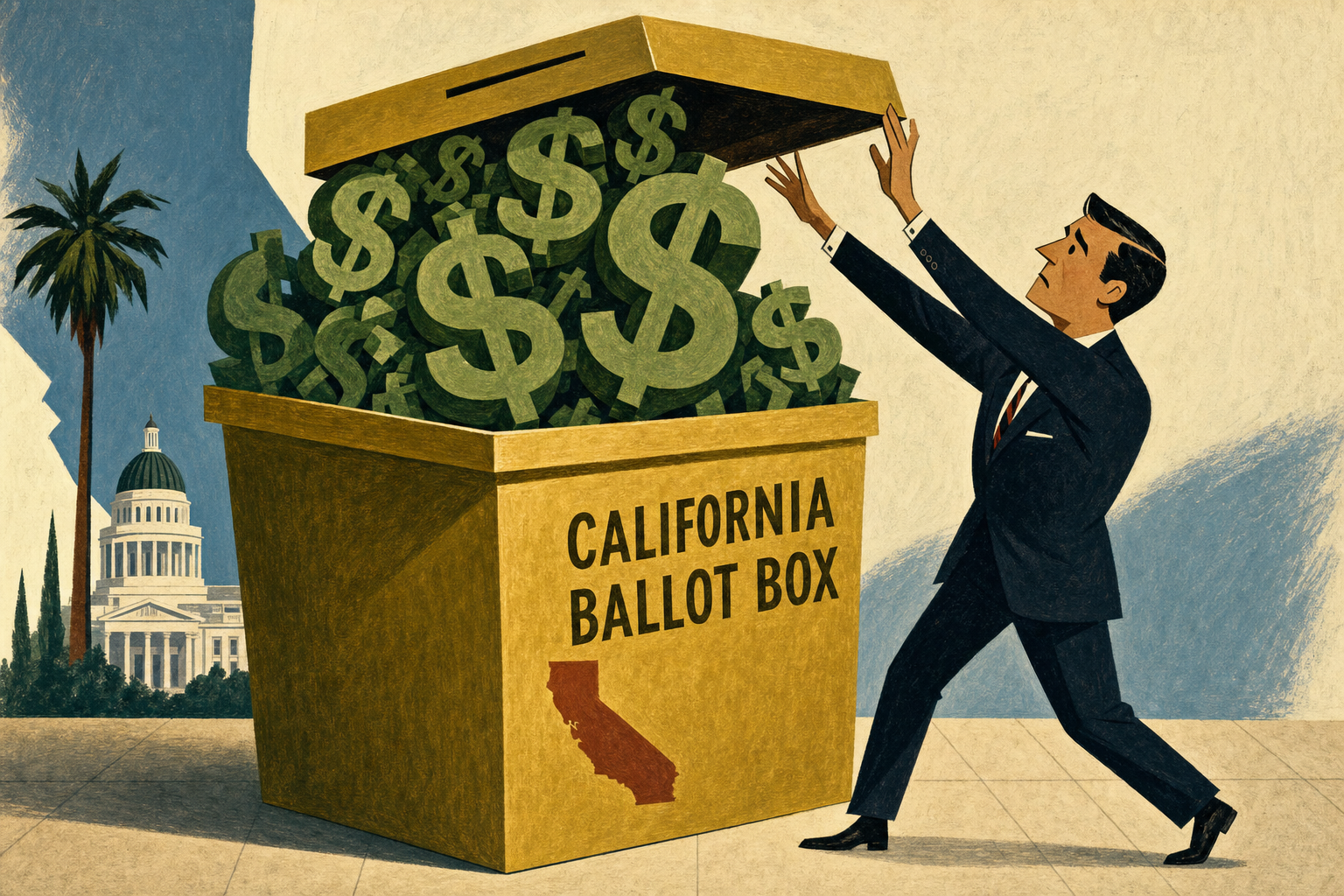
California Governor Gavin Newsom (D) has failed to reach an agreement to keep a proposed billionaire wealth tax off the November ballot, initiating what is widely expected to become one of the state’s most closely watched and expensive ballot measure campaigns. Negotiations between the Governor’s office and proponents of the initiative concluded without a compromise, allowing the proposal to proceed to voters this fall. The measure, if approved, would impose a one-time 5% tax on California residents with a net worth exceeding $1 billion.
"What the governor has made clear from the beginning is that he would not entertain any any proposal or compromise that would tax billionaires." — Dave Regan, President, SEIU-United Healthcare Workers West
Supporters of the ballot measure argue that the revenue generated would be critical in offsetting anticipated reductions in federal health care funding, thereby preserving essential state programs. These programs include Medi-Cal, various hospitals, education initiatives, and food assistance. Dave Regan, president of SEIU-United Healthcare Workers West, a key proponent, stated that negotiations with the Governor’s office involved only limited discussions. "What the governor has made clear from the beginning is that he would not entertain any proposal or compromise that would tax billionaires," Regan asserted during a virtual news conference. According to Regan, supporters later offered to reduce the proposed tax rate from 5% to 2%, but Governor Newsom reportedly declined this revised proposal.
The Governor’s office offered limited detailed comment but indicated that Newsom plans to address the issue publicly. His opposition throughout the process has been consistent, citing concerns that a California-only wealth tax would be difficult to administer, highly vulnerable to legal challenges, and could incentivize wealthy residents and businesses to relocate outside the state, potentially harming the state’s economic base.
Proponents, however, contend that the measure is vital for protecting health care programs facing financial pressure. Regan highlighted the potential impact, stating, "Three and a half million people are going to lose health insurance. People are going to suffer and die unnecessarily" if additional state revenue is not secured. California is home to more than 200 billionaires, whose combined wealth is estimated to exceed $2 trillion. Advocates argue that taxing a small portion of this immense wealth would help preserve essential public services without significantly impacting the vast majority of residents.
Opponents, including Governor Newsom, the influential California Chamber of Commerce, and several business organizations, maintain that the proposal would accelerate the departure of wealthy taxpayers, investors, and companies that have already begun relocating operations outside California. Earlier this month, the California Chamber of Commerce publicly labeled the proposal "misguided" and warned of potential long-term economic consequences for the state.
In response to these concerns, Rep. Ro Khanna (D-CA) dismissed the arguments during the labor union’s news conference. "The only reason we’re having this conversation is because people are concerned about the billionaire donor class," Khanna stated, suggesting that opposition is primarily driven by the interests of the wealthy.
The prospect of the wealth tax has already spurred significant political spending. Google co-founder Sergey Brin and other affluent Californians have reportedly backed competing ballot measures through a committee named Building A Better California. These alternative proposals include additional auditing requirements for programs funded by new state taxes and could complicate the implementation of the wealth tax if both sets of measures are approved by voters.
Critics of the wealth tax proposal reiterate that it could discourage investment and reduce overall state tax revenue over time if wealthy residents indeed choose to relocate. Supporters counter that only a minuscule fraction of Californians would be directly affected, while the additional revenue would be instrumental in preserving health care access for millions of residents across the state.
The campaign leading up to the November election is anticipated to be one of California’s most expensive ballot fights. Labor unions, business organizations, wealthy donors, and political committees are all reportedly preparing to spend millions of dollars to influence public opinion. Governor Newsom has previously expressed confidence that the proposal will ultimately fail. "This will be defeated — there’s no question in my mind," the governor stated earlier this year. "I’ll do what I have to do to protect the state." Following his inability to block the state-level measure, NBC News reported on June 26, 2026, that Governor Newsom is now proposing a national wealth tax of his own. This development signals a potential shift in strategy from opposing a state tax to advocating for a broader federal approach.

