


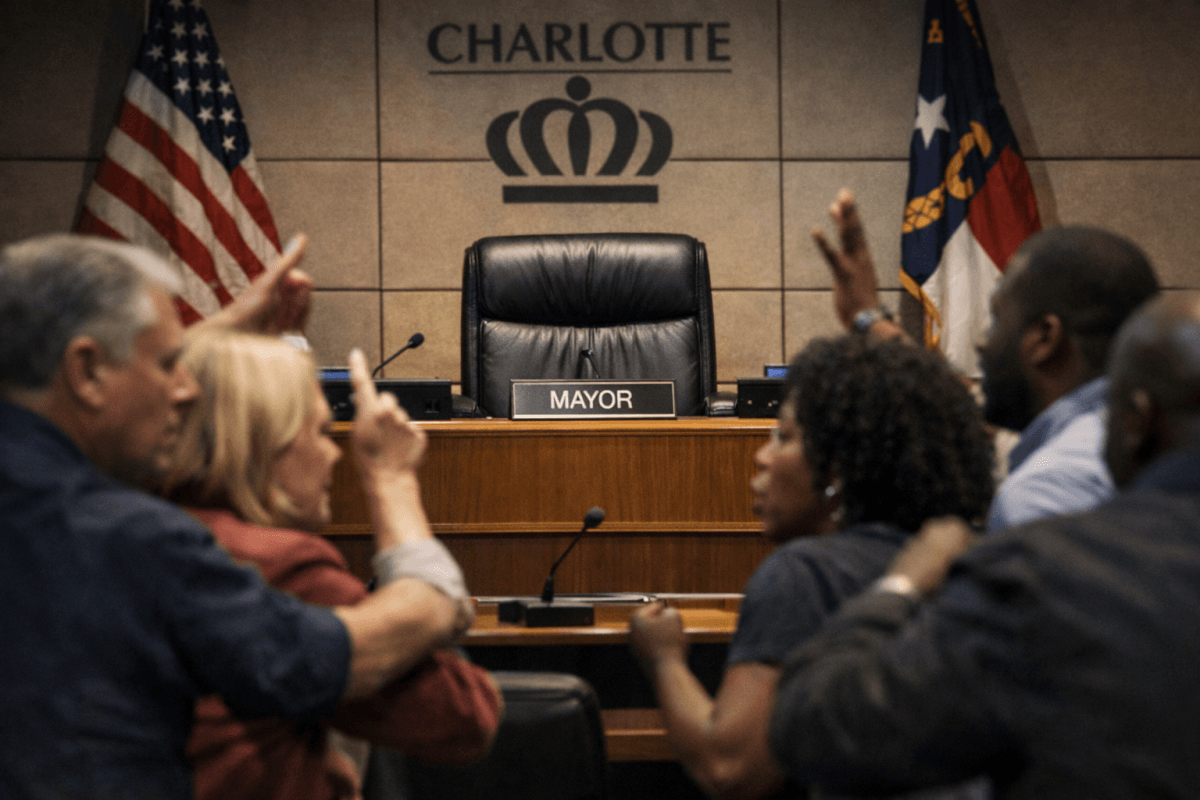
Charlotte, North Carolina, is currently embroiled in a political and racial dispute regarding the selection of an interim mayor, a process initiated by the upcoming departure of Mayor Vi Lyles. The controversy intensified after Corine Mack, President of the NAACP Charlotte-Mecklenburg Branch, issued a public statement on May 11, sharply criticizing white individuals who have expressed interest in filling the vacancy.
"It is seriously disturbing for white folks to be lobbying to be the interim Mayor in Charlotte." — Corine Mack, NAACP Charlotte-Mecklenburg Branch President
Mayor Lyles, Charlotte's first Black female mayor, announced her decision to step down early after winning re-election in 2025, with her term officially concluding at the end of June. North Carolina state law mandates that the City Council appoint a temporary replacement from among registered Democrats to serve the remainder of her term, which spans approximately another year and a half. The City Council is expected to finalize its decision before Mayor Lyles' departure on June 30.
In her May 11 Facebook statement, Mack asserted, "It is seriously disturbing for white folks to be lobbying to be the interim Mayor in Charlotte." She further noted that Mayor Lyles is a Black woman and a registered Democrat, framing the situation within a broader national context of representation in public office. Mack escalated her critique, describing some candidates as "tone deaf" or "self-centered," and issued a warning to City Council members about potential political repercussions if the interim seat does not maintain Black representation. "If the City Council votes a non-Black person in as interim Mayor again, voters will hold you accountable next year," her statement read.
Former Charlotte Mayor Jennifer Roberts, who served from 2015 to 2017, has emerged as a prominent figure in the discussion. According to WCNC, Roberts stated her willingness to serve if selected, clarifying that she was not actively seeking the position but was approached by community members encouraging her consideration. Roberts explained, "I started hearing from a lot of people who thought that I would be a good choice." She indicated that she would view the role as a short-term, transitional appointment rather than a stepping stone for future political campaigns.
Roberts also addressed the broader debate over representation, acknowledging the tensions surrounding the selection process. She conveyed understanding for concerns within Black communities while simultaneously emphasizing the importance of qualifications and experience in leadership decisions. "I understand the pain that the Black community is feeling," Roberts said, adding that if appointed, she would commit to extensive outreach and engagement efforts.
Following online backlash, Mack later clarified that her initial remarks reflected her personal views and did not represent an official position of the NAACP branch. In subsequent social media comments, she defended her stance, pushing back against critics and arguing that concerns regarding Black representation are frequently overlooked or dismissed. She also stated that her comments were not aimed at any specific candidate but rather at what she characterized as a pervasive pattern of racial underrepresentation in leadership roles.
The dispute has brought to light competing priorities within Charlotte politics. Critics argue that the primary focus for the interim appointment should be on a candidate's experience and ability to ensure effective governance. Conversely, Mack and her supporters advocate for the appointment to align with broader representation goals, particularly maintaining Black leadership in a city with a significant Black population.
As the City Council proceeds toward a final decision, the debate underscores deeper divisions within Charlotte regarding identity, leadership qualities, and the characteristics that should define the city's next interim mayor. The decision is poised to influence local political dynamics and potentially set a precedent for future leadership transitions in the city. The process highlights the ongoing national conversation about diversity in public office and the methods by which communities ensure their leadership reflects their demographic makeup.

