

Breaking
Sponsor Advertisement
Dominion Dismisses $1.3 Billion Lawsuit Against MyPillow Founder
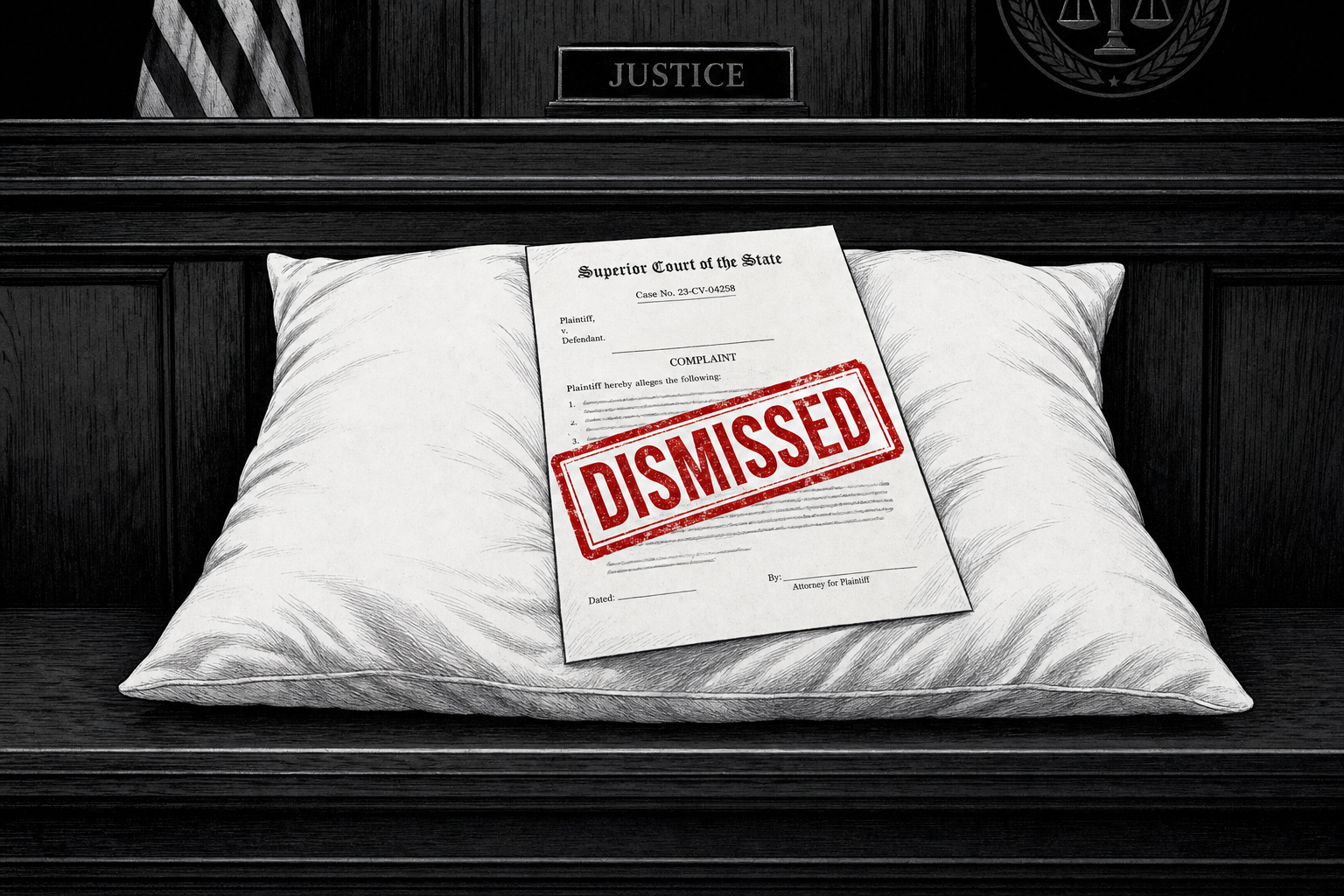
Image for: Dominion Dismisses $1.3 Billion Lawsuit Against MyPillow Founder

Dominion Dismisses $1.3 Billion Lawsuit Against MyPillow Founder

Dominion Voting Systems has dismissed its $1.3 billion defamation lawsuit against MyPillow founder Mike Lindell and his company. The parties reached a confidential settlement, concluding one of the final major legal disputes stemming from claims related to the 2020 presidential election.
Jump to The Flipside Perspectives

Dominion Voting Systems has agreed to dismiss its $1.3 billion defamation lawsuit against MyPillow founder Mike Lindell and his company, MyPillow, concluding a years-long legal battle that stemmed from claims made after the 2020 presidential election. Court filings submitted this week in the U.S. District Court for the District of Columbia confirmed that the parties reached a confidential settlement. The agreement stipulates that the case is dismissed with prejudice, meaning it cannot be refiled, and each side will bear its own attorney fees and legal costs. The specific financial terms of the settlement have not been publicly disclosed.

"They dropped the lawsuit after five and a half years. MyPillow was being sued for $1.3 billion. My employee-owned company, they had this hanging over their head for that long." — Mike Lindell, MyPillow Founder

The lawsuit, originally filed by Dominion in February 2021, alleged that Lindell and MyPillow repeatedly promoted false claims regarding the company’s voting machines. Dominion contended that these machines were used to manipulate the outcome of the 2020 presidential election. The company sought $1.3 billion in damages, arguing that Lindell's public statements, made through various media appearances, interviews, social media posts, and online platforms, caused significant reputational and financial harm. Furthermore, Dominion asserted that these claims exposed its company and employees to threats and harassment.

Mike Lindell announced the dismissal during an appearance on Steve Bannon’s "War Room" podcast, characterizing the outcome as a significant victory after more than five years of litigation. He highlighted the impact of the lawsuit on his employee-owned company, stating, “They dropped the lawsuit after five and a half years. MyPillow was being sued for $1.3 billion. My employee-owned company, they had this hanging over their head for that long.” Following the announcement, Lindell reiterated his long-standing criticism of electronic voting systems, advocating for paper ballots, hand-counted elections, and the complete elimination of voting machines. He also referenced an 800-page report which he claims contains evidence supporting his election assertions.

Throughout the course of the litigation, Lindell consistently maintained that his public statements were protected under the First Amendment. He repeatedly affirmed his intention to continue questioning election security protocols and the widespread use of electronic voting systems. Lindell had previously estimated that the lawsuit incurred approximately $20 million in legal expenses, imposing considerable financial strain on both himself and MyPillow during the period the case was pending.

This settlement marks the conclusion of one of Dominion's last high-profile defamation cases originating from the contentious aftermath of the 2020 election. The voting technology company previously reached a substantial $787.5 million settlement with Fox News related to similar defamation claims. Additionally, Dominion has resolved several other lawsuits involving various allies of President Donald Trump.

During the period of litigation, Dominion Voting Systems also underwent a significant corporate restructuring. Last year, the company was acquired by Liberty Vote, an entity now led by Scott Leiendecker, a former Republican election official. Despite this change in ownership, the lawsuit against Lindell continued until the confidential settlement was reached this week.

While the Dominion lawsuit against MyPillow has concluded, Lindell continues to face other legal challenges. Earlier this year, a federal jury in Colorado found him liable for defaming Eric Coomer, a former Dominion executive, and awarded Coomer approximately $2.3 million in damages. Lindell has publicly stated his intent to appeal this verdict. He is also involved in separate ongoing litigation initiated by Smartmatic, another voting technology company. Furthermore, MyPillow itself continues to navigate additional financial and legal pressures distinct from the recently dismissed Dominion lawsuit.

With the confidential settlement now finalized and the case dismissed with prejudice, the extensive legal dispute between Dominion Voting Systems and Mike Lindell has officially concluded, bringing to a close one of the most closely observed defamation cases connected to the discourse surrounding the 2020 presidential election.

Advertisement

The Flipside: Different Perspectives

Progressive View

The dismissal of the defamation lawsuit against Mike Lindell, while a legal resolution, does not diminish the serious concerns about the spread of misinformation and its impact on democratic institutions. From a progressive perspective, the lawsuit itself was an attempt to hold accountable those who amplified baseless claims about election fraud, which have been shown to erode public trust in elections and fuel political polarization. The confidential settlement, with no disclosed financial terms from Lindell, might be viewed as a missed opportunity for a public acknowledgment of accountability for the harm caused by widespread false narratives.

While the First Amendment protects speech, progressive thought often emphasizes the importance of balancing free expression with social responsibility and the prevention of harm. The repeated promotion of unverified claims about voting machines led to threats against election workers and undermined the legitimacy of a fair election outcome. The fact that Lindell continues to advocate for the elimination of electronic voting systems, despite a lack of substantiated evidence for widespread fraud, highlights an ongoing challenge. This case underscores the need for robust mechanisms to counter disinformation and protect the integrity of democratic processes, ensuring that public discourse is grounded in verifiable facts and that individuals and companies are held responsible for the societal impact of their statements.

Conservative View

The dismissal of Dominion's $1.3 billion lawsuit against Mike Lindell represents a significant development for proponents of free speech and election integrity. For many conservatives, Lindell's persistent questioning of electronic voting systems, while controversial, highlights fundamental concerns about the transparency and security of the electoral process. The First Amendment's protection of speech, even unpopular or disputed claims, is a cornerstone of individual liberty, and the ability of an individual like Lindell to defend himself against a massive legal challenge, culminating in a dismissal, reinforces this principle.

This outcome may be viewed as a partial vindication of Lindell's right to express his views, regardless of their factual basis, without facing crippling financial penalties from private entities. The emphasis on paper ballots and hand-counted elections, which Lindell continues to advocate for, resonates with conservative calls for simpler, more auditable election methods that reduce reliance on technology perceived as vulnerable. The confidential nature of the settlement, with each side paying its own costs, could be interpreted as a pragmatic resolution that avoids further protracted litigation, allowing Lindell to continue his activism and focus on other legal challenges without the immediate threat of the $1.3 billion claim. This case underscores the ongoing tension between corporate efforts to protect reputation and individual rights to free expression, a balance many conservatives believe must heavily favor the latter.

Common Ground

Despite differing perspectives on the specifics of the Dominion-Lindell lawsuit, there are areas of common ground regarding election integrity and the legal system. Both conservatives and progressives can agree on the fundamental importance of secure and transparent elections. Ensuring public confidence in election outcomes is a shared goal, even if there are disagreements on the best methods to achieve it. Discussions around the balance between free speech rights and preventing the spread of harmful misinformation are crucial for a healthy democracy, and this case brings those tensions to the forefront.

Both sides can also appreciate the complexities of the legal system and the significant costs associated with prolonged litigation. The confidential settlement, allowing both parties to move forward, demonstrates a pragmatic approach to resolving disputes outside of a lengthy and expensive trial. Furthermore, there is shared interest in protecting individuals from frivolous lawsuits and ensuring that the justice system is accessible and fair. While views diverge on Lindell's claims, a common understanding exists that the legal process, even when imperfect, serves as a mechanism for dispute resolution and the upholding of rights, including the right to defend oneself against accusations.

What's your view on this story? Share your thoughts and remember to consider multiple perspectives and being respectful when forming and voicing your opinion. "If you resort to personal attacks, you have already lost the debate..."

Advertisement

Contact Us About This Article

Have a question or comment about this article? We'd love to hear from you.

About Fair Side News

At Fair Side News, we believe in presenting news with perspectives from both sides of the political spectrum. Our goal is to help readers understand different viewpoints and find common ground on important issues.