

Breaking
Sponsor Advertisement
Gabbard Declassifies U.S.-Supported Biolab Documents Globally
Image for: Gabbard Declassifies U.S.-Supported Biolab Documents Globally

Gabbard Declassifies U.S.-Supported Biolab Documents Globally

Director of National Intelligence Tulsi Gabbard declassified documents Friday, revealing U.S.-supported biological laboratories in over 30 countries, including Ukraine, raising transparency concerns.
Jump to The Flipside Perspectives

Director of National Intelligence Tulsi Gabbard on Friday, June 14, 2026, released a cache of declassified documents that she stated provide new details regarding U.S.-supported biological laboratories in more than 30 countries worldwide. The extensive release by the Office of the Director of National Intelligence (ODNI) includes information on facilities in Ukraine, which have been a point of international contention amidst the ongoing conflict in the region.

"Despite the obvious potential for catastrophic global impact research on dangerous pathogens in biolabs can have, politicians, so-called health professionals like Dr. Fauci, and entities within the Biden administration’s national security team lied to the American people about the existence of U.S.-funded and supported biolabs." — Tulsi Gabbard, Director of National Intelligence

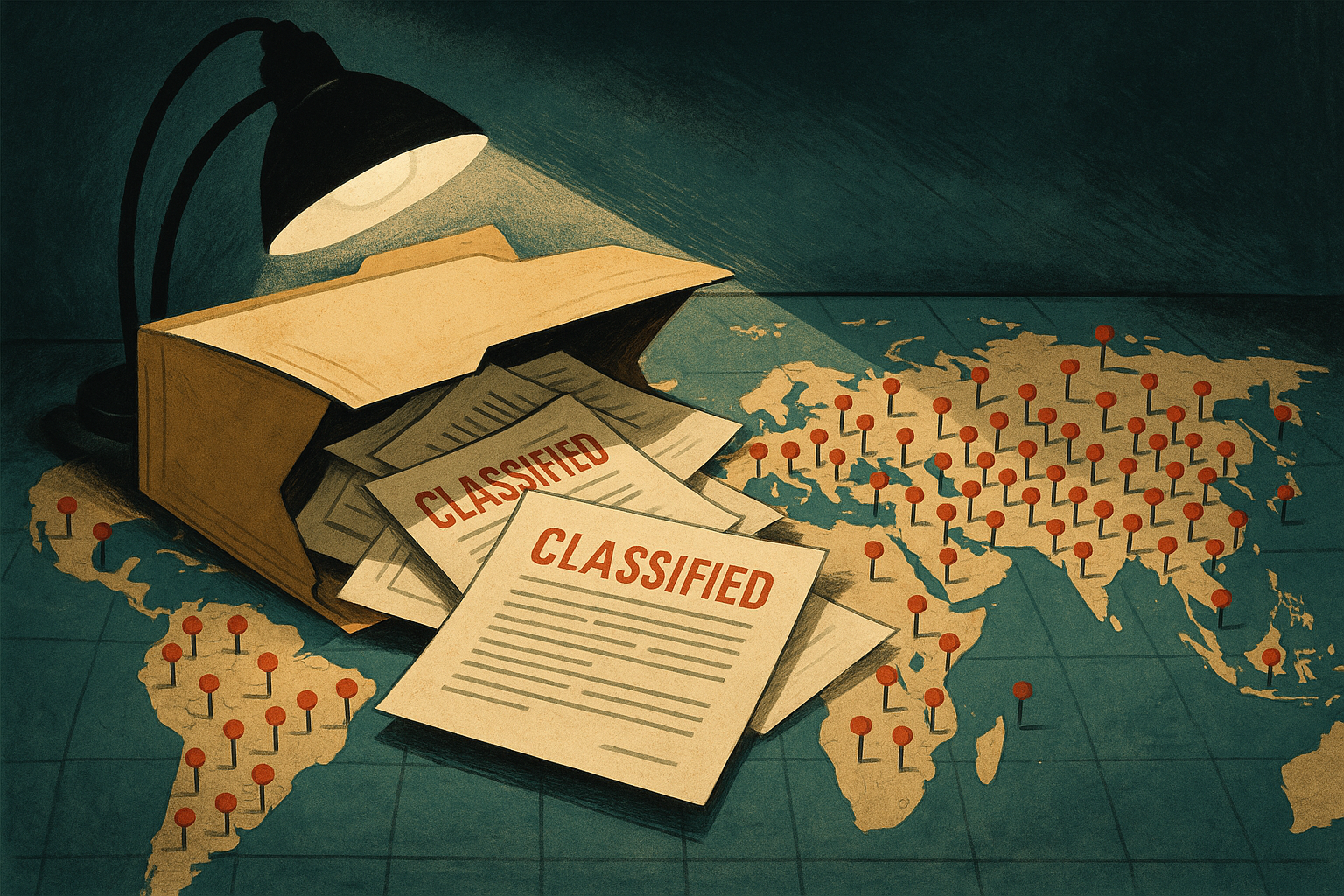
The partially redacted records, made public by the ODNI, contain maps identifying the locations of these laboratories and summaries of the research activities conducted at several of these facilities. The documents highlight that some of the laboratories in Ukraine became particularly vulnerable following Russia's invasion, largely due to their housing of potentially hazardous biological materials within active conflict zones.

In a statement accompanying the release, Director Gabbard sharply criticized previous administrations, accusing them of deliberately concealing the true extent of U.S. involvement in these biological research programs. "Despite the obvious potential for catastrophic global impact research on dangerous pathogens in biolabs can have, politicians, so-called health professionals like Dr. Fauci, and entities within the Biden administration’s national security team lied to the American people about the existence of U.S.-funded and supported biolabs," Gabbard asserted. Her remarks underscore a broader call for greater transparency and accountability in government-supported scientific endeavors.

According to the intelligence documents, the United States played a significant role in establishing or supporting more than 40 biological laboratories across Ukraine. These efforts were undertaken as part of broader public health and biodefense cooperation programs, aimed at enhancing global health security and preparedness against biological threats. One facility specifically highlighted in the declassified materials is the Institute of Experimental and Clinical Veterinary Medicine in Kharkiv, Ukraine. The documents indicate that this institute likely housed dangerous pathogens and maintained historical ties to Soviet-era biological research. Its work encompassed various fields, including veterinary medicine, virology, and toxicology.

The declassified assessment also raised concerns about biosafety deficiencies identified in certain laboratory areas within the Kharkiv institute. Furthermore, it noted the facility's vulnerability to physical damage, potential seizure by hostile forces, or foreign information operations, particularly given its location in an active war zone. The released records identify a range of pathogens handled or studied at various laboratories, including highly dangerous agents such as anthrax, Ebola virus, swine fever, and highly pathogenic avian influenza.

The scope of U.S. support, as detailed in the intelligence assessment, extended beyond mere construction and infrastructure development. It included substantial funding for scientific research, the provision of advanced laboratory equipment, and comprehensive training for Ukrainian researchers in critical biosafety and biocontainment practices. Intelligence officials, according to the documents, expressed considerable concern that laboratories operating under wartime conditions could become prime targets for military action or be exploited in disinformation campaigns.

The records acknowledge that Russia has repeatedly accused the United States of conducting biological weapons activities in Ukraine. These allegations have been consistently and widely disputed by U.S. officials and numerous international organizations. While the declassified assessment acknowledges these accusations, it does not present any evidence to support claims that the laboratories were engaged in offensive biological weapons development. Instead, the documents consistently describe these facilities as integral components of a broader international public health and biodefense research network, primarily focused on disease surveillance, diagnostics, and infectious disease research.

The ODNI also noted that certain portions of the records remain redacted, meaning they do not fully describe all oversight mechanisms, specific research activities at every facility, or the full extent of identified biosafety concerns. Director Gabbard stated that the primary objective of this release was to enhance transparency regarding U.S.-supported biological research programs. She also pledged additional reviews, emphasizing a commitment to identifying all such labs, understanding their pathogen inventories, and working towards the cessation of "dangerous Gain-of-Function research that threatens the health and wellbeing of the American people and people around the world."

The Office of the Director of National Intelligence further alleged that information concerning the existence and funding of these laboratories had previously been withheld from public knowledge. The declassified documents, while confirming significant U.S. funding and collaboration with laboratories engaged in dangerous pathogen research, stop short of concluding any involvement in offensive biological weapons programs. Instead, they underscore the inherent security risks posed by the ongoing conflict in regions where these facilities operate.

Advertisement

The Flipside: Different Perspectives

Progressive View

The declassification of documents regarding U.S.-supported biological laboratories, while providing greater transparency, also brings into focus complex issues of global health, ethical research, and international relations from a progressive standpoint. The revelation of numerous labs handling dangerous pathogens in various countries, particularly in conflict zones like Ukraine, emphasizes the systemic risks inherent in such endeavors. Progressives would highlight the critical need for robust international oversight and collaboration to ensure that biodefense research prioritizes global public health and equity, rather than contributing to geopolitical tensions or potential environmental hazards.

The concern over "Gain-of-Function" research and the accusation of previous administrations withholding information underscore the importance of ethical governance and accountability. From a progressive perspective, the focus should be on establishing universal, transparent standards for biosafety and biocontainment, ensuring that all research, regardless of funding source, adheres to the highest ethical guidelines. The vulnerability of these labs in wartime also raises humanitarian concerns, emphasizing the disproportionate impact that accidental releases or weaponization could have on vulnerable populations. This situation calls for a re-evaluation of how biodefense programs are integrated into a broader framework of collective well-being, advocating for investments in public health infrastructure and disease surveillance that serve all nations equitably, rather than solely focusing on national security interests in isolation.

Conservative View

The declassification of documents by Director of National Intelligence Tulsi Gabbard regarding U.S.-supported biological laboratories in over 30 countries, including Ukraine, raises critical questions about government transparency, accountability, and national security. For conservatives, this development highlights a long-standing concern about the lack of oversight and information sharing regarding sensitive research, particularly when it involves potentially dangerous pathogens and taxpayer funds. The accusation by Director Gabbard that previous administrations concealed the extent of U.S. involvement underscores the need for greater scrutiny of federal agencies and their international collaborations.

From a conservative perspective, the potential for "Gain-of-Function" research, as mentioned by Gabbard, poses significant risks that demand robust regulation and transparency. The principle of individual liberty is inherently tied to the right of citizens to be fully informed about government activities that could impact public health and safety. Furthermore, the vulnerability of these labs in conflict zones raises serious national security implications, potentially exposing sensitive U.S. interests to foreign adversaries or accidental release. This situation necessitates a re-evaluation of how U.S. biodefense strategies are implemented abroad, with a focus on minimizing risks and ensuring that American resources are not inadvertently contributing to global instability. The call for additional reviews and an end to dangerous research aligns with conservative principles of fiscal responsibility and prudent governance, ensuring that government actions serve the best interests of the American people.

Common Ground

Despite differing perspectives, there are clear areas of common ground regarding the declassification of documents on U.S.-supported biological laboratories. Both conservative and progressive viewpoints can agree on the fundamental importance of government transparency and accountability concerning sensitive research programs. The public has a right to know about activities that involve dangerous pathogens and significant taxpayer investment, especially those with potential global health and national security implications.

There is also shared consensus on the critical need for robust biosafety and biocontainment standards in all laboratories handling dangerous biological materials. Preventing the accidental or intentional release of pathogens is a paramount concern for everyone, necessitating stringent protocols and continuous oversight. Furthermore, both sides can unite around the goal of preventing disinformation and ensuring that public discourse about these facilities is based on accurate, verifiable information. A shared commitment to protecting public health, minimizing global risks, and fostering responsible scientific research forms a strong foundation for bipartisan efforts to review and reform how such international collaborations are managed and communicated. This includes a mutual interest in evaluating the ethical implications of certain types of research, like "Gain-of-Function," to ensure it aligns with global safety and security objectives.

What's your view on this story? Share your thoughts and remember to consider multiple perspectives and being respectful when forming and voicing your opinion. "If you resort to personal attacks, you have already lost the debate..."

Advertisement

Contact Us About This Article

Have a question or comment about this article? We'd love to hear from you.

About Fair Side News

At Fair Side News, we believe in presenting news with perspectives from both sides of the political spectrum. Our goal is to help readers understand different viewpoints and find common ground on important issues.