


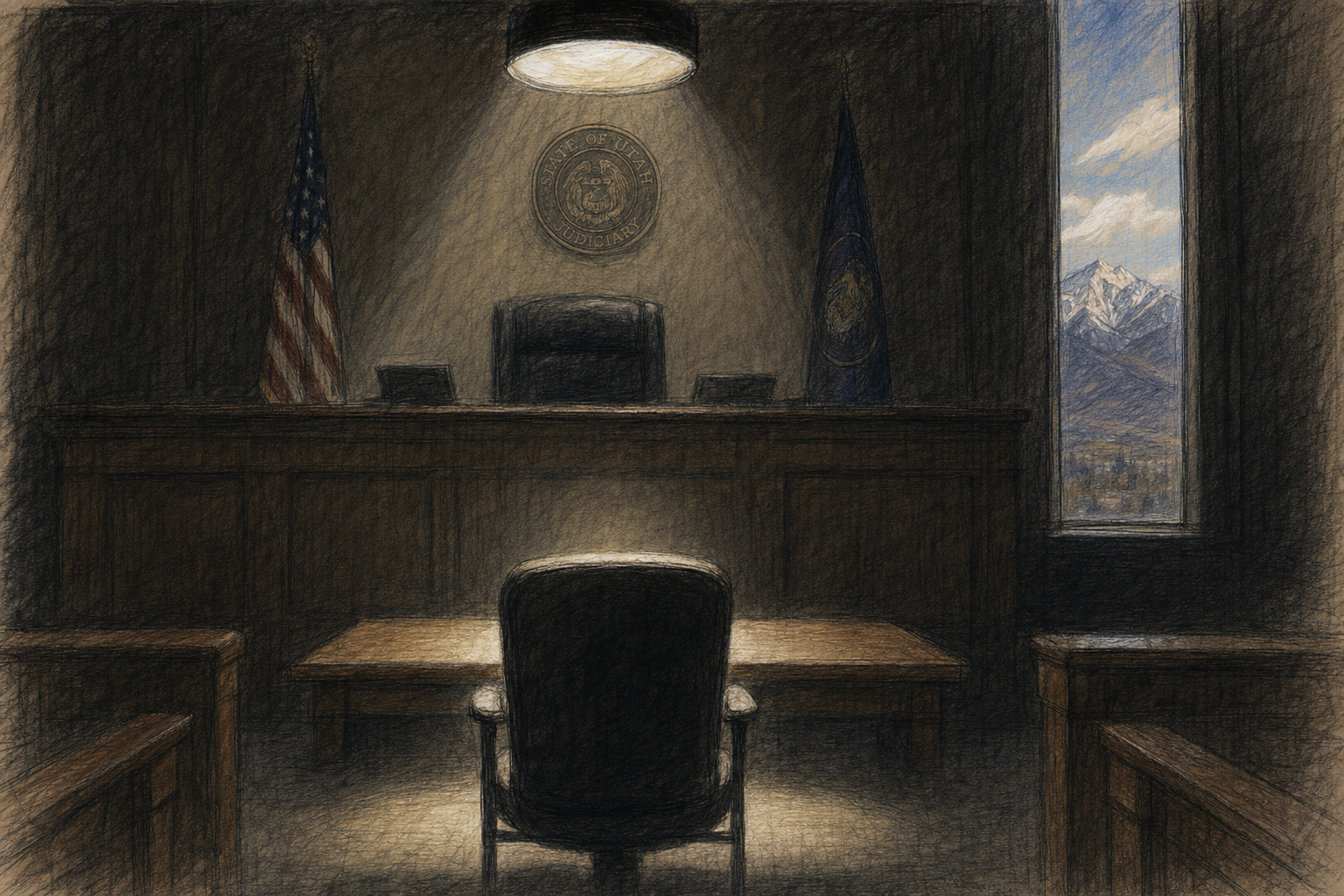
PROVO, Utah — A Utah judge ruled Friday that prosecutors may continue seeking the death penalty against Tyler Robinson, the man accused of the September 2025 fatal shooting of Turning Point USA founder Charlie Kirk. The decision came despite Fourth District Judge Tony Graf finding that a prosecutor violated a court order restricting public comments about the high-profile case.
"The court finds that striking the death penalty is grossly disproportionate to the misconduct and legally unavailable in this civil contempt framework." — Judge Tony Graf, Fourth District Judge
Robinson, 23, faces charges of aggravated murder and several additional felony offenses stemming from Kirk's death during a Turning Point USA event at Utah Valley University. Prosecutors allege Robinson intentionally targeted Kirk due to his political beliefs, a factor that could support an aggravated murder conviction and make him eligible for the death penalty under Utah law if convicted. Robinson has not yet entered a plea and remains jailed without bail.
The controversy arose after Deputy Utah County Attorney Christopher Ballard made public comments regarding forensic evidence in the case. Defense attorneys argued that Ballard violated a pretrial publicity order, commonly known as a gag order, by discussing a bullet fragment recovered from Kirk’s body and expressing confidence in the strength of the prosecution’s evidence. According to the defense, these statements risked prejudicing potential jurors and warranted the extraordinary sanction of barring prosecutors from pursuing a death sentence.
Judge Graf agreed that Ballard improperly crossed the line by publicly stating that the prosecution possessed sufficient evidence to obtain a conviction. As a result, the judge found Ballard in civil contempt of court and ordered the prosecution to pay the defense’s attorney fees associated with filing the contempt motion.
However, Graf rejected the defense’s request to remove capital punishment as a sentencing option. He concluded that such a sanction would be both legally unavailable and disproportionate to the misconduct. In his ruling, Judge Graf stated, "The court finds that striking the death penalty is grossly disproportionate to the misconduct and legally unavailable in this civil contempt framework." The judge also noted that the defense contributed to public confusion by filing court documents suggesting ballistics testing had excluded Robinson’s alleged weapon from the investigation, prompting prosecutors to publicly respond.
Despite concluding that Ballard’s additional comments violated the court’s order, Judge Graf determined that removing capital punishment as a sentencing option exceeded the authority permitted under Utah law. Instead, the court ordered several measures intended to safeguard Robinson’s right to a fair trial. These measures include expanding the pool of prospective jurors and conducting more extensive questioning during jury selection to identify potential jurors who may have been influenced by media coverage surrounding the case.
Friday’s ruling marks another setback for Robinson’s defense team, which has filed numerous pretrial motions seeking to challenge evidence and limit the prosecution’s case. Earlier this week, Judge Graf denied a defense request requiring Robinson’s former roommate and romantic partner, Lance Twiggs, to testify in person during the preliminary hearing. Prosecutors instead plan to introduce Twiggs’ recorded statements, in which he allegedly told investigators Robinson confessed to the shooting and discussed concealing the rifle after the incident.
The preliminary hearing for Robinson remains scheduled to begin in early July. Prosecutors are expected to present surveillance video, forensic evidence, witness testimony, and electronic communications they contend link Robinson to the shooting. If Robinson is ultimately convicted of aggravated murder, prosecutors may continue seeking the death penalty, which would require a separate capital sentencing phase following any guilty verdict. Friday’s ruling leaves that option intact despite the court’s finding that a prosecutor violated the pretrial publicity order. The case continues to draw national attention given the high-profile nature of the alleged victim and the serious charges involved.

