


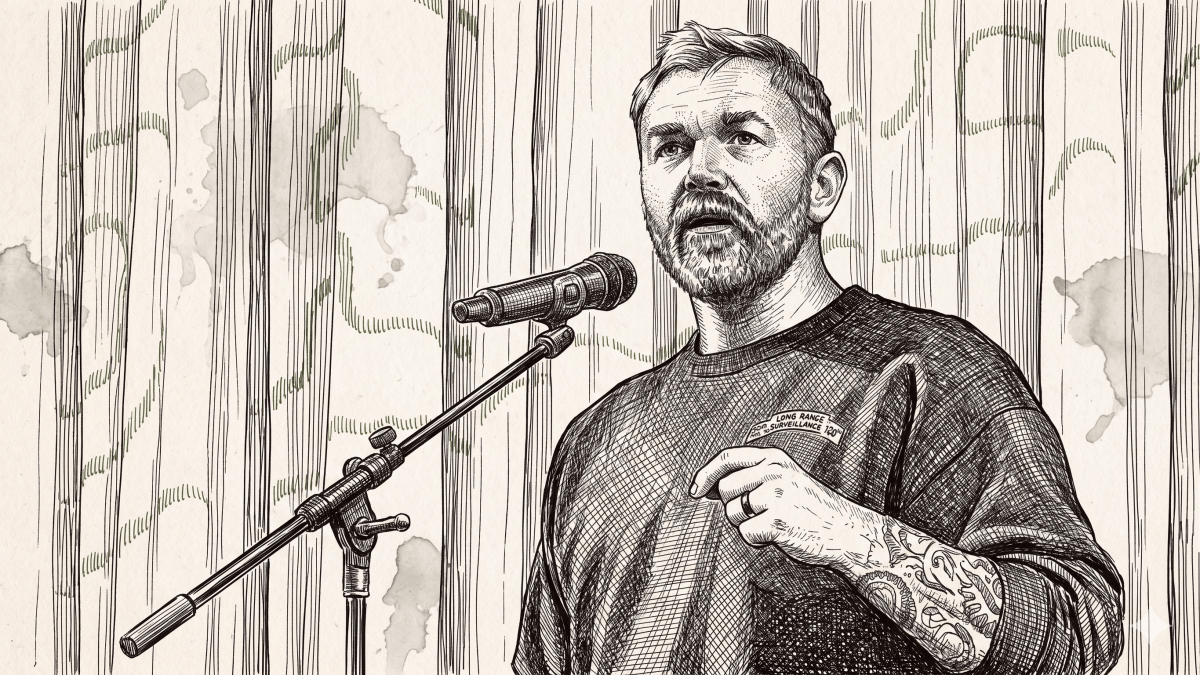
Democratic Maine Senate candidate Graham Platner is facing intensified scrutiny as a vast archive of his Reddit posts, spanning over a decade, has resurfaced, adding significant political pressure to his closely watched campaign. The posts, made under a now-deleted account linked to Platner, have quickly become a central target for Republican attacks as the upcoming general election draws nearer.
"I still have to jerk off every time I sit in a portas—-er… that blue water smell conditioned me." — Graham Platner, Democratic Maine Senate Candidate
The unearthed archive reportedly contains more than 1,800 posts published between 2009 and 2021, covering various periods of Platner’s life, including his military service in Iraq and Afghanistan, according to reporting from the Bangor Daily News. The sheer volume and duration of the material have raised questions about whether the comments represent isolated instances of immaturity or indicate a more consistent pattern of online behavior over time.
Platner, who has previously acknowledged using the username “P-Hustle,” is accused of making explicit sexual remarks within military-themed Reddit forums. Fox News reported on one particular post from 2017, where Platner wrote, "I still have to jerk off every time I sit in a portas—-er… that blue water smell conditioned me." In another post from 2021, Platner described encountering graphic graffiti inside a portable restroom during an overseas deployment, using highly descriptive and explicit language. He reportedly referred to the imagery as "beautiful," "engorged and veiny," and moving "towards its penetrative glory," subsequently adding, "Oh s—!!! You’ve got the Hot Rod C— from Manas!" Manas refers to a former U.S. military transit hub located in Kyrgyzstan, which was utilized during the wars in Afghanistan. Platner served multiple combat tours in Iraq and later deployed to Afghanistan with the National Guard and as a contractor.
Beyond the explicit nature of some content, the broader collection of posts has also drawn attention for displaying what analysts describe as ideological inconsistencies over the years. According to the Bangor Daily News, the archive includes political commentary that at times criticized rural white Americans and law enforcement, while at other times expressed support for military institutions. This creates a perception of a shifting and often contradictory online identity for the candidate.
Platner has publicly defended the resurfaced material, asserting that the comments were taken out of context and were intended as humor common in online forums. "You should read the comments in context. It’s very clear I’m joking," Platner told Fox News Digital. He further explained, "It’s called s—posting. It’s when you argue with people on the internet and try to bother them. So, yeah, no, it’s very obviously not true." Some reports also highlight Platner’s description of his early online activity occurring during a challenging post-service period, marked by difficulties adjusting after his military deployments.
Supporters of Platner contend that the posts reflect immature online behavior from a past phase of life rather than his current political beliefs or character. They emphasize the need to consider the context of online interactions and the potential for personal growth over time. Conversely, critics argue that the extensive volume and prolonged duration of the archive suggest a deeper pattern of behavior and raise concerns about his judgment and temperament, particularly as he seeks to transition from a political newcomer to a statewide nominee for a federal office.
The controversy has already led to internal political repercussions within Platner’s campaign. At least one political staffer reportedly resigned following the resurfacing of the posts, indicating early organizational strain. Despite this, national progressive figures have largely continued to endorse and back Platner’s Senate bid. Republicans have been swift to elevate the issue, using the material to question Platner’s overall suitability for public office. Democrats, for their part, have largely maintained a unified front behind their candidate in the face of the resurfaced content.
Political analyst Mehek Cooke suggested that the controversy is likely to extend beyond the primary dynamics and significantly impact the general election environment, especially in a state where the race is anticipated to be highly competitive. Cooke argued that a candidate’s cumulative digital history can become a decisive factor when voters evaluate character and credibility in high-stakes elections. The evolving standards for public figures' digital footprints mean that past online activity can have profound implications for contemporary political aspirations.

